4.01 The Hill That Moved
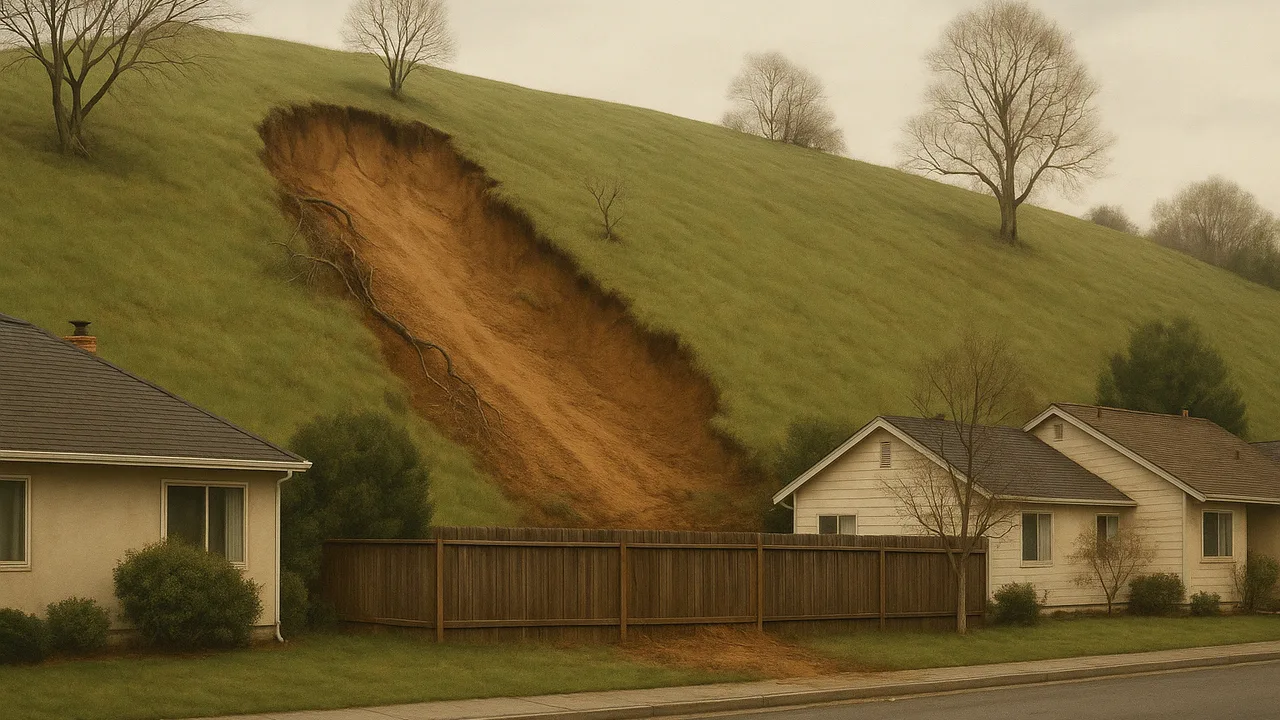
Hillside Heroes: A Safety Plan for a River-Valley Town
How does Earth’s surface change, and how can our community stay safe when it does?
The mystery: After heavy rain, soil slides down steep hillsides in hilly cities and river-valley towns, and the rivers run brown with mud.
Questions we will figure out together in this unit:
- Why does soil slide down hills after it rains?
- Why does the river turn brown after a storm?
- Do plants help keep a hill in place?
- Can ice really break a rock?
- How do rocks show what Earth was like long ago?
- Why are there fossils of sea animals in rocks far from the ocean?
- Why are some places full of volcanoes and earthquakes, but not here?
- How can we protect homes and roads from mudslides and floods?
explain that the land around us changes over time and describe the problem our client needs us to solve.
- I can explain that landscapes change over time.
Phase 1: Spark
Warm-Up ~5 min
Do Now. Picture a steep, grassy hill next to a road. It rains hard all night. In the morning, a pile of mud and rocks sits on the road. A brown river flows at the bottom of the valley. Make a guess before we learn anything new.
Where did the mud on the road most likely come from?
Instruction ~10 min
Junior engineers, we have a new client! A neighborhood council in a hilly river-valley town has asked for help. The town looks a lot like many river-valley towns. Homes sit on steep hills. A road curves along the bottom, next to the river.
Here is the council’s problem. After heavy rain, soil slides down the hills. Sometimes a small landslide blocks the road. Sometimes water floods the low streets. Neighbors worry about their homes. The council wants a plan to keep people safe. First, they need to understand how the land changes.
The land is always changing. We usually think hills and rocks stay the same forever. They do not. Rain, rivers, ice, wind and even plant roots slowly change the land. Some changes are slow, like a river cutting a valley over a very long time. Some are fast, like a landslide in one night.
Worked example 1: the muddy river. Mei sees the river turn brown after a storm. She asks, “What is the brown stuff?” It is tiny bits of soil and rock called sediment. Rain washed it off the land and into the water. So the cause is rain running over loose soil. The effect is a muddy river.
Worked example 2: the cracked sidewalk. Jamal notices a sidewalk near a hill. It has cracks, and some dirt is piled against it. He thinks the hill is slowly creeping down. The cause is soil moving downhill. The effect is a pushed and cracked sidewalk.
Our Wonder Board holds the questions we will answer in this unit. Add your own questions on sticky notes. Next lesson, we will sort them and form our teams.
Guided Exercises ~15 min
Work with your team. Use the arrows to move through each question. Talk about the cause and the effect before you answer.
Independent Practice ~10 min
On your own, think like a member of the council.
You live in a house at the top of a steep hill. Write two things you would worry about after a big storm. For each one, name the cause and the effect.
Write one new question for our Wonder Board.
Closure ~5 min
Today we met our client and saw that the land is always changing. Next time, we will sort our Wonder Board and go on a hunt for clues that the land near school has changed.
How confident are you that you can I can explain that landscapes change over time.
Exit ticket: name one thing that can change the shape of a hill. Explain how it changes the hill.
Teacher notes
Materials: sticky notes for the Wonder Board, chart paper, and one or two photos of a muddy river or small slide (use your own local photos if you have them).
Setup: Post the driving question and the Wonder Board before class.
Listen for: students who think rocks and hills never change, or that mud in the river “comes from the rain.” Ask: what did the rain pick up on the way?
Support / stretch: Give a cause-and-effect frame (“Because ___, ___ happened.”). Stretch students can sort changes into fast and slow.