4.17 Flood Fighters and Rain Gardens
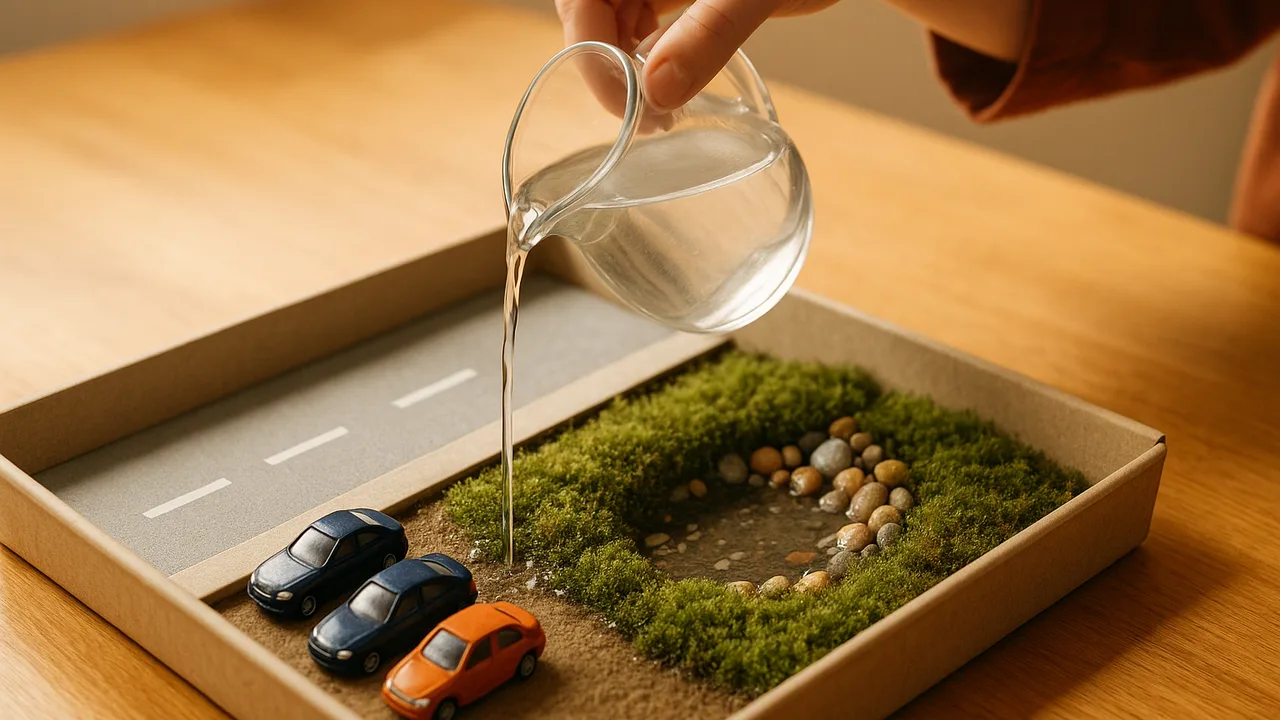
design and test a way to keep a model street from flooding, and explain how it lowers the harm to people.
- I can explain how my solutions use cause and effect relationships between the natural event and its impact on humans.
- I can describe how each solution changes the impact of the natural event on people.
- I can use information from research to explain what causes a problem and what effects it has.
- I can use scientific facts I have learned to help me understand the problem.
Phase 4: Build
Warm-Up ~5 min
Do Now. Pour a little water on a hard tabletop. Then pour the same amount on a kitchen sponge. Watch where the water goes.
A street is covered with hard pavement. Where does heavy rain go?
Instruction ~10 min
Junior engineers, the council has a second worry: flooding. A flood happens when water covers land that is usually dry. Heavy rain is a common cause. When rain cannot soak into the ground, it runs off fast. Then it fills low streets and rivers.
Cause and effect. Engineers cannot stop the rain. Instead, they change what happens to the water. If more water soaks in, less runs off. If less water runs off, low streets flood less. That protects homes, cars and people.
Ways to fight floods.
- Rain gardens and trees: soil and roots soak up water.
- Pavement that lets water through: water drains into the ground below.
- Levees and flood walls: tall banks or walls along a river that keep high water away from the town.
- Raising buildings: homes built up high, so water passes underneath.
- Warnings: alerts that tell people to move to higher ground before a flood arrives.
Worked example 1: the sponge street. Priya’s team builds a street from a plastic lid. They pour one cup of water. The low end floods. Then they add a strip of sponge beside the street. The sponge soaks up much of the water. Less water reaches the low end.
Worked example 2: explaining the effect on people. Malik writes: “The rain garden soaks up water, so less water reaches the low street, so families’ basements stay dry.” Notice the chain: solution → change in the water → less harm to people.
Guided Exercises ~15 min
Build a model street in a tray. Pour one cup of water at the high end. Measure how much water collects at the low end with a measuring cup. Then add one flood solution and test again.
| Test | Solution | Water at low end (cups) | Did the “homes” stay dry? | Notes |
|---|---|---|---|---|
| 1 | None (control) | |||
| 2 | Sponge rain garden | |||
| 3 | Our choice: |
Independent Practice ~10 min
Explain two flood solutions.
Pick two ways to fight floods from today. For each, explain how it solves part of the council's problem. Which one would fit a hilly town with a river at the bottom?
🔎 Mini case study: Green Tools for a Big City ~5 min
Picture a big, crowded city. Much of its ground is covered with roofs, streets and parking lots. Rain cannot soak into those hard surfaces. So in heavy storms, lots of water rushes into pipes and then into the rivers. Sometimes it carries pollution with it.
Some big cities have made long-term green-infrastructure plans. Instead of only building bigger pipes, these cities add “green” tools. These include rain gardens, street trees, green roofs with plants on top, and pavement that lets water soak through. These tools catch rain where it falls. Many other cities use green tools like these to handle stormwater, too.
Think about it: How is a rain garden like the sponge in our model street? Which part of our council’s problem could it help solve?
Closure ~5 min
You tested real flood-fighting ideas and saw how one city uses them. Next lesson is our mid-build checkpoint. It shows what you know so far and helps you plan your revisions.
Exit ticket: name one solution that helps with flooding. Explain the cause it changes and the effect on people.
Teacher notes
Materials (per team): a plastic storage lid or tray, a book to tilt it, kitchen sponge strips, small cups of soil, craft sticks and clay (levee or wall), small blocks for “homes,” measuring cups, paper towels.
Setup: Tilt all trays on one book so tests are fair. Mark the “low street” at the bottom.
Listen for: “we can stop the flood.” Engineers lower the harm; they cannot stop heavy rain. Also listen for students who think a levee soaks up water.
Support / stretch: Give the cause-effect chain frame on a card. Stretch: combine a rain garden and a levee and predict the result.