3.21 The Nature Center Display
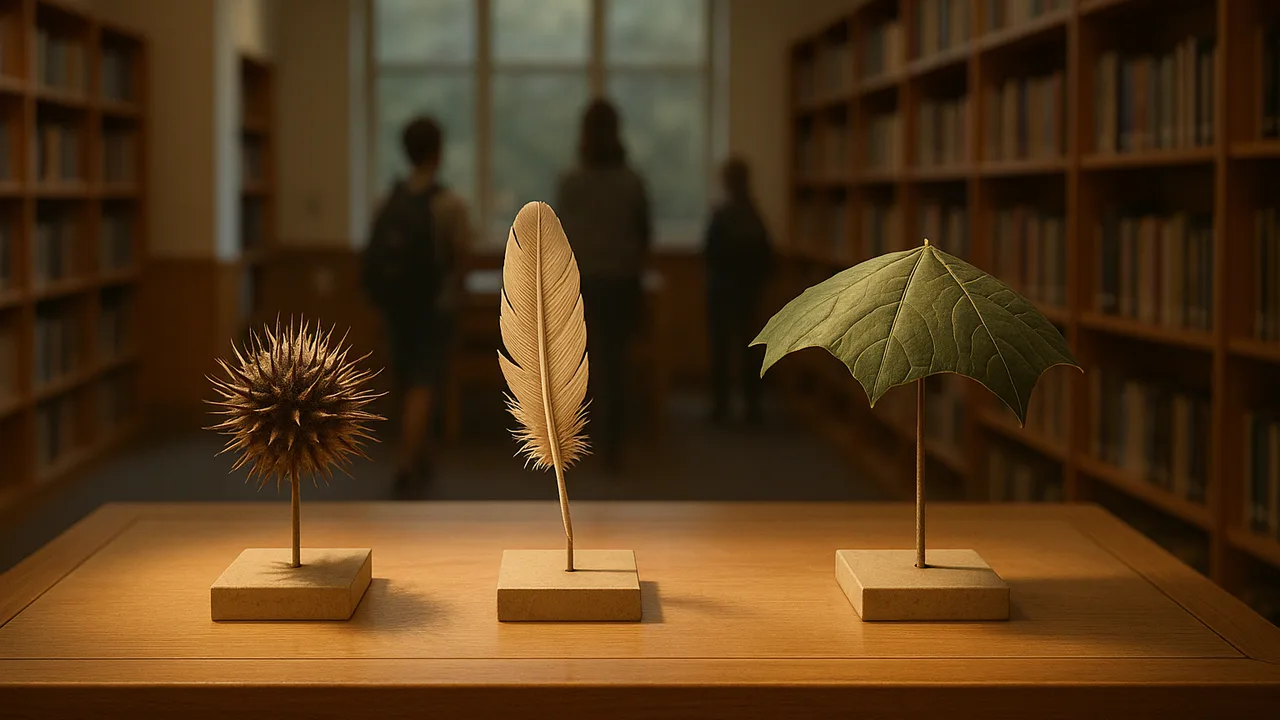
present my team’s invention to the nature center and explain how a plant or animal structure helps it survive and how we borrowed it.
- I can use evidence to explain how inside and outside parts of plants and animals have special jobs.
- I can explain how these parts help plants and animals survive, grow, act, or make more of their kind.
- I can show how different parts work together as a system to help plants and animals live and grow.
- I can make a claim that plants and animals have inside and outside parts that work together to help them survive, grow, act, and make more of their kind.
- I can use information I am given to explain a problem that comes from something people need or want.
Phase 5: Prove It
Warm-Up ~5 min
Do Now. Read your display card to a partner from another team. Time it. Can they explain your invention back to you in under one minute?
Which display card sentence teaches visitors the MOST science?
Instruction ~10 min
Junior engineers, today you present. Your class, or a guest, plays the nature center staff. Each team gives a two-minute display talk. The Reporter leads, but everyone speaks.
A strong display talk has four parts.
- The living thing. Name the plant or animal and the structure. Explain how it works with other parts to help it survive, grow, behave, or reproduce.
- The problem. What do people need or want? Who has this problem?
- The invention. Show how it borrows the structure.
- The evidence. Share one test result and the change you made because of it.
Worked example 1: Malik’s talk. “Burdock burrs have tiny hooks. The hooks grab animal fur, so the seeds inside get carried away and grow in new places. Lots of kids have snack bags that spill in backpacks. Our Burr Bag Clip uses hooks and loops to keep bags shut. In Test 1 it opened at the corner. We added hooks there, and in Test 2 it stayed shut 5 of 5 shakes.”
Worked example 2: Ava’s talk. “Owls hunt at night. Their soft, fringed feather edges make their flight quiet. Their ears and brain find the mouse, and their talons grab it. Noisy fans bother people who are trying to sleep. Our Owl Quiet Fan has a fringed blade. Two of three listeners said it was softer. We fixed the fringe so it stands up.”
Being a good audience. Listen, then ask one question. Use the visitor card to give each team one star and one wish.
Guided Exercises ~15 min
Get ready, then present. Use the arrows to move through each step.
Independent Practice ~10 min
On your own, be a thoughtful visitor.
Visitor card: pick one other team's display. Give one star (something that worked) and one wish (something that could improve). Name the structure they borrowed.
Public product: the Borrowed from Nature display
Present your team’s nature-inspired invention to the nature center. Show your prototype, your display card, and your test log. Explain how a plant or animal structure works with other parts to help it survive, and how your invention borrows that idea to meet a real human need.
Submission workflow
- Finish your display card: the living thing, the structure, its job and partner parts, the problem, your invention, and one test result.
- Set up your prototype, display card, and test log on your team’s desk.
- Rehearse a two-minute talk where every team member speaks.
- Present to the nature center audience and answer one visitor question.
How it is scored
| Criterion | What proficient looks like |
|---|---|
| Structure and function | Correctly names a real plant or animal structure and explains how it works with other parts to help the living thing survive, grow, behave, or reproduce. |
| Nature-inspired design | The prototype clearly borrows that structure to solve a real human need or want, and meets the project’s criteria. |
| Testing and revision | Shares real test data, names a failure point, and explains how that evidence led to one change. |
| Presentation | The display card and talk are clear enough for a visitor to understand in one minute, and every member speaks. |
Closure ~5 min
You did it! You shared real science and real engineering with an audience. Next time, the unit checkpoint will help you get ready for the spring science test.
Exit ticket: what is one thing you are proud of in your team's display? What is one thing you would do differently?
Teacher notes
Materials: prototypes, display cards, test logs; visitor cards (star and wish); a timer; the four-row rubric for scoring.
Setup: With a full class, run a gallery walk where half the teams present while the other half visits, then switch. Invite a guest, such as a principal, a family member, or staff from a local nature center if one is available, to play the client. Score each team on the rubric during the talk.
Listen for: talks that skip the structure’s job in the living thing; problems that are not a real human need; and test results with no data. Check that each talk links the structure to its job in nature, not just to the invention.
Support / stretch: Give a talk script with sentence frames. Allow students to present by pointing and labeling if speaking is hard. Stretch: ask teams how people’s needs might change in the future and how their invention could change too.