3.06 Catch It! The Ruler Drop Reaction Test
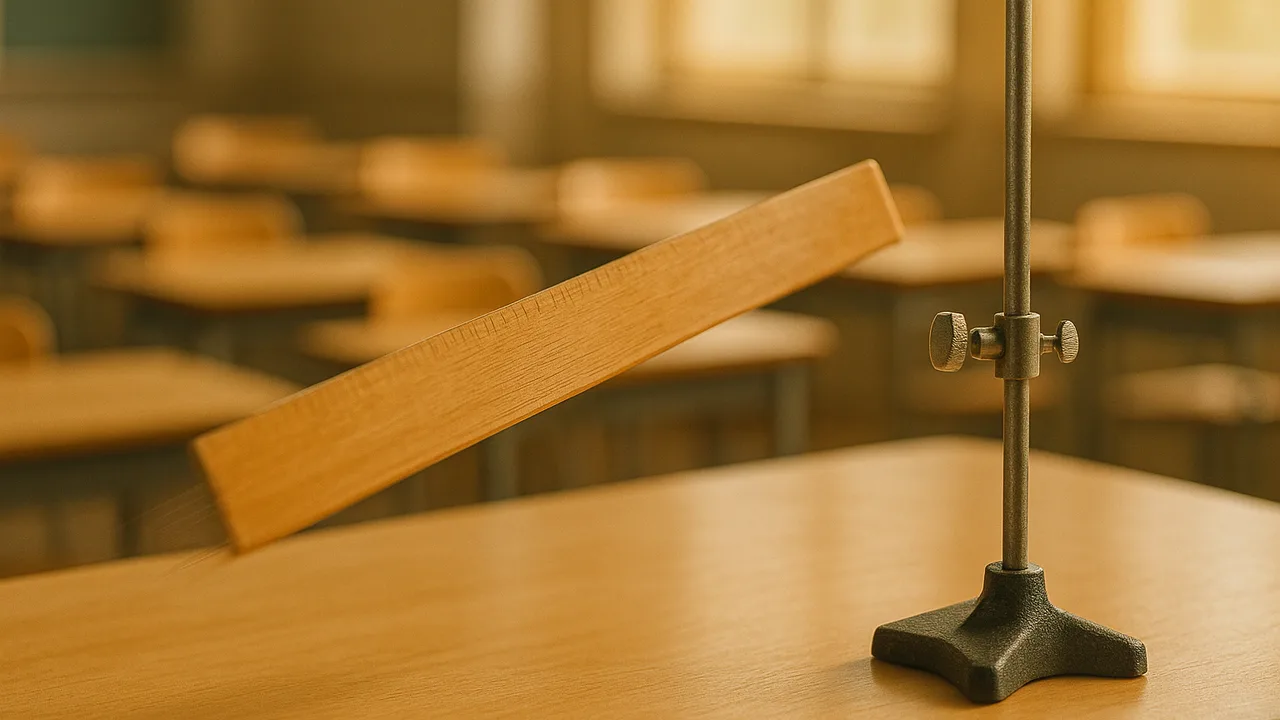
test how fast I react when I see or feel a signal, and describe the path from a sense, to the brain, to an action.
- I can use a model to show and describe the parts that help animals sense and respond to their surroundings, like different types of information (sound, light, odor, temperature), sense receptors, the brain, and actions animals take.
- I can explain how different sense receptors pick up certain types of information from the environment and send it to the brain.
- I can describe how the brain uses information from sense receptors to help animals notice things right away or remember them for later.
- I can show how what animals sense and remember affects how they act or respond to things around them.
Phase 2: Investigate
Warm-Up ~5 min
Do Now. Your teacher will clap without warning. Raise your hand the moment you hear it. Did everyone raise a hand at exactly the same time? What had to happen inside your body before your hand moved?
You will catch a dropped ruler two ways: once when you SEE it drop, and once with your eyes closed when a partner TAPS your shoulder as it drops. Which way will you catch it sooner?
Instruction ~10 min
Explore first. Today you test your own reactions. Do not worry about science words yet. Just test carefully and record honestly.
How to run the ruler drop.
- The Tester holds a ruler at the top end so it hangs straight down.
- The catcher holds a thumb and finger open at the bottom end, not touching.
- The Tester lets go without warning.
- The catcher pinches to catch it.
- The Recorder notes where the fingers caught it: near the bottom, the middle, or the top.
A catch near the bottom means a quick reaction. The ruler did not have time to fall far. We only compare quick, medium, and slow. We do not need exact numbers.
Worked example 1: three tries. Diego tried the eyes-open drop three times. He caught it in the middle, then near the bottom, then in the middle. His Recorder circled “medium” as his usual result. Doing more than one try helps, because one try can be lucky or unlucky.
Now let’s name it. A signal from the world, like a falling ruler, is called a stimulus. Your eyes, ears, nose, tongue, and skin have sense receptors. These are tiny parts that pick up one kind of information, like light, sound, smell, taste, or touch. Nerves carry the message to your brain. The brain decides what to do. Then it sends a message to your muscles. What your body does is called a response.
Worked example 2: the path of a catch. Ava drew four boxes: ruler falls → eyes see it → brain says ‘pinch!’ → fingers pinch. For the tap test, only the second box changed: skin on shoulder feels the tap. Different receptors, same path to the brain.
| Test | Sense used | Try 1 | Try 2 | Try 3 | Usual result (quick, medium, slow) |
|---|---|---|---|---|---|
| Eyes open: see it drop | |||||
| Eyes closed: shoulder tap | |||||
| Eyes closed: partner says “now” |
Guided Exercises ~15 min
Run all three tests. Each person catches three times for each test, then switch roles. Use the arrows to move through these questions.
Independent Practice ~10 min
On your own, draw a model.
Draw four boxes with arrows for the shoulder-tap test. Label the stimulus, the receptors, the brain, and the response. Describe your model in two sentences.
How confident are you that you can I can explain how a sense sends a message to the brain, and the brain tells the body what to do.
Closure ~5 min
Every catch followed the same path: sense, brain, action. Next time we will test touch and smell, and see how memory helps the brain decide.
Exit ticket: in the ruler drop, what was the stimulus, which sense picked it up, and what was your response?
Teacher notes
Materials: one 30 cm ruler per team (plastic or wood); printed data tables; a four-box model organizer.
Setup: Model the drop once with a volunteer. Mark each ruler into three zones with tape (bottom, middle, top) so results stay qualitative. Keep the activity to about 15 minutes so there is time to name the ideas. Do not convert distances to times.
Listen for: “My hand caught it, so my hand decided.” Point out that the brain decides and the hand follows. Watch for students turning it into a contest; frame results as data, not a score. The test partner who says “now” adds a hearing comparison.
Support / stretch: Students with limited hand movement can be the Tester or Recorder, or catch a soft ball rolled off a table instead. Stretch: ask whether practice changes the catch, and how they would test that fairly.