4.06 Shake, Rattle and Weather
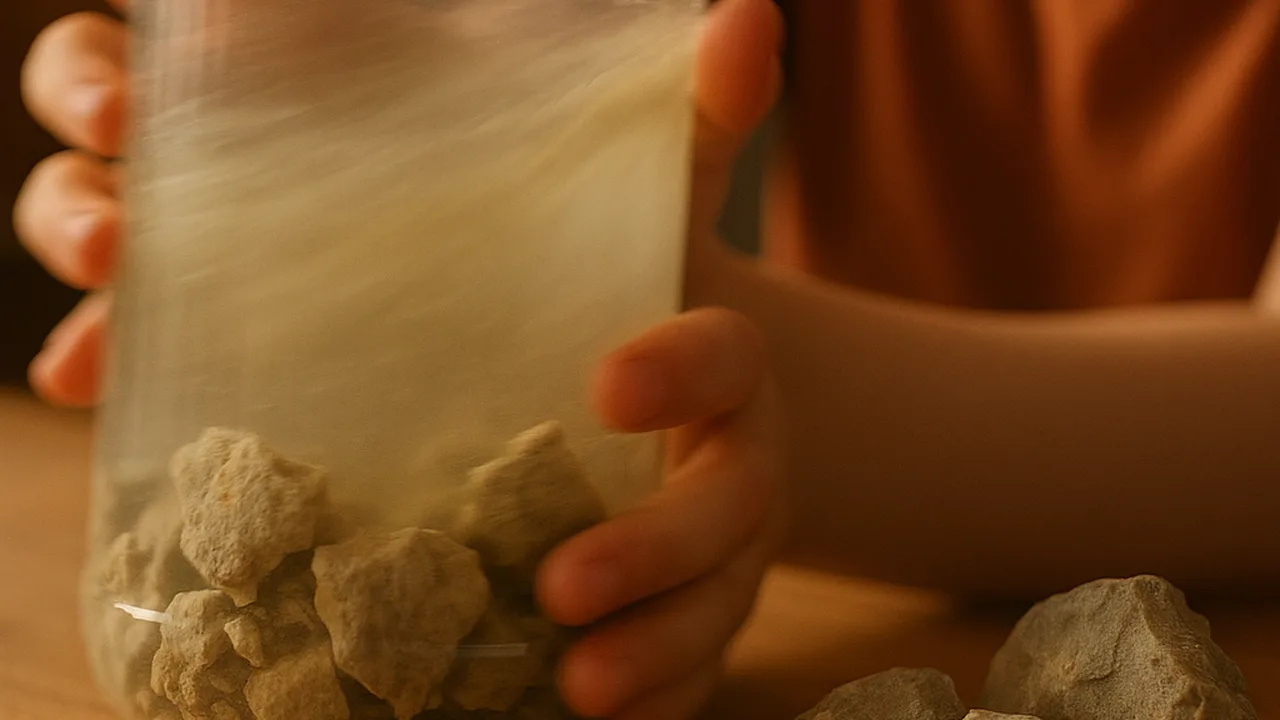
measure how bumping and tumbling break Earth materials into smaller pieces in a fair test.
- I can describe how we will observe or measure the steepness of the slope in our investigation.
- I can describe the type of weathering or erosion we are testing on Earth materials.
- I can describe how we will observe changes in the shape of Earth materials caused by water, ice, wind, or plants.
- I can describe how we will collect data about the speed of air or water flow.
- I can describe how we will count cycles of freezing and thawing, and the number and types of plants in the Earth material.
- I can describe how we will measure the amount or size of soil, sediment, or rocks moved or broken down by weathering or erosion.
- I can describe which variables we will keep the same, such as water flow, air movement, temperature, and the presence of plants.
Phase 2: Investigate
Warm-Up ~5 min
Do Now. Pass around a rough, broken rock and a smooth, round creek pebble. Feel them. How are they different?
How did the creek pebble most likely get so smooth and round?
Instruction ~10 min
Junior engineers, today we shake rocks. We cannot wait years for a creek, so we use a model. Sugar cubes are our “rocks.” A plastic jar with a lid is our “creek.” Shaking is the moving water.
Our variable. We change the number of shakes: 0, 50, 100 and 200. One shake means one quick move up and back down. Everything else stays the same: the same jar, 6 sugar cubes each time and the same shaking strength.
How we measure. After shaking, pour the jar onto dark paper. Count how many cubes are still whole. Then sweep the crumbs into a pile. Measure the pile with a measuring spoon. Look at the corners with a hand lens, too.
Worked example 1: reading data. Malik’s team shakes 50 times. All 6 cubes are whole, but the corners are rounded. There is about a quarter teaspoon of crumbs. At 200 shakes, only 2 cubes are whole. There is about one teaspoon of crumbs. More shaking broke more material.
Worked example 2: a second test. Ava’s team adds three small pebbles to the jar. They keep 100 shakes the same as before. The cubes break down faster. Hard pieces bumping into softer pieces grind them down. That happens in real creeks, too.
Guided Exercises ~15 min
Run each test with 6 fresh sugar cubes. The Tester shakes, the Recorder counts out loud, and everyone checks the results.
| Number of shakes | Whole cubes left (of 6) | Crumbs (teaspoons) | Corners: sharp or rounded? |
|---|---|---|---|
| 0 | |||
| 50 | |||
| 100 | |||
| 200 | |||
| 100 + 3 pebbles |
Independent Practice ~10 min
Think about a real creek.
A rock falls into a fast creek near our client's town. Describe what it might look like after many years. Use the words tumble, rounded and smaller.
Closure ~5 min
Ice and tumbling both broke our “rocks.” Next lesson, we see how wind and moving water carry the broken pieces away. Do not forget to log today’s freeze-and-thaw cycle!
Exit ticket: how did the number of shakes change the cubes? Give one number from your data.
Teacher notes
Materials (per team): a plastic jar with a screw lid (peanut butter jars work), about 30 sugar cubes, 3 small pebbles or aquarium gravel, dark construction paper, a teaspoon and a quarter-teaspoon measure, a hand lens.
Setup: Pre-count bags of 6 cubes. Teams can split shaking among members so no one gets tired, but the strength must stay the same.
Listen for: students who think the cubes “dissolved.” There is no water in the jar; the pieces broke apart by bumping. The sample numbers in the worked examples are for practice only.
Support / stretch: Assign two settings (0 and 200) for teams that need more time. Stretch: graph crumbs vs. number of shakes and describe the pattern.