3.15 Prototype Day
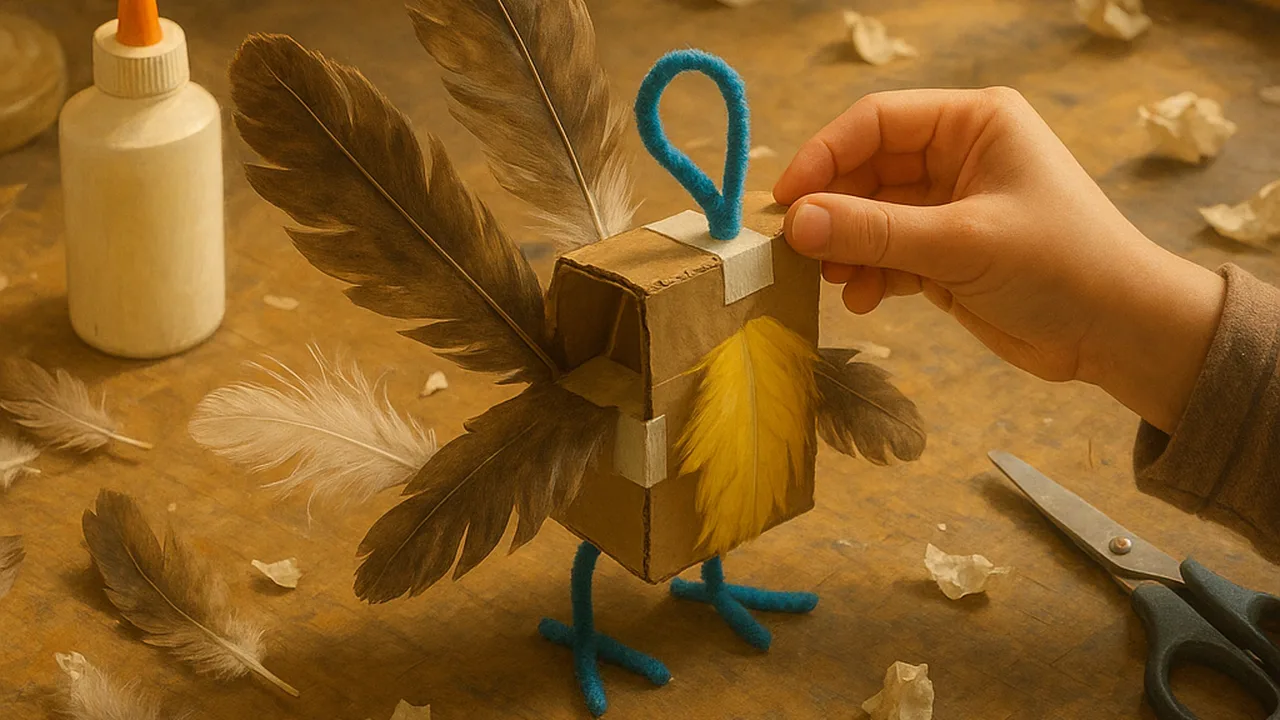
build the first version of our prototype, stay inside our constraints, and record the structure it borrows and how it works.
- I can describe the limits on my design, such as how much it costs, what materials I can use, or how much time I have.
- I can describe the inside and outside parts of certain plants and animals.
- I can explain what those parts do for the plant or animal.
- I can explain the purpose of my investigation, including how I will find problems or failure points in my model or prototype to help make it better.
Phase 4: Build
Warm-Up ~5 min
Do Now. Materials Managers, pick up your team’s bin. Everyone else, read your sketch out loud. Point to the part that copies nature.
Your team wants to use a big wooden board. It will not fit on a desk. What should you do?
Instruction ~10 min
Build day! Today you build version 1. Version 1 is the first try. It will probably have problems, and that is fine. Engineers build fast, then test and fix.
Build rules.
- Follow your sketch, but you may change small things.
- Use only materials from the bin. That keeps it free or cheap.
- Keep it small enough to fit on a desk.
- Record every change in the build log.
Worked example 1: Diego’s Gecko Grip. Diego’s team borrowed a gecko’s toes. Gecko toes have many tiny parts that help them cling to walls. Their problem: a phone slides off a slanted desk. They tried a strip of rubber-like shelf liner, cut into thin lines. Their build log says: “Tried glue stick. Liner fell off. Switched to tape.” That note is useful. It shows a failure point they already fixed.
Worked example 2: Mei’s Seed Glider. Mei’s team borrowed the maple seed’s wing. Their problem: a garden sign that blows over. Wait! Their glider spins and falls slowly. That would not hold a sign up. So they changed the problem. Now it is a paper spinner that carries a few wildflower seeds on the breeze, so a gardener can scatter them gently. When a design and a problem do not match, engineers rethink.
Inside and outside parts. Most of our inventions copy outside structures, like hooks, feathers, or wings. Remember that inside structures matter too. A gecko’s toes work with its leg muscles and its brain. A maple seed’s wing works with the seed inside, which holds the start of a new tree.
| Build log | What we did | What happened | Inside our constraints? (yes/no) |
|---|---|---|---|
| Step 1 | |||
| Step 2 | |||
| Step 3 | |||
| Change we made |
Guided Exercises ~15 min
Build with your team. Stop at each step in the carousel and answer together. The Recorder fills in the build log.
Independent Practice ~10 min
On your own, explain your borrowed part.
Name the plant or animal your team borrowed from. Name one outside structure and one inside structure it has, and tell the job of each.
How confident are you that you can I can build a prototype that stays inside our constraints.
🔎 Mini case study: A Bird-Beak Train ~5 min
Japan has very fast trains called bullet trains. Years ago, one kind of bullet train had a problem. When it zoomed out of a tunnel, it pushed a wall of air ahead of it. That made a loud boom that bothered people nearby.
An engineer named Eiji Nakatsu loved watching birds. He thought about the kingfisher. A kingfisher dives from the air into water to catch fish. Its long, pointed beak lets it slip into the water with very little splash. Air and water both push back on things moving through them.
The team tested many nose shapes. They gave the new train a long nose shaped a lot like a kingfisher’s beak. The train became quieter coming out of tunnels. The engineers also studied owl feathers to make a part on the train’s roof quieter.
Think about it: Which bird structure did the engineers borrow, and what job does it do for the bird?
Closure ~5 min
Version 1 is built! It may wobble, slip, or tear. That is what testing is for. Next lesson is a mid-build checkpoint to make sure every engineer is ready.
Exit ticket: name one constraint your team had to think about today and how you stayed inside it.
Teacher notes
Materials: a materials bin per team (cardboard, pipe cleaners, yarn, felt, paper, craft sticks, shelf liner or rubber bands, tape, glue sticks, safety scissors); build-log copies; project folders.
Setup: About 25 minutes to build, 5 for the case study, 5 for the constraint check. Store prototypes in labeled trays. Teams that finish early start a second version of one part.
Listen for: teams adding materials from outside the bin (constraint), and teams that rebuild everything when one part fails. The gecko example is simplified: gecko toes have tiny hair-like parts, and the shelf liner only stands in for “lots of grip.” Say so if students ask.
Support / stretch: Pre-cut materials for students with fine motor needs. Stretch: ask how the kingfisher team could test nose shapes fairly (same speed, same tunnel, change only the shape).