3.11 Hunter and Hunted: Two Systems Face Off
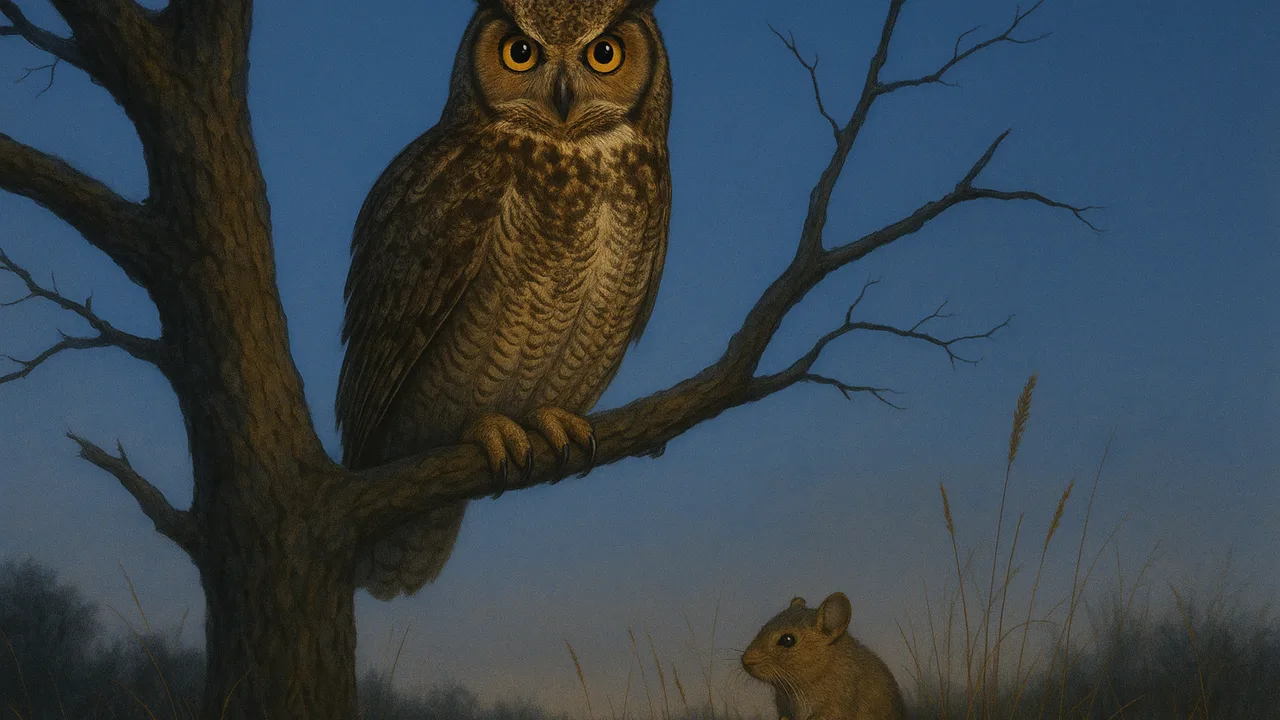
compare how an owl and a mouse use their structures, senses, and brains as systems, and explain how each one’s behavior fits its surroundings.
- I can use evidence to explain how inside and outside parts of plants and animals have special jobs.
- I can explain how these parts help plants and animals survive, grow, act, or make more of their kind.
- I can show how different parts work together as a system to help plants and animals live and grow.
- I can use a model to explain how information from the environment goes through the brain and affects what animals do.
- I can describe how different senses send information to the brain, and how animals use what they sense and remember to make choices, like picking which fruit to eat.
- I can show that sensory input, the brain, and actions are all parts of a system that helps animals behave in ways that fit their surroundings.
- I can use a model to test and show how information from the environment, sense receptors, perception and memory, and animal behavior all work together to affect how animals act.
Phase 3: Make Sense
Warm-Up ~5 min
Do Now. It is night in a forest. An owl sits on a branch. A mouse creeps across the leaves below. Who do you think has the advantage? Write one reason.
The owl cannot see the mouse under a pile of leaves. Can it still catch the mouse?
Instruction ~10 min
Read like a scientist: a night hunter. An owl’s body is a hunting system. Its eyes are very large and face forward. They are shaped like tubes, so they cannot roll around like ours. Instead, an owl turns its whole head, and it can turn it very far around. Its flat, round face gathers sound toward its ears. Soft-edged feathers keep its flight quiet, so it can hear while it flies and the mouse does not hear it. Sharp talons grab, and a hooked beak tears food. Inside, the brain puts all this information together to aim the dive.
Read like a scientist: the hunted. A mouse is a staying-alive system. Its large ears pick up small sounds. Its whiskers feel the way in the dark. Its nose smells seeds and danger. It is small and quick, so it can dart into tiny holes. A mouse that has escaped danger before may freeze or run at the next rustle. Its senses, brain, and memory work together to keep it safe.
Worked example 1: comparing the two models. Malik put the two models side by side.
- Owl: rustling sound → ears and facial disk → brain locates the sound → silent dive with talons out.
- Mouse: a shadow or a faint whoosh → eyes and ears → brain remembers danger → freezes or runs for a hole.
He noticed that both systems have the same four parts. The structures are different because each animal survives in a different way.
Worked example 2: a CER that uses both. Jamal wrote: “Claim: The owl’s quiet feathers and the mouse’s big ears are both structures that help them survive. Evidence: Owl feathers have soft, fringed edges. A mouse’s ears are large for its body. Reasoning: Quiet feathers help the owl surprise prey. Big ears help the mouse hear danger. Each structure sends or hides information, and that changes what the other animal’s brain decides.”
| Owl | Mouse | |
|---|---|---|
| Outside structures and jobs | ||
| Inside structures and jobs | ||
| Main senses | ||
| What the brain decides | ||
| Response |
Guided Exercises ~15 min
Fill in the comparison table with your team. Then work through these questions. Use the arrows to move through them.
Independent Practice ~10 min
On your own, show what you know.
Draw one model that shows BOTH animals: the owl's response becomes information for the mouse. Explain your model in three sentences.
How confident are you that you can I can explain how structures, senses, and the brain work as a system to help an animal survive.
Closure ~5 min
Hunters and the hunted both have amazing systems. Engineers notice systems like these and borrow ideas from them. Next time we brainstorm our own nature-inspired inventions.
Exit ticket: name one owl structure and one mouse structure. Explain how each one helps that animal survive.
Teacher notes
Materials: photos of a great horned owl or barred owl and a white-footed or deer mouse; the comparison table; optional owl call audio from a trusted nature source.
Setup: Partner-read the two “read like a scientist” passages, one partner per animal, then teach each other. Use the final CER as a formative check on 4-LS1-1 and 4-LS1-2 before part 2 of the unit.
Listen for: “The owl is mean” or “the mouse is smart.” Steer away from feelings toward structures and responses. Avoid specific numbers for how far an owl turns its head; “very far around” is enough. Uneven ears are true of barn owls and some other owls, not all owls.
Support / stretch: Give a partly filled comparison table. Stretch: compare a bat, which hunts insects using echoes of its own calls, with the owl.