3.10 Modeling the Message: Senses, Brain, and Action
build and use a model to explain how information from the environment travels through sense receptors and the brain to cause an animal’s response.
- I can use a model to show and describe the parts that help animals sense and respond to their surroundings, like different types of information (sound, light, odor, temperature), sense receptors, the brain, and actions animals take.
- I can use a model to explain how information from the environment goes through the brain and affects what animals do.
- I can describe how different senses send information to the brain, and how animals use what they sense and remember to make choices, like picking which fruit to eat.
- I can show that sensory input, the brain, and actions are all parts of a system that helps animals behave in ways that fit their surroundings.
- I can use a model to test and show how information from the environment, sense receptors, perception and memory, and animal behavior all work together to affect how animals act.
Phase 3: Make Sense
Warm-Up ~5 min
Do Now. A squirrel is eating an acorn. A dog barks. The squirrel dashes up a tree. In your notebook, list everything that had to happen between the bark and the dash.
In the squirrel story, which part is the RESPONSE?
Instruction ~10 min
Read like a scientist: how animals use information. Every animal is surrounded by information: light, sound, smells, tastes, touch, and heat or cold. Animals have sense receptors in their eyes, ears, nose, tongue, and skin. Each kind of receptor picks up one kind of information. Nerves carry the message to the brain.
The brain does the thinking. It figures out what the message means. It may compare it to a memory. Then it chooses an action and sends a message to the muscles. Sometimes the action is fast, like a jump. Sometimes the brain stores the information to use later, like remembering where food was found.
Scientists use models to show how this works. A model can be a drawing, a diagram, or even a human chain acting it out. Our model has five parts: information → receptors → brain (with memory) → response.
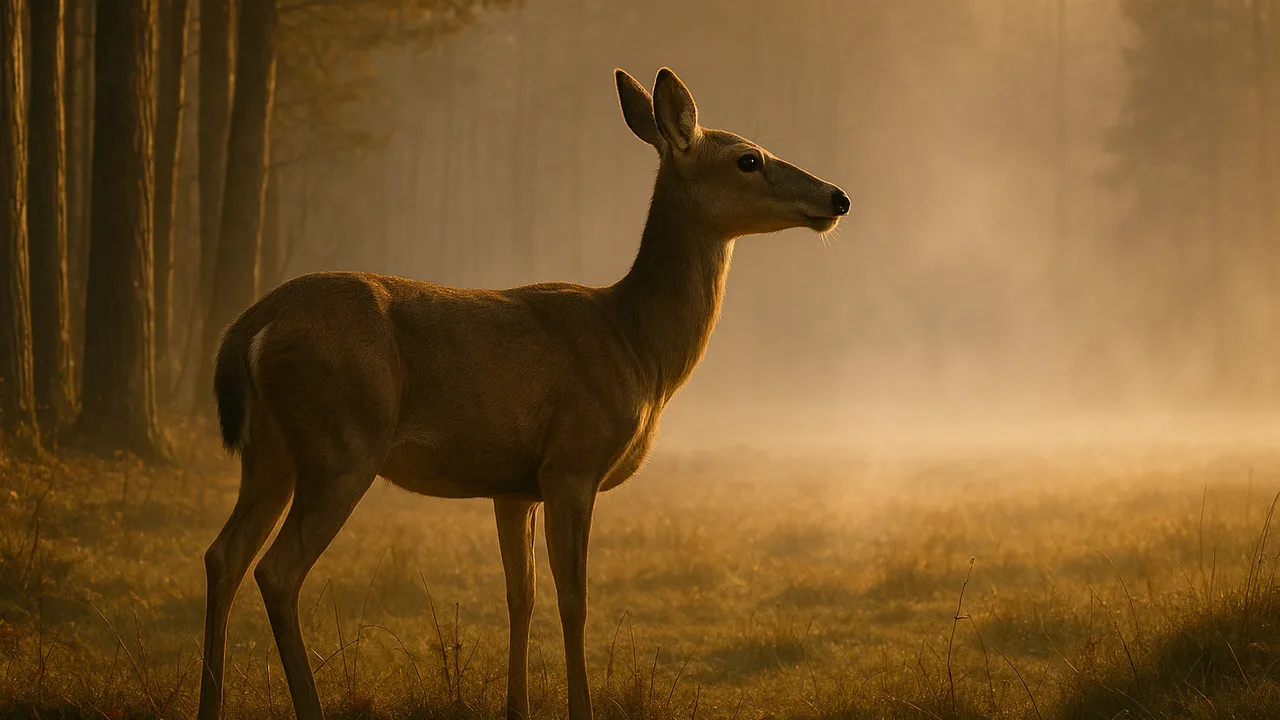
Worked example 1: a model of a white-tailed deer. A deer is eating in a grassy field. A twig snaps.
- Information: the sound of the snap.
- Receptors: the deer’s large ears, which can turn toward a sound.
- Brain and memory: the brain notices the sound and may remember that snapping twigs can mean danger.
- Response: the deer raises its white tail and runs.
Worked example 2: testing the model by changing one part. Ava asked, “What if the deer had a memory that this sound is safe?” Deer that live near busy yards often get used to everyday sounds, like car doors. In Ava’s model, the memory box changed, so the response changed: the deer kept eating. A good model lets you change one part and predict what happens next.
CER starters for a model. Claim: “The ____ responds to ____ because ____.” Evidence: “In our model, the ____ picks up ____ and the brain ____.” Reasoning: “The parts work as a system because ____.”
| Model part | Deer and twig | My animal: ____ |
|---|---|---|
| Information | ||
| Receptors | ||
| Brain and memory | ||
| Response |
Guided Exercises ~15 min
Work with your team. First act out the human-chain model, then work through the questions. Use the arrows to move through them.
Independent Practice ~10 min
On your own, test a model.
Think about your ruler-drop test. Draw the model for the eyes-open catch. Then change ONE part, like closing your eyes and using a tap. Which box changed, and which stayed the same?
How confident are you that you can I can use a model to show how senses, the brain, and actions work together.
Closure ~5 min
Your models show that senses, the brain, and actions are one system. Next time we will compare a night hunter and its prey to see how two systems face off.
Exit ticket: pick any animal. Write the four boxes of its model for one action. Then explain how a memory could change its response.
Teacher notes
Materials: sticky notes for the human-chain model; blank paper or a model organizer; markers; photos of a white-tailed deer and a squirrel.
Setup: Run the human chain for about 5 minutes. Keep the brain model at the grade-4 level: receptors, nerves, brain, action. The assessment boundary excludes how the brain works on the inside and the mechanisms of sense receptors. Collect owl models as a formative check on 4-LS1-2.
Listen for: the idea that the eyes or ears decide on their own; skipping the brain box; and models with no arrows. Ask: “Where does the message go next?”
Support / stretch: Provide a pre-drawn four-box organizer with picture icons. Stretch: add a second sense to one model, such as a deer that hears a sound AND smells a fox, and explain how the brain combines them.