4.11 Reading the Rocks
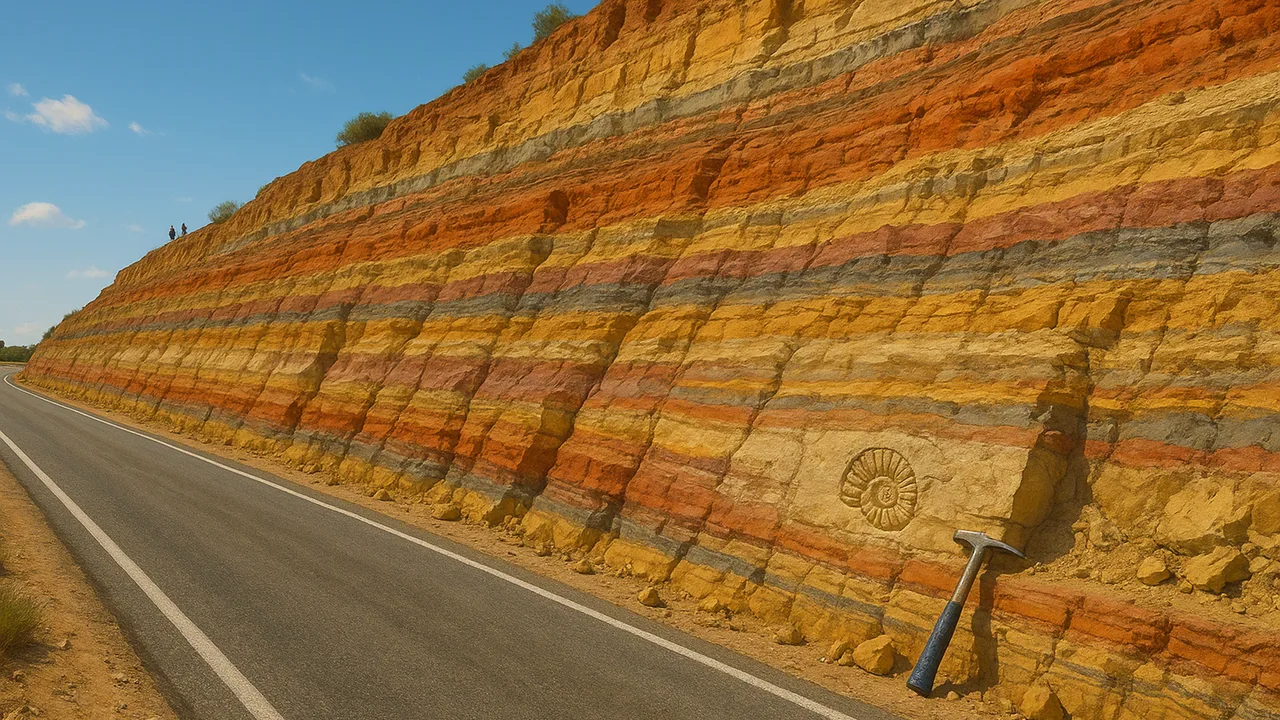
use the order of rock layers and the fossils in them to explain how a place changed over time.
- I can identify patterns in rock layers found in an area, like how some layers have different types of fossils.
- I can tell the order of rock layers, such as which layer is above or below another.
- I can recognize what kinds of fossils are found in certain rock layers.
- I can use evidence from rock layers and fossils to explain how a landscape changed over time.
- I can describe how the order of rock layers and the fossils in them show what the landscape was like in the past and how it changed.
- I can explain how unusual patterns in rock layers, like canyons or rivers, show that Earth forces changed the landscape.
Phase 3: Make Sense
Warm-Up ~5 min
Do Now. Look at a stack of books on a desk. Which book was put down first? How do you know?
In a stack of books, which book was probably put there first? Explain your thinking. How is that like your core sample?
Instruction ~10 min
Rocks keep a record. Sediment settles in layers, just like in our shake jar. Over a very long time, layers can press together and harden into rock. New layers form on top of old ones. So in most rock layers, the bottom layer is the oldest, and the top layer is the youngest. It works like your stack of books.
Fossils tell us what the place was like. Each layer may hold fossils of the living things from that time. Sea shells mean the place was under water. Leaves and stems mean land plants grew there. Different layers often hold different kinds of fossils. That pattern shows the place changed.
Worked example 1: a trilobite fossil. Trilobites were ancient sea animals whose fossils are found in many places. A trilobite was a small sea animal with a hard shell. Its fossils are found in some rocks that are now on dry land. That is evidence. It tells us that the place where that rock formed was once under a sea. The landscape has changed a lot since then!
Worked example 2: coal. In many regions, some rock layers underground hold coal. Coal formed from plants that grew in ancient swamps. The plants died and were buried under layers of sediment. Over a very long time, they turned into coal. So a coal layer tells us the place was once swampy land. A layer of sea fossils below it tells us it was a sea even earlier.
Putting it in order. Read layers from the bottom up, like a story from the first page. Bottom: sea. Middle: swamp. Top: dry land with soil. The story is: sea → swamp → land.
Guided Exercises ~15 min
Study this rock-layer model with your team. Layer 1 is on the bottom.
| Layer | What it holds | What the place was like |
|---|---|---|
| 4 (top) | Soil with plant roots | |
| 3 | Sandstone with river pebbles | |
| 2 | Coal, with fossil leaves and stems | |
| 1 (bottom) | Rock with sea-shell and trilobite fossils |
Then write a CER with your team. Claim: “This place changed from ___ to ___.” Evidence: “In layer ___, we see ___.” Reasoning: “This shows ___ because ___.”
Independent Practice ~10 min
Go back to your core sample from 4.08.
Use the order of the layers and the fossils in your core to tell its story from bottom to top. What was the place like first, and what was it like last?
Closure ~5 min
Rock layers are like pages in a history book. Next lesson, we see what happens when a river cuts through the pages.
Exit ticket: what is one clue from rock layers that tells us a place has changed? Explain what the clue means.
Teacher notes
Materials: the printed rock-layer diagram, students’ 4.08 core drawings, a trilobite picture or replica, a piece of coal if you have one, CER organizers.
Listen for: “the top layer is oldest” or “fossils are just bones.” Fossils include shells, leaves and footprints. Also listen for the idea that coal and trilobites come from the same time. Point out they are in different layers. Keep to the order of layers; exact ages in years are not needed at grade 4.
Support / stretch: Provide a partly filled CER. Stretch: ask what a layer of river pebbles (layer 3) adds to the story.