4.21 Light Rain, Heavy Rain: Comparing Our Solutions
test my solutions in different situations and use data to compare how well each one meets the criteria and constraints.
- I can test each solution in different situations and collect data to see how well it meets the criteria and constraints.
- I can use the data I collected to compare how well each solution meets the criteria and constraints of the problem.
- I can compare my solutions to each other based on how well they meet the criteria and constraints.
Phase 4: Build
Warm-Up ~5 min
Do Now. A raincoat keeps you dry in a drizzle. Does it work as well in a thunderstorm? Why do engineers test a design more than one way?
A solution works well in a light rain. What will happen in a heavy rain?
Instruction ~10 min
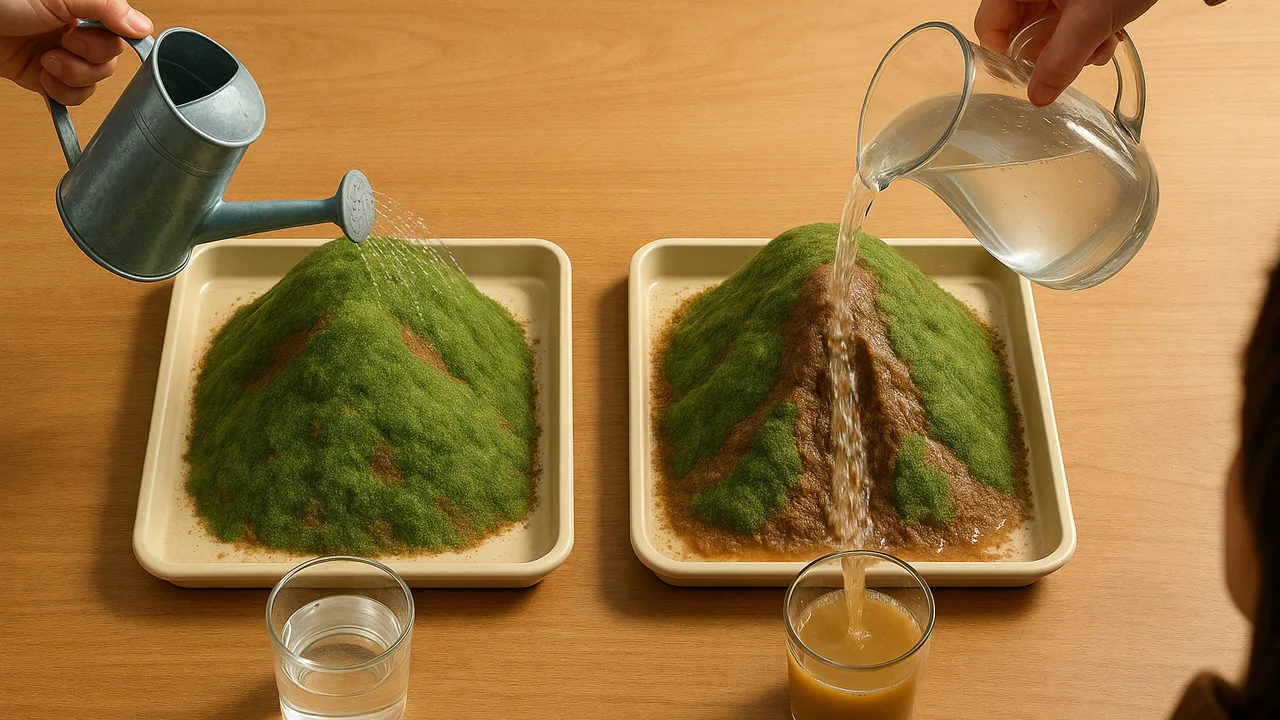
Junior engineers, today is a fair-test showdown. Each team tests two revised solutions in two situations: a light rain (half a cup) and a heavy rain (one and a half cups). Everything else stays the same: slope, soil and pour height.
A decision matrix. After testing, we score each solution against each criterion and constraint. A score of 3 means it meets it well. A 1 means it does not. We add the scores to compare.
Worked example 1: one solution, two storms. Mei’s plants-only hill scores a mud rating of 1 in light rain. In heavy rain it scores 4. So plants alone do well in small storms but struggle in big ones.
Worked example 2: comparing totals. Diego’s team fills in the matrix:
| Criterion or constraint | Plants only | Plants + wall |
|---|---|---|
| Soil stays on hill (heavy rain) | 1 | 3 |
| Road stays dry | 2 | 3 |
| Cost (cheaper = higher score) | 3 | 2 |
| Total | 6 | 8 |
Plants plus a wall scores higher overall, even though it costs more. The team can now explain its choice with numbers.
Guided Exercises ~15 min
Test both solutions in both rains. Then score them in a decision matrix.
| Solution | Light rain mud (1–5) | Heavy rain mud (1–5) | Road dry in heavy rain? | Cost (points) |
|---|---|---|---|---|
| Solution 1: | ||||
| Solution 2: |
| Criterion or constraint | Solution 1 score (1–3) | Solution 2 score (1–3) |
|---|---|---|
| Soil stays on hill | ||
| Road stays dry | ||
| Stays inside budget | ||
| Total |
Independent Practice ~10 min
Explain a trade-off.
Describe one trade-off between your two solutions. For example: “Solution 2 costs more, but it ___.” Which would you pick for the steepest hill in town, and why?
Closure ~5 min
The Build phase is done! You built, critiqued, revised and compared. Next comes Prove It: the big storm test and the council presentation. Next: your 3DX field trip.
How confident are you that you can I can use data to compare how well each solution meets the criteria and constraints.
Exit ticket: which solution will your team bring to the big storm test? Give one reason from your data.
Teacher notes
Materials (per team): pan model hill, revised prototypes, measuring cups, watering cup with holes, a clear cup for runoff samples, paper towels.
Setup: Reset the soil between tests. Use 2 books for the slope in all tests. Post the matrix scoring guide (3 = meets well, 2 = partly, 1 = not yet).
Listen for: teams that change two things at once, and teams that pick a winner without using their numbers.
Support / stretch: Pre-fill the criterion rows for teams that need it. Stretch: add a third situation, such as a steeper slope (3 books).