4.15 The Station Design Brief
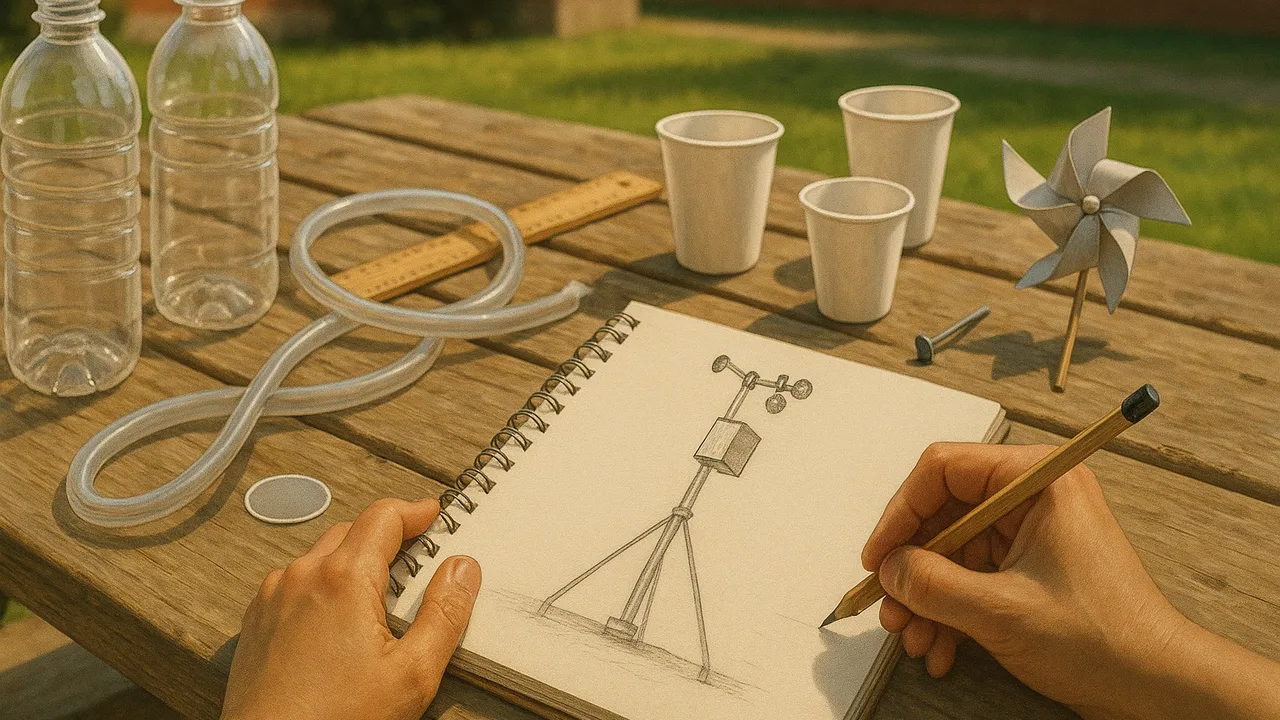
turn the green team’s request into criteria, constraints and a labeled model of the problem our weather and wildlife station must solve.
- I can develop a model that shows the problem I am trying to solve, including its criteria and constraints.
- I can identify and show the parts of my proposed solution, including the inputs and outputs in my model.
- I can explain how each part of my proposed solution affects how it works.
- I can describe how my proposed solution connects to the problem I am trying to solve.
- I can explain how each part of my proposed solution relates to the problem and how the data from my model shows how well the solution works.
Phase 4: Build
Warm-Up ~5 min
Do Now. Read the request from our client, the school green team. “We want a schoolyard station that does two jobs. First, it should measure the weather so classes can spot patterns and make forecasts. Second, it should help birds, insects and other wildlife find food, water and shelter on our grounds. Can your class design it?”
Which part of the station do you think will be hardest to get right?
Instruction ~10 min
Station engineers, welcome to the Build phase. In Part 1 you learned how air masses bring changes in weather, how climate depends on sunlight and the ocean, and how living things depend on resources. Now you turn those ideas into a real station for our school.
Step 1: model the problem. Engineers often start with a system model of the problem itself. It shows the inputs, the outputs, the parts and the limits. A model of the problem keeps everyone on the team solving the same thing.
| Criteria (must do) | Constraints (limits) |
|---|---|
| Rain gauge reads within 2 mm of a reference gauge | Made from recycled or low-cost materials |
| Wind tools show direction and a relative speed | Survives outdoors for at least two weeks |
| Pressure model shows rising or falling pressure | Built in about six class periods |
| Habitat plan meets food, water and shelter needs of at least three species | Uses only safe, native or school-approved plants and no pesticides |
Worked example 1: inputs and outputs. Jamal’s team draws the station as a box. Inputs entering the box are rain, wind, sunlight and air pressure. Outputs are readings in a data log and a three-day forecast. For the habitat half, inputs are food, water, shelter and space. The output is a count of the animals that use the habitat.
Worked example 2: tying parts to the problem. Mei asks, “Why does a forecast need a barometer?” Her team points to their Part 1 data. Falling air pressure often came before a cold front and rain. So the barometer model is the part that warns of changing weather. Every part on the model should have a reason like that.
Guided Exercises ~15 min
Work in your team: Materials Manager, Recorder, Tester and Reporter. Build a model of the problem before you design any solution.
| Station model part | Our team’s answer |
|---|---|
| Inputs (weather half) | |
| Inputs (habitat half) | |
| Outputs | |
| Two criteria we will measure | |
| Two constraints | |
| System boundary (where the station ends) |
Independent Practice ~10 min
Explain your model like an engineer reporting to the green team.
Pick two parts of your station. For each, explain how it connects to the problem the green team asked you to solve.
Which constraint will be hardest to meet? Explain how it might change the materials or design you choose.
Closure ~5 min
Your model of the problem is the map for the whole build. Next class you build and test three different rain gauges.
Exit ticket: name one input, one output and one constraint in your station model, and explain why each belongs there.
Teacher notes
Materials: the green team request (read aloud or project it), model-of-the-problem template, chart paper, markers, Part 1 weather data posted on the wall.
Setup: If possible, invite a green team member or advisor to deliver the request in person. Assign rotating roles: Materials Manager, Recorder, Tester, Reporter. Collect a recycled-materials bin this week.
Listen for: teams drawing only the finished product instead of the problem; criteria and constraints mixed up; “the barometer measures wind.”
Support / stretch: Give a partly filled model with inputs already listed. Stretch: ask teams to add a feedback arrow showing how station data could change the habitat plan.