4.14 Matter Cycles, Energy Flows: Ideas for Our Station
use an ecosystem model to show that matter cycles and energy flows, and brainstorm station designs grounded in all our science.
- I can use my model to describe how energy and atoms move when organisms consume other organisms.
- I can use my model to explain how matter and energy are transferred between living and nonliving parts at every level in the ecosystem.
- I can use my model to track how atoms cycle repeatedly between living and nonliving parts of the ecosystem.
- I can use my model to show that matter and energy are conserved as they move within and outside the ecosystem.
- I can describe how energy enters and leaves the ecosystem in my model.
- I can show how matter and energy move among producers, consumers, and decomposers in my model.
- I can explain how organisms use matter from nonliving parts of the ecosystem and how matter moves between living and nonliving parts.
Phase 3: Make Sense
Warm-Up ~5 min
Do Now. Check your rot bags through the plastic. Do not open them. What changed since you set them up? Which bag changed more?
If we weighed a sealed rot bag at the start and after three weeks, what would we find?
Instruction ~10 min
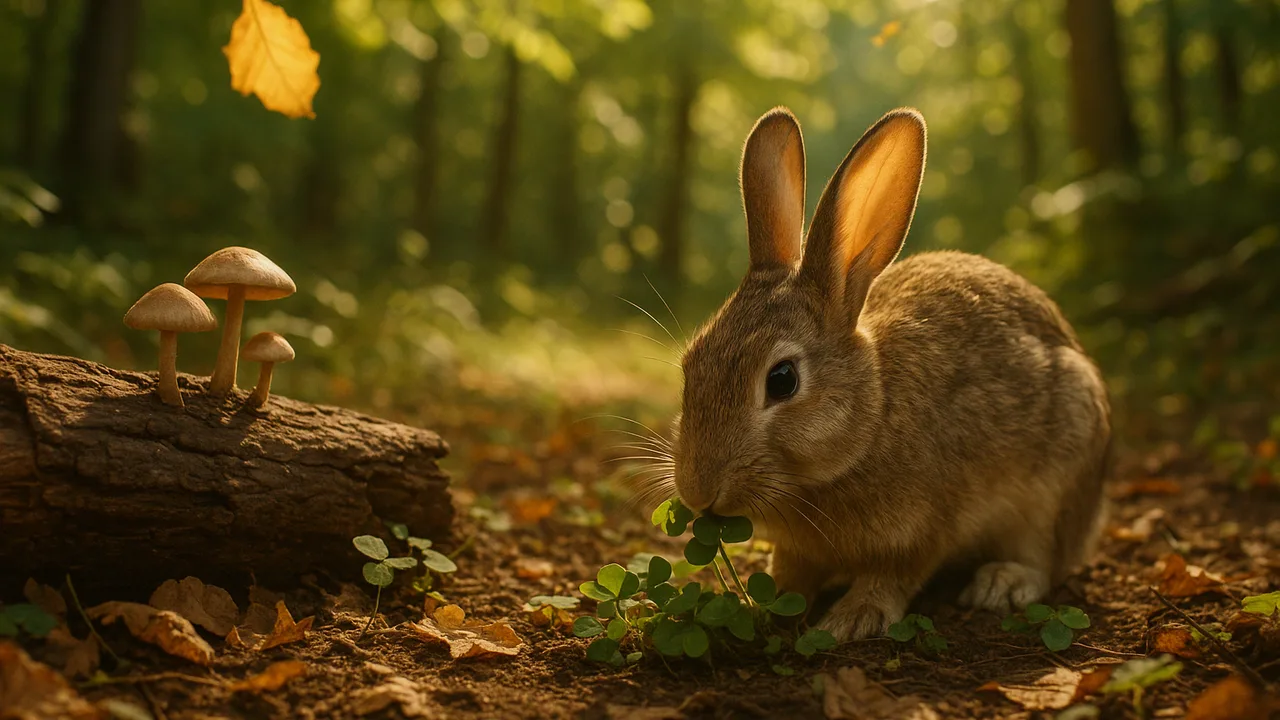
Reading: matter cycles, energy flows. When a rabbit eats clover, the atoms in the clover become part of the rabbit or are released as wastes and breath. When a hawk eats the rabbit, those atoms move again. When any organism dies, decomposers break it down and return its atoms to the soil and air. Plants take them up again. The same atoms cycle over and over. Energy is different. It enters the ecosystem as sunlight, moves from food to eater, and at every step some leaves as thermal energy. Energy flows through; it does not cycle back.
Worked example 1: following one atom. Mei followed a carbon atom. It was in carbon dioxide in the air. Clover took it in and built it into a leaf. A rabbit ate the leaf. The rabbit breathed out some carbon, and some became part of its muscle. When the rabbit died, fungi and bacteria broke it down and released the carbon back to the air. A tree took it in the next spring. The atom was never lost.
Worked example 2: following energy. Diego followed energy. Sunlight energy reached the clover, which stored some in its food. The rabbit got some of that energy by eating, but used most of it to move and keep warm, and that energy left as thermal energy. Only a small part reached the hawk. That is why there are fewer hawks than rabbits. Within our boundary, energy keeps arriving as sunlight and leaving as thermal energy.
Ideate: brainstorm the station. Now use everything from this phase. In teams, list as many station ideas as you can in 8 minutes, without judging. Each idea must connect to a science idea. Examples: a rain gauge and barometer log that warns of falling pressure; a shaded water dish refilled in dry weeks; a native flower bed for pollinators; a brush pile or log for decomposers and shelter. Then star your team’s top three.
Guided Exercises ~15 min
Use your 4.09 food web, your rot bags and the reading.
Independent Practice ~10 min
Ideate. Use this frame for each idea: “Our station could ___ because ___ (science idea).”
Write at least three station ideas, each linked to a different science idea from this unit: air masses and fronts, uneven heating, resources and populations, interactions, or matter and energy.
Use your model to trace one atom and one bit of energy through our schoolyard. Explain where each ends up.
Closure ~5 min
We can explain storms, climate, populations, interactions and the flow of matter and energy. Next phase, we build and test our station.
Exit ticket: explain the difference between how matter and energy move in an ecosystem. Then name your team's favorite station idea and the science behind it.
Teacher notes
Materials: sealed rot bags (do not open), a scale for an optional before-and-after mass check, students’ 4.09 food webs, two marker colors for matter and energy arrows, chart paper for the brainstorm.
Setup: if you weighed bags on day 0, weigh them sealed today. Dispose of all bags sealed after class.
Listen for: “energy is recycled” and “matter turns into energy.” Keep to conservation and flow; MS-LS2-3 excludes chemical reactions, so avoid equations. In the brainstorm, protect quantity over quality; teams choose designs in Build.
Support / stretch: give an atom-path card set to sequence. Stretch: design a station feature that measures a matter or energy flow.