3.09 Water on the Move, and What Our Guide Must Do
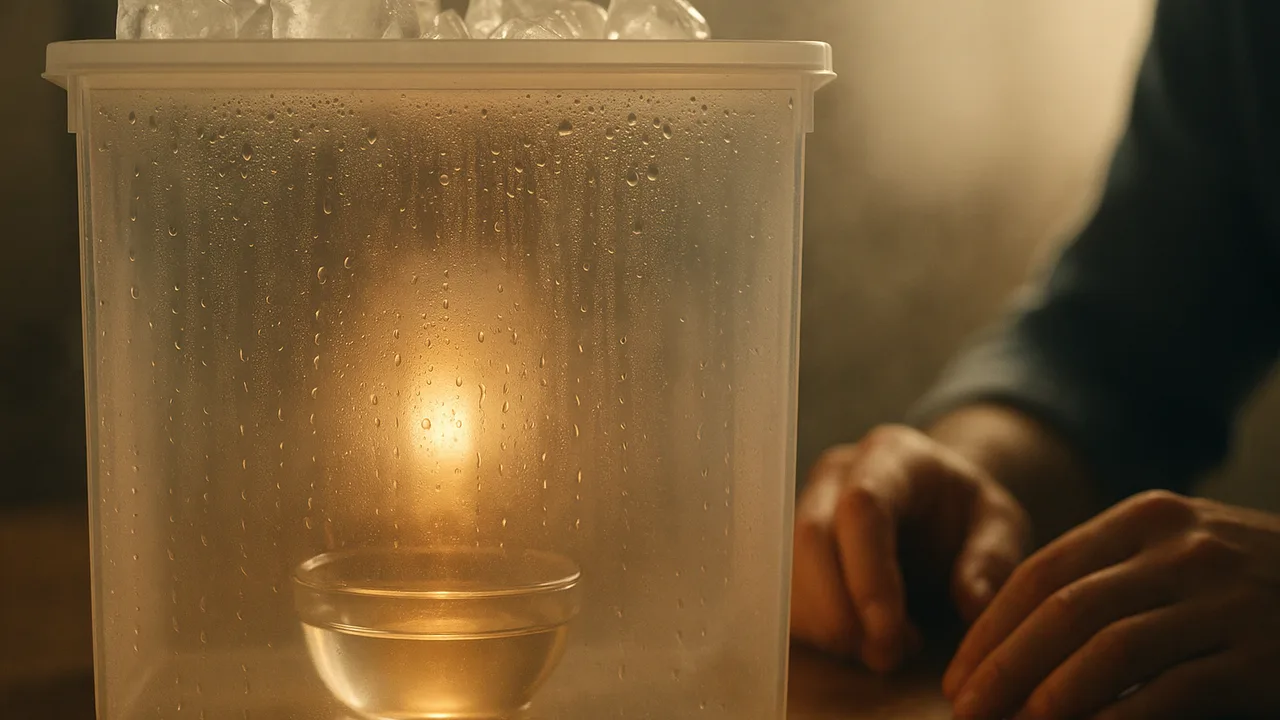
model how sunlight and gravity move water through the water cycle, then draft the criteria and constraints for our trail guide.
- I can identify and show the parts of the water cycle in my model, including water in different forms (liquid, solid, vapor), sunlight, gravity, the atmosphere, landforms, and living things.
- I can explain how sunlight warms water, causing it to evaporate into the atmosphere.
- I can describe how water vapor forms clouds, which cool and condense to make precipitation that falls to Earth.
- I can show how gravity moves water downhill, how water can stay on land or in living things, and how it is released when organisms decompose.
- I can define the criteria for a solution that meet the needs of the people or groups affected by the problem.
- I can explain who the solution is meant to help and use criteria to compare different solutions, including using numbers when needed.
Phase 2: Investigate
Warm-Up ~5 min
Do Now. In the stream table, water carved gullies. But where did the rain come from in the first place, and why did it flow downhill?
A clear tub has warm water at one end, a clay hill at the other and plastic wrap on top with ice over the hill. A lamp shines on the water. What happens?
Instruction ~10 min
Trail geologists, part 1: a water cycle in a box. Build the model described in the warm-up. Add a small sprig of a real plant on the hill. Observe every 5 minutes for 20 minutes.
Worked example 1: tracing energy and force. Mei notices drops only form on the wrap above the warm water and the ice. She explains: energy from the lamp turns liquid water into vapor. Cooling turns the vapor back into liquid. Gravity, not the lamp, makes drops fall and run downhill. Two drivers: sunlight and gravity.
Part 2: what must our guide do? Engineers write criteria, the things a solution must do, and constraints, the limits it must work within. Good criteria can be measured.
Worked example 2: a measurable criterion. Malik first writes, “The guide should be good.” Too vague. He revises: “The guide explains at least five trail stops, and a visitor can read each stop in under two minutes.” Now the team can test it. A constraint he adds: “The printed guide fits on one folded sheet, because the park pays for printing.”
Also a constraint: the environment. The guide must not lead visitors off the trail, onto unstable slopes or into the creek, where they could speed erosion or get hurt.
Guided Exercises ~15 min
Part 1. Record observations every 5 minutes.
| Time (min) | Under the wrap (drops?) | On the hill | On the plant | Driver: sunlight or gravity? |
|---|---|---|---|---|
| 5 | ||||
| 10 | ||||
| 15 | ||||
| 20 |
Part 2. Draft your team’s criteria and constraints.
| Criteria: the guide must… | How we could measure it | Constraints: the guide is limited by… | Why |
|---|---|---|---|
Independent Practice ~10 min
Connect water to rock.
Draw the water cycle box. Label the water in its different forms, the energy source, gravity, the hill (landform) and the plant. Then add one arrow showing how the moving water could carry sediment.
Closure ~5 min
Sunlight lifts water, and gravity brings it down to shape the land. Next: your 3DX field trip, The Rock Cycle Workshop. Then the Make Sense phase begins.
How confident are you that you can I can explain how sunlight and gravity move water, and name criteria and constraints for our guide.
Exit ticket: name the two drivers of the water cycle and the job each one does.
Teacher notes
Materials (per team): a clear plastic shoebox or tub, a fist-sized clay hill, warm tap water, plastic wrap, a zip bag of ice, a desk lamp (an incandescent or warm LED bulb works best), a small plant sprig, a timer.
Timing (50 min): Do Now 3, build 7, observe (with Part 2 running at the same time) 20, guided questions 10, independent and exit 10. Start Part 2 while the box warms.
Listen for: “The Sun pulls rain down.” Separate the two drivers. Keep MS-ESS2-4 qualitative; no energy calculations. Save the class criteria and constraints chart for 3.14 and the Build phase.
Support / stretch: Provide a criteria starter bank (accuracy, reading time, number of stops, accessibility). Stretch: write a criterion that uses a number and explain how you would test it.