3.02 Mapping the Park as a System: Teams, Roles and Needs
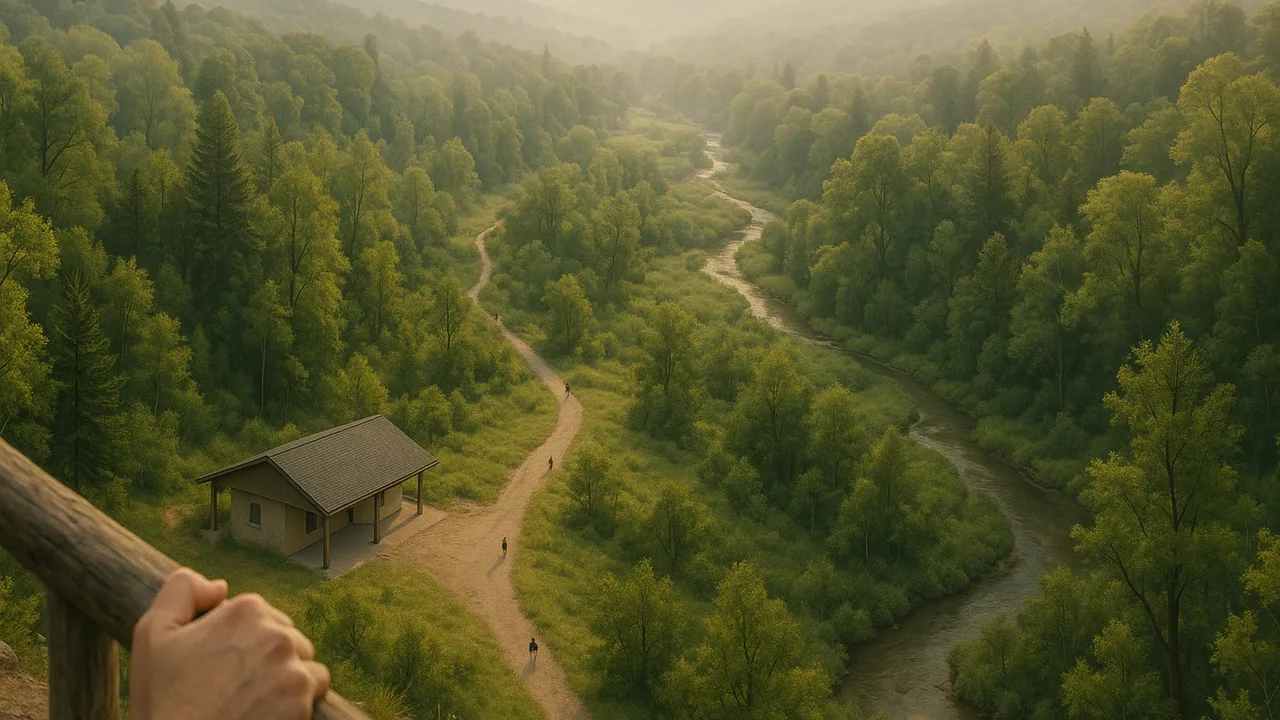
The Deep-Time Trail Guide
How did the rocks and landforms around us form and change, and how can we tell their story to park visitors?
The mystery: Ocean fossils lie in rocks high on mountain ridges, hundreds of miles from any sea. Matching fossils and rocks appear on continents that are now an ocean apart.
identify the parts of the park system our guide must work in, explain whose needs it must meet, and get ready to work in a team.
- I can describe a problem that could be solved by creating an object, tool, process, or system.
- I can identify the system where the problem exists, including its main parts, how they relate, and what is inside or outside the system.
- I can explain who needs the problem solved, what needs must be met, and which scientific issues are important.
- I can analyze how possible solutions might affect people and the environment, and decide which issues and parts of the system matter most.
Phase 1: Spark
Warm-Up ~5 min
Do Now. Read the Wonder Board from last lesson. Sort each question into one of three piles: rocks, moving land or water.
“Did the continents really used to be joined?” belongs in which pile?
Instruction ~10 min
Trail geologists, a guide does not live alone. It works inside a system: a group of parts that affect each other. Before engineers design anything, they map the system so they do not miss an important part.
Parts of our park system. The rocks and landforms (outcrops, ridges, a creek valley). The trail and its stops. The visitors, from young children to older adults. The park staff who maintain the trail. Plants and animals that live along it. Weather, which wears down signs and paper.
Inside or outside the system? We draw a boundary. The trail, the rocks and the visitors are inside. A museum in another city is outside. Choosing a boundary keeps our design focused.
Worked example 1: who needs what. Diego makes a two-column table. Visitors need an explanation they can read quickly while standing on a trail. Staff need a guide that is accurate, cheap to print and easy to update. Wildlife needs visitors to stay on the trail.
Worked example 2: effects on people and the environment. Priya imagines a sign that says, “Find more fossils on the slope below!” It would excite visitors, but it would send them off the trail. That tramples plants and loosens soil, which washes away in the next rain. Many parks also do not allow visitors to remove rocks or fossils. So a good guide teaches visitors to look, photograph and leave the rocks in place.
Team roles. Teams of four rotate roles each investigation: Materials Manager (gathers and returns supplies), Recorder (keeps the data table), Tester (runs each trial the same way) and Reporter (shares results with the class).
Guided Exercises ~15 min
With your new team, sketch the park system on chart paper. Then fill in this table in your notebook.
| Who or what | Inside or outside the system? | What it needs from the guide | How the guide could affect it |
|---|---|---|---|
| Visitors | |||
| Park staff | |||
| Rocks and fossils | |||
| Plants and animals by the trail | |||
| Weather |
Independent Practice ~10 min
Write your own team agreement and one key question.
Write two team agreements, for example how you will share materials or settle a disagreement.
Which Wonder Board question matters MOST to visitors? Explain why, using the needs in your table.
Closure ~5 min
Our system map shows who the guide must serve. Next: your 3DX field trip, Fossils on the Ridge. Then the Investigate phase begins with real rock samples.
How confident are you that you can I can describe the system our trail guide must work in.
Exit ticket: name two parts inside the park system and one possible negative effect our guide must avoid.
Teacher notes
Materials: chart paper, markers, role cards (Materials Manager, Recorder, Tester, Reporter), the Wonder Board.
Timing (50 min): Do Now 6, mini-lecture 10, system sketch and table 20, independent 8, exit ticket 6.
Listen for: teams that leave out living things or weather. Ask, “What else does the guide touch?” Also listen for the idea that fossil collecting is always fine; parks set their own rules, so frame it as “check the park’s rules and leave what you find.”
Support / stretch: Provide a partly filled table. Stretch: add a column for how each part could change the guide over time.