4.01 Sunny Morning, Stormy Afternoon
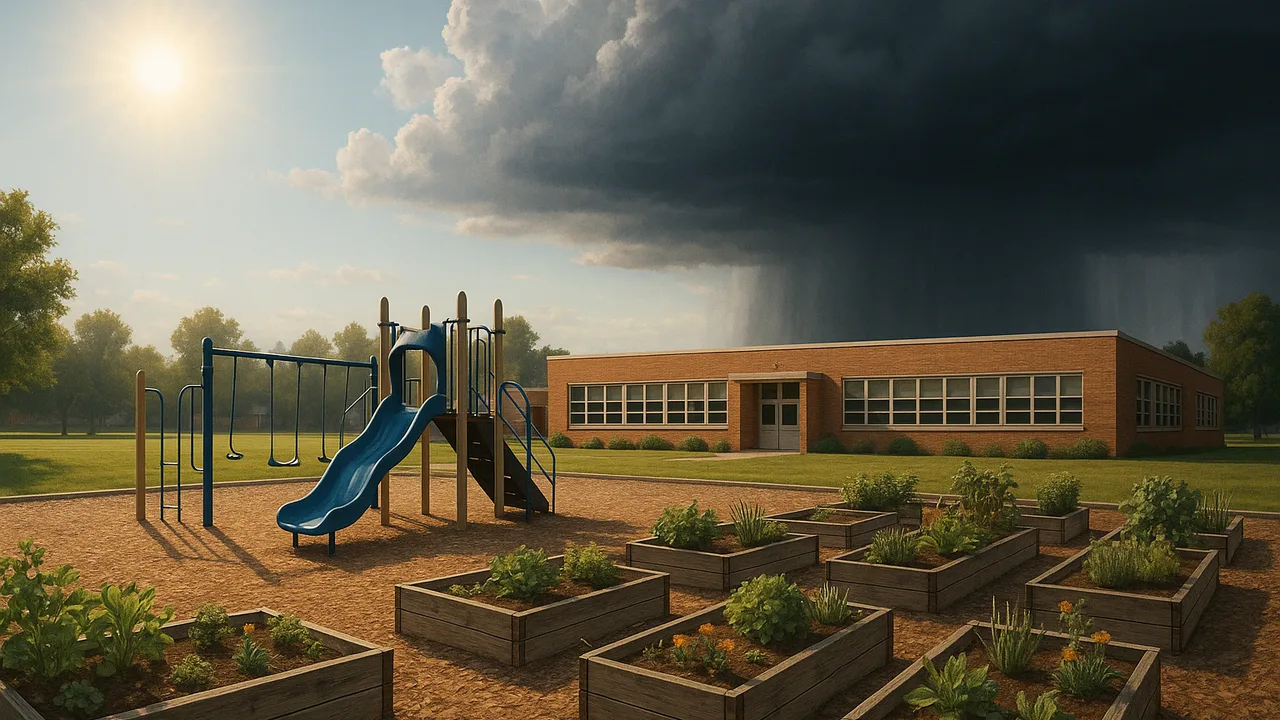
The Schoolyard Weather and Wildlife Station
What makes the weather change, and how can we help the living things in our schoolyard get what they need?
The mystery: A sunny morning turns into a thunderstorm by afternoon. Some years a pond is crowded with frogs, and other years it is nearly empty.
Questions we will figure out together in this unit:
- Why can a sunny morning turn into a thunderstorm by the afternoon?
- Why does the wind sometimes change direction right before a storm?
- Why are forecasts given as a chance of rain instead of a yes or no?
- Why is it usually warmer near the equator and colder near the poles?
- Why are some years crowded with frogs and other years nearly empty?
- What happens to leaves and dead animals that fall on the ground?
- Do the birds at our feeder compete with the squirrels?
- How could our station help wildlife without harming them?
explain what our green team client needs from a schoolyard weather and wildlife station and describe the two puzzles our unit will investigate.
- I can describe how the movement and interactions of air masses cause changes in weather conditions.
- I can explain that similar patterns of interactions happen between organisms and their environment, no matter which ecosystem or species are involved.
Phase 1: Spark
Warm-Up ~5 min
Do Now. Picture a summer day that starts clear and calm. By 3:00 the sky turns dark, the wind gusts, and thunder rolls in. Nothing about the Sun changed. So what changed in the air above us? Make a guess before we learn anything new.
What most likely caused the sunny morning to turn stormy by the afternoon?
Instruction ~10 min
A message from our client. Our school’s green team takes care of the garden, the bird feeders and the rain barrel. They have noticed two puzzles. First, the weather can flip from sunny to stormy in a few hours, and storms have flattened their seedlings. Second, the wildlife changes from year to year. Some springs the wet corner of the field is loud with frogs, and other springs it is almost silent.
Scientists and engineers, here is your mission. The green team asked our class to design a Schoolyard Weather and Wildlife Station. It should collect weather data, help the team forecast changes, and help local wildlife find the food, water and shelter they need. To design it well, we first need to explain what makes weather change and what controls living populations.
Worked example 1: one afternoon of data. Here is a sample weather log from a school station on a summer day. At 1:00 p.m. it was 86°F, humid and breezy from the southwest. At 3:00 p.m. thunder started. By 5:00 p.m. it was 70°F, drier, and the wind blew from the northwest. The temperature, the moisture and the wind direction all changed together. That pattern is a clue that a new air mass arrived. These are sample numbers, and our own station will collect real ones.
Worked example 2: frogs in the wet corner. Imagine the green team counted frog egg masses in a wet spot each spring. One rainy spring they found many. After a dry winter and spring, the spot dried out early and they found very few. The frogs did not disappear for no reason. Something they need, standing water, was missing. We will look for patterns like this in many ecosystems: who competes, who eats whom, and who helps whom.
Our teams. You will work in teams of four, and roles rotate each lesson. The Materials Manager gets, sets up and returns supplies. The Recorder keeps the data table. The Tester runs measurements and checks the tools. The Reporter shares the team’s evidence and questions with the class.
Guided Exercises ~15 min
Work through these cards with your team. Discuss each one before anyone chooses an answer.
Independent Practice ~10 min
On your own, start our class Wonder Board.
Write two questions on sticky notes: one about weather or climate and one about the living things in our schoolyard.
How confident are you that you can I can describe how a change in air masses might cause a change in the weather.
Closure ~5 min
Today we met our client and our two puzzles: weather that flips in an afternoon, and wildlife that booms and busts. Next time we sort our Wonder Board and set the rules for our station.
Exit ticket: in your own words, what does the green team need from us, and what are the two puzzles we must explain first?
Teacher notes
Materials: sticky notes in two colors (weather, wildlife), chart paper for the Wonder Board, a role rotation chart, a projected forecast page. If possible, invite a green team member or sponsor to deliver the request in person.
Setup: post the driving question and the Wonder Board where they stay all unit. Start a class weather log today so you have about two weeks of data by lesson 4.04.
Listen for: “clouds make the weather cold” or “storms come from the Sun.” Do not correct yet; park them on the Wonder Board. Also listen for “frogs die in winter” as the only explanation; invite students to think about resources.
Support / stretch: give a frame: “The green team needs ___ because ___.” Stretch: ask students to predict which conditions in the sample log would change first if a storm were coming.