3.01 Ocean Fossils on a Mountain Ridge
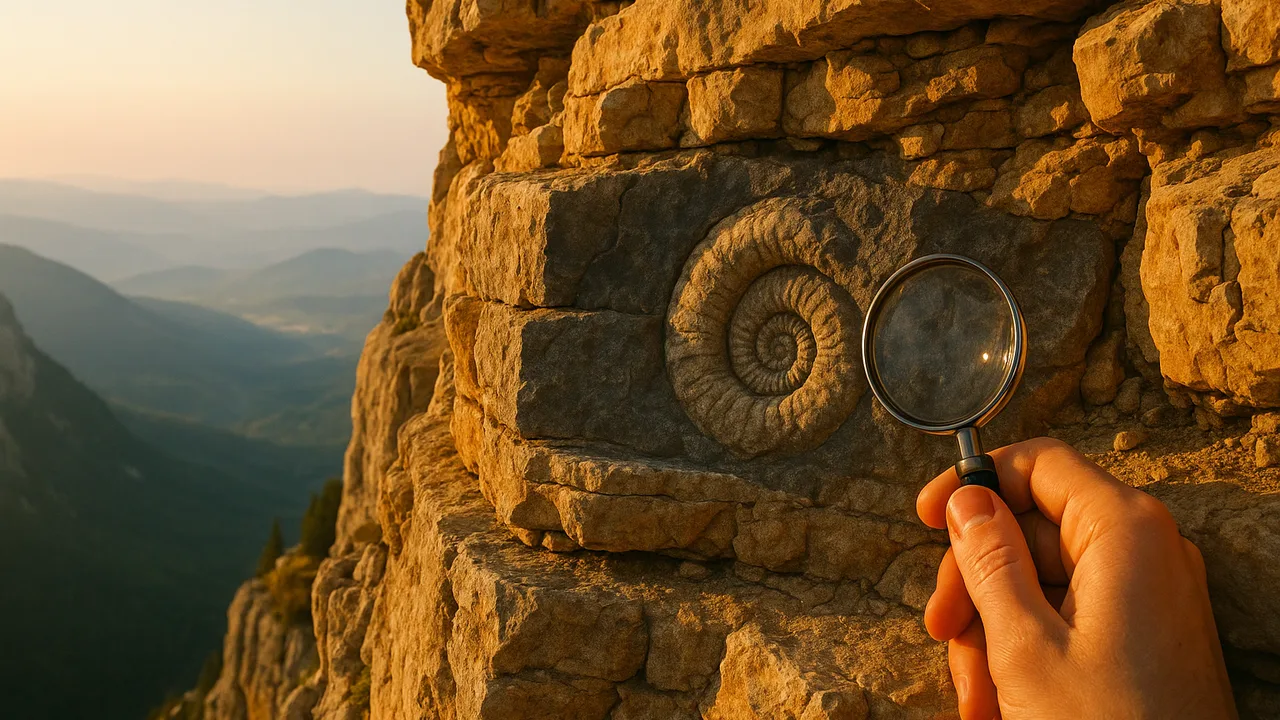
The Deep-Time Trail Guide
How did the rocks and landforms around us form and change, and how can we tell their story to park visitors?
The mystery: Ocean fossils lie in rocks high on mountain ridges, hundreds of miles from any sea. Matching fossils and rocks appear on continents that are now an ocean apart.
Questions we will figure out together in this unit:
- How did ocean shells end up on top of a ridge?
- How old are the rocks in the park?
- How does one kind of rock turn into another?
- Why are some rock layers bent or tilted?
- Do the ridges change, or do they stay the same forever?
- Can a flood or landslide change the land quickly?
- Did the continents really used to be joined?
- What does water have to do with shaping rocks?
describe the puzzle of ocean fossils high on mountain ridges and explain the problem our park client needs us to solve.
- I can describe a problem that could be solved by creating an object, tool, process, or system.
Phase 1: Spark
Warm-Up ~5 min
Do Now. Look at the photo of a gray rock broken open on a hiking trail. Inside are the ribbed shells of small sea animals. The trail is on a forested mountain ridge, hundreds of miles from the ocean. Write your first idea before we discuss it.
How could the shells of ocean animals end up in rock on top of a mountain ridge?
Instruction ~10 min
Trail geologists, we have a client. The education staff of a state park have written to our class. Their park sits on a long, forested ridge. Visitors keep finding shell fossils in the trail rocks and asking the same question: how did the sea get up here?
Their request. The staff want a deep-time trail guide. It could be a folded brochure, a set of trail signs or a phone audio tour. It must tell the true story of how the park’s rocks and landforms formed and changed. The staff do not have a geologist on the team, so they need our science to be accurate.
What is deep time? Deep time means the huge span of Earth’s history, measured in millions and billions of years. A human life is about 80 years. Many rocks in mountain ridges like this one are hundreds of millions of years old. That gap is hard to picture, so our guide will need to help visitors feel it.
Worked example 1: describing a problem. Mei reads the letter and writes, “Visitors find fossils but leave confused.” Then she sharpens it: “Park visitors need a clear, accurate explanation of how ocean fossils got onto the ridge, and the staff need a tool that gives it to them.” Her second version names who has the problem and what kind of solution could help.
Worked example 2: a problem a design can solve. Jamal asks whether this is really an engineering problem. It is, because the answer is a designed product: a guide that works for real people on a real trail. Engineers solve problems by creating objects, tools, processes or systems. A trail guide is a tool, and the walk it leads is a process.
Our Wonder Board collects every question the unit should answer. We will check questions off as our evidence grows.
Guided Exercises ~15 min
Work with a partner. Reread the client’s letter as you answer each question.
Independent Practice ~10 min
Think like a park visitor who has just found a fossil.
List three questions a visitor might ask at the fossil rock. Star the one you most want our guide to answer.
Name one kind of guide (brochure, signs, audio tour or another idea). Give one reason it might work well on a trail and one reason it might not.
Closure ~5 min
Today we met our client and our puzzle. Next lesson, we form teams, sort the Wonder Board and map the park as a system.
How confident are you that you can I can describe the problem our park client needs us to solve.
Exit ticket: in two sentences, describe the problem and explain why a designed trail guide could help solve it.
Teacher notes
Materials: a photo of a fossil-bearing rock (or a real shell fossil from the science kit), a client letter you write on chart paper or slides (keep it general; do not name a real park or staff member), sticky notes and chart paper for the Wonder Board.
Timing (50 min): Do Now 6, letter and mini-lecture 12, guided practice 18, independent 8, exit ticket 6.
Listen for: “A flood carried the shells up there” or “the ocean used to be that deep.” Record these ideas on the board without correcting them; the Investigate phase tests them.
Support / stretch: Give a frame: “___ need ___ because ___.” Stretch: ask what visitors of different ages would need from the guide.