3.17 Prototype Stop 1: The Rock Cycle Ledge
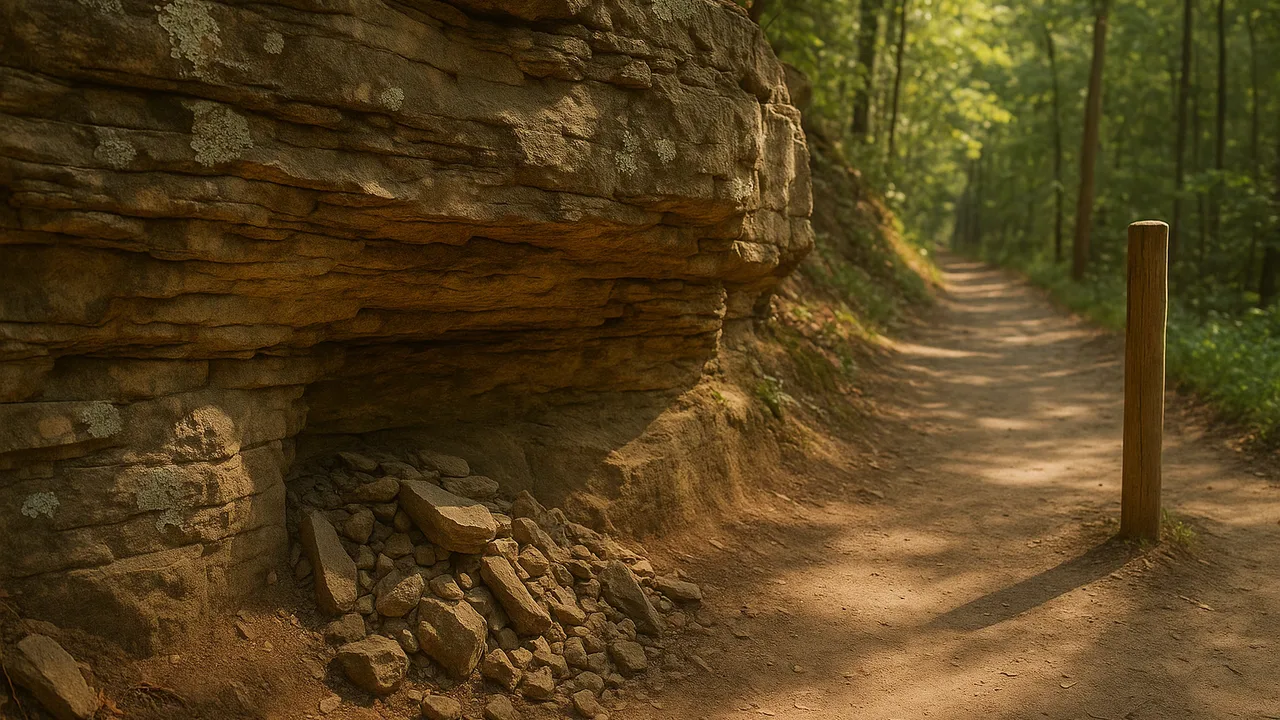
prototype a trail stop that uses a rock-cycle model to explain how the ledge’s rocks formed and how energy from the sun and Earth’s interior keeps changing them.
- I can use my model to explain how Earth processes like melting, sedimentation, and crystallization cause materials to change through chemical and physical changes.
- I can show how energy from the Earth’s interior drives processes such as melting, crystallization, and deformation, leading to changes in Earth materials.
- I can describe how energy from the sun causes weathering, erosion, and sedimentation, and explain the time and place these processes occur.
- I can use my model to show how the Earth’s internal heat drives processes like melting, crystallization, and deformation, which change rocks and move them to the surface for weathering and erosion.
- I can explain how energy from the sun moves wind and water, causing erosion and sedimentation of weathered materials.
- I can describe how any rock can become a new type of rock if the right conditions and energy sources are present.
- I can describe how changes to landforms are always happening, but they seem stable to us because they occur over time scales much longer than a human lifetime.
Phase 4: Build
Warm-Up ~5 min
Do Now. Our trail’s first stop is a ledge of tan sandstone. If you look closely, you can see thin layers and tiny sand grains glued together. Where do you think that sand came from?
Sandstone is made of sand grains cemented together. What kind of rock is it?
Instruction ~10 min
Trail designers, each stop needs a model, not just a fact. Visitors remember a story with causes. Our first stop uses the rock cycle to tell the ledge’s story.
Rock cycle review. Igneous rock forms when melted rock (magma or lava) cools and crystallizes. Weathering breaks rock into sediment. Water, wind and ice carry sediment away (erosion) and drop it (deposition). Buried layers are pressed and cemented into sedimentary rock. Deep heat and pressure can change any rock into metamorphic rock without melting it. Enough heat melts it, and the cycle continues.
Two energy sources drive the cycle. Energy from the sun drives weather, wind and flowing water, so it powers weathering, erosion and deposition at the surface. Energy from Earth’s hot interior drives melting, crystallization and deformation deep underground, and it pushes rocks back up where weathering can reach them.
Worked example 1: the ledge’s story. Jamal’s team wrote: “Long ago, rivers carried sand and dropped it in layers. (Sun-powered water.) The layers were buried, pressed and cemented into sandstone. Later, forces from inside Earth lifted the rock. Now rain and frost weather it into sand again.” Notice the arrows: any rock can become a new rock.
Worked example 2: the vinegar clue. Further along is gray limestone with shell fossils. Limestone is mostly calcite, often from the shells of sea animals. A drop of vinegar may slowly fizz on it, because the acid reacts with calcite. Sandstone usually does not fizz. Ava’s team made that a hands-on “try it” at their model display, using small loose samples, never the trail’s own rocks.
Why the ledge looks permanent. These changes are happening right now. They seem stable to us because they take far longer than a human lifetime. A good stop says so.
Guided Exercises ~15 min
Test the samples, then draft your stop’s model. Record observations here.
| Sample | Grains or crystals? | Layers? | Fizzes with vinegar? | Rock type and how it formed |
|---|---|---|---|---|
| Sandstone | ||||
| Shale | ||||
| Limestone | ||||
| Granite |
Independent Practice ~10 min
Write the visitor version.
Write the 60-word text (or a 45-second audio script) for the Rock Cycle Ledge stop in your chosen format. It must name where the sand came from, how it became rock, and what is changing it today.
Closure ~5 min
Stop 1 drafted. Next: a stop about the biggest clue of all, the fossils and maps that show continents move.
Exit ticket: explain why the ledge looks unchanging to visitors even though the rock cycle is acting on it right now.
How confident are you that you can I can use a rock-cycle model to explain how energy from the sun and Earth's interior changes Earth materials.
Teacher notes
Materials: small loose samples of sandstone, shale, limestone and granite (a classroom rock kit), white vinegar in dropper bottles, trays, magnifiers, goggles, paper towels.
Setup: vinegar is a weak acid, so fizzing on limestone can be slow and faint; a scratched or powdered corner of the sample, or a piece of chalk, shows it better. Tell students a weak or missing fizz is still data.
Listen for: “rocks never change”; the idea that the cycle runs in only one direction; confusing weathering (breaking) with erosion (moving).
Support / stretch: give a rock-cycle diagram with blank arrow labels. Stretch: add a time label to each arrow (seconds, years, millions of years).