3.25 Opening Day: Presenting the Deep-Time Trail Guide
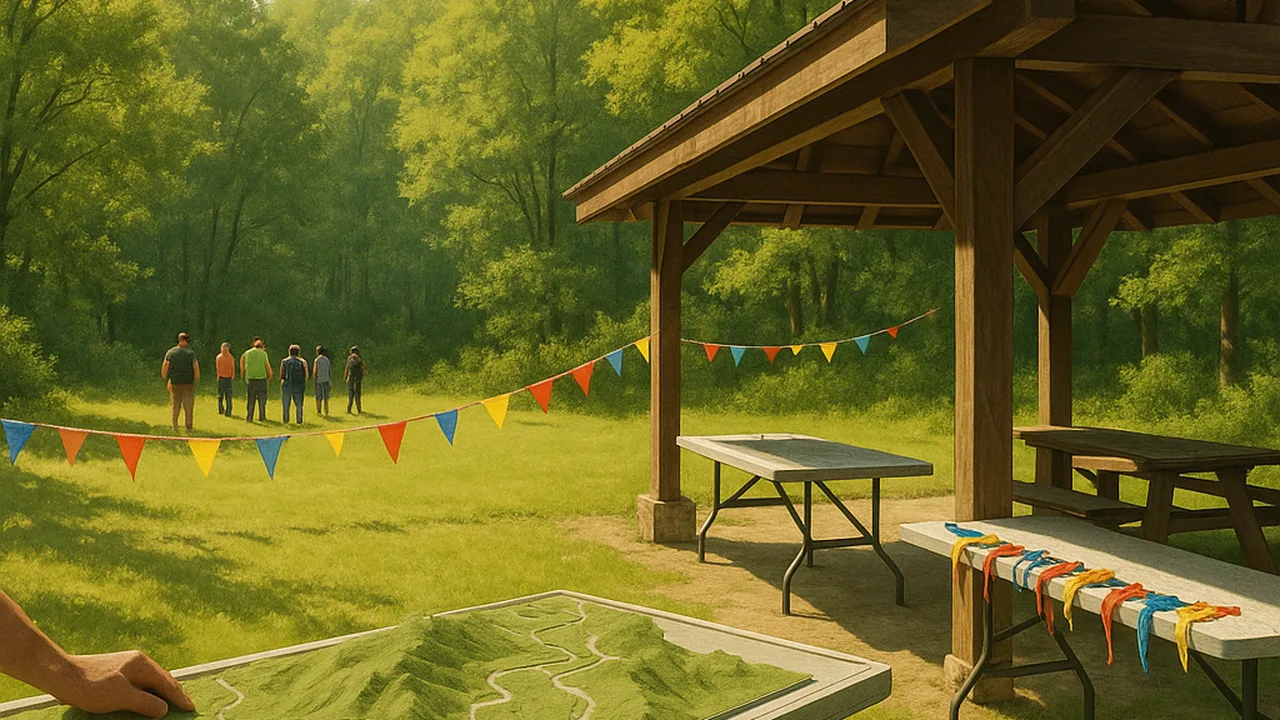
present our trail guide to the park’s education staff and explain the science, the design choice and the test evidence behind it.
- I can use evidence and reasoning to make a claim about which solution works best, based on their strengths and weaknesses.
- I can use my model to explain, with evidence, that energy from inside the Earth and from the sun drives Earth processes that cycle materials into different forms over time and in different places.
- I can use reasoning and scientific ideas to connect evidence and explain how geoscience processes have changed Earth’s surface at different times and scales.
- I can describe how plate motion creates large features like mountains and continents over millions of years, and how surface processes like erosion and deposition shape features over shorter or longer times.
- I can explain how catastrophic events quickly change Earth’s surface, and how those changes are later affected by slower processes, showing that surface features result from many processes acting over different times and sizes, and will keep changing in the future.
Phase 5: Prove It
Warm-Up ~5 min
Do Now. The park staff have 5 minutes for your team. Write the ONE sentence you most want them to remember.
Which opening line is strongest for the park staff?
Instruction ~10 min
Trail designers, it is Opening Day. The park’s education staff join us, in person or by video. Each team presents its guide and walks the staff through one stop as a visitor would.
Your presentation has five parts. 1. The problem and who it helps. 2. The formats you compared and your matrix. 3. The guide, stop by stop, with its science. 4. Your visitor test data and the fix it led to. 5. Your claim: why this design is the best fit, and its honest weakness.
Worked example 1: explaining a stop. Priya: “At the ridge, visitors see sea fossils. Our map shows matching fossils on continents now apart and seafloor that is youngest at the ridge. Plates moved, and collisions lifted old sea-floor layers into mountains.” Evidence, then explanation.
Worked example 2: the design claim. Malik: “Our hybrid scored 23 of a possible 24 in our matrix. In the visitor test, 5 of 6 visitors understood each stop after our fix. Its weakness is weak cell signal, so every audio stop also has a short sign.” These are sample numbers.
Listen like engineers. When it is not your turn, note one idea the park could combine from several teams.
Guided Exercises ~15 min
Rehearse with your team before the staff arrive.
Independent Practice ~10 min
After the presentations, reflect.
What did the park staff ask or suggest? Name one idea from another team that the park could combine with your design.
Project task: The Deep-Time Trail Guide
Deliver a trail guide that helps park visitors read the deep-time story in the rocks and landforms: how the rocks formed and cycle, the evidence that plates moved, and how water keeps reshaping the land. Present it to the park’s education staff with your design matrix, your visitor test data and a claim for why your design fits the park best.
Submission workflow
- Finish the final fix from the visitor test and update your revision log.
- Assemble the guide: at least three stops (rock cycle, plate evidence, water and landforms) plus a deep-time timeline feature.
- Prepare a 5-minute presentation: problem, formats and matrix, stops and their science, test data, and your claim with its trade-off.
- Present to the park staff and walk them through one stop as a visitor.
How it is scored
| Criterion | What proficient looks like |
|---|---|
| Earth science explanations | Each stop uses a model and evidence: the rock cycle with both energy sources, matching fossils, rocks, shapes and seafloor ages for plate motion, and the sun and gravity driving the water cycle and erosion. The guide shows processes at different time and size scales. |
| Evaluating designs | The team compares at least four formats with a weighted decision matrix built on agreed criteria and constraints, and makes a claim for the best design that names its strengths and weaknesses. |
| Testing and revision | Visitor test data (time, understanding, accessibility, impact) identifies a failure point, and the revision log shows a change and its result. |
| Communication | The guide and talk are clear and accurate for visitors aged 10 and up; every member speaks; the team suggests an idea to share with other teams. |
Closure ~5 min
You did it, trail designers. Your guide tells a story hundreds of millions of years long. Next: the unit checkpoint, then two catch-up and stretch days.
Exit ticket: which question on our Wonder Board can you now answer? Write the question and your answer.
How confident are you that you can I can explain how my design meets the client's needs, using science and test data.
Teacher notes
Materials: final guides, matrices, data sheets, revision logs, a projector for audio or slides, rubric copies for scoring.
Setup: contact the park’s education staff early; a video call works well. Make clear the guides are student proposals and the park decides what, if anything, it uses. Score the rubric during talks. The “400 million” figure in the warm-up is an example; use the age range that fits your partner park’s rocks, or say “hundreds of millions.”
Listen for: stops that state facts without evidence; one student doing all the talking; claims with no trade-off.
Support / stretch: give a five-heading presentation frame. Stretch: combine the best stops from several teams into one class proposal for the park.