3.11 One Model, Two Engines: How Ocean Fossils Reached the Ridge
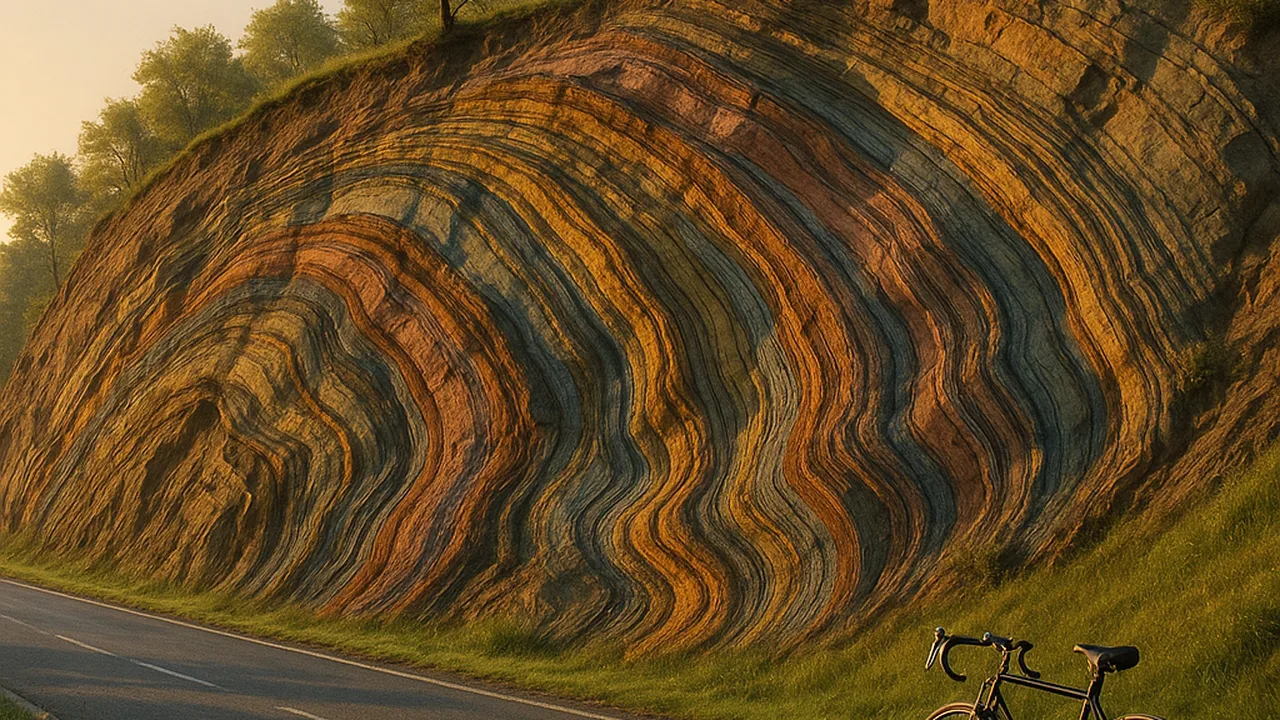
use a rock cycle model with both energy sources to explain, with evidence, how ocean-floor sediment became rock high on a mountain ridge.
- I can use my model to explain, with evidence, that energy from inside the Earth and from the sun drives Earth processes that cycle materials into different forms over time and in different places.
- I can use my model to show how the Earth’s internal heat drives processes like melting, crystallization, and deformation, which change rocks and move them to the surface for weathering and erosion.
- I can explain how energy from the sun moves wind and water, causing erosion and sedimentation of weathered materials.
- I can describe how any rock can become a new type of rock if the right conditions and energy sources are present.
- I can use evidence and reasoning to explain how Earth’s surface changes because of geoscience processes.
Phase 3: Make Sense
Warm-Up ~5 min
Do Now. Look back at the 3.01 predictions on the Wonder Board. Which ones does our evidence now support? Which ones does it rule out?
Which first idea does our evidence rule out?
Instruction ~10 min
Reading: the journey of a shell. Hundreds of millions of years ago, a shallow sea covered the land where our ridge now stands. Rivers, powered by the Sun’s water cycle, carried weathered sand and mud into it. Sea animals with shells lived and died there. Their shells settled into the mud.
Over time, more layers piled on top. The weight pressed the lower layers, and minerals in the water cemented the grains. The mud and shells became sedimentary rock, with fossils inside.
Later, moving plates pushed continents together. That squeezing, along with heat and pressure from Earth’s interior, folded the layers and lifted them high above sea level. Some deeply buried rock changed into metamorphic rock.
Since then, sun-driven wind, rain, ice and streams, helped by gravity, have worn the land down. Soft layers eroded into valleys. Hard layers stood as ridges, showing the fossil rock at the surface. Erosion is still at work today.
Worked example 1: a CER. Claim: the ridge rock formed under a sea and was raised by plate motion. Evidence: it is layered, contains ocean shells and is folded. Reasoning: layers with shells form on sea floors; folding needs squeezing, which comes from moving plates.
Worked example 2: energy in the model. Ava labels her diagram. Sun arrows: weathering, erosion, deposition. Interior heat arrows: melting, deformation, uplift. Every arrow names a when (time scale) and a where.
Guided Exercises ~15 min
Build a team poster model of the ridge’s story. Then use the sentence starters to write a CER.
| Part | Sentence starter | Our writing |
|---|---|---|
| Claim | The fossil rock on the ridge formed when… | |
| Evidence | We observed… Our models showed… | |
| Reasoning | This shows… because… |
Independent Practice ~10 min
Formative check: your rock cycle model.
Draw your final rock cycle model. Show materials at the surface and inside Earth, label each process, color arrows by energy source, and explain one path that turns igneous rock into sedimentary rock.
Closure ~5 min
We can now tell the whole story of the fossil rock. Next lesson, we add water’s journey to the model.
How confident are you that you can I can use a model to explain how the Sun and Earth's interior heat cycle rock.
Exit ticket: in three sentences, tell the story of a shell from the sea floor to the top of a ridge.
Teacher notes
Materials: poster paper, markers in yellow and red, student rock cycle diagrams from 3.04–3.05, data from 3.06–3.08.
Timing (50 min): Do Now 4, reading and worked examples 12, poster model 12, CER 12, formative model and exit 10.
Listen for: skipping the “how did it get high up” step, or saying the sea simply drained. The final model is a formative check of MS-ESS2-1:1a, 2a and 3b; note who still confuses metamorphic and igneous.
Support / stretch: Provide a story strip with blanks. Stretch: add where a fossil could be destroyed along the way (melting, strong metamorphism).