3.19 Prototype Stop 3: The Waterfall and the Water Cycle
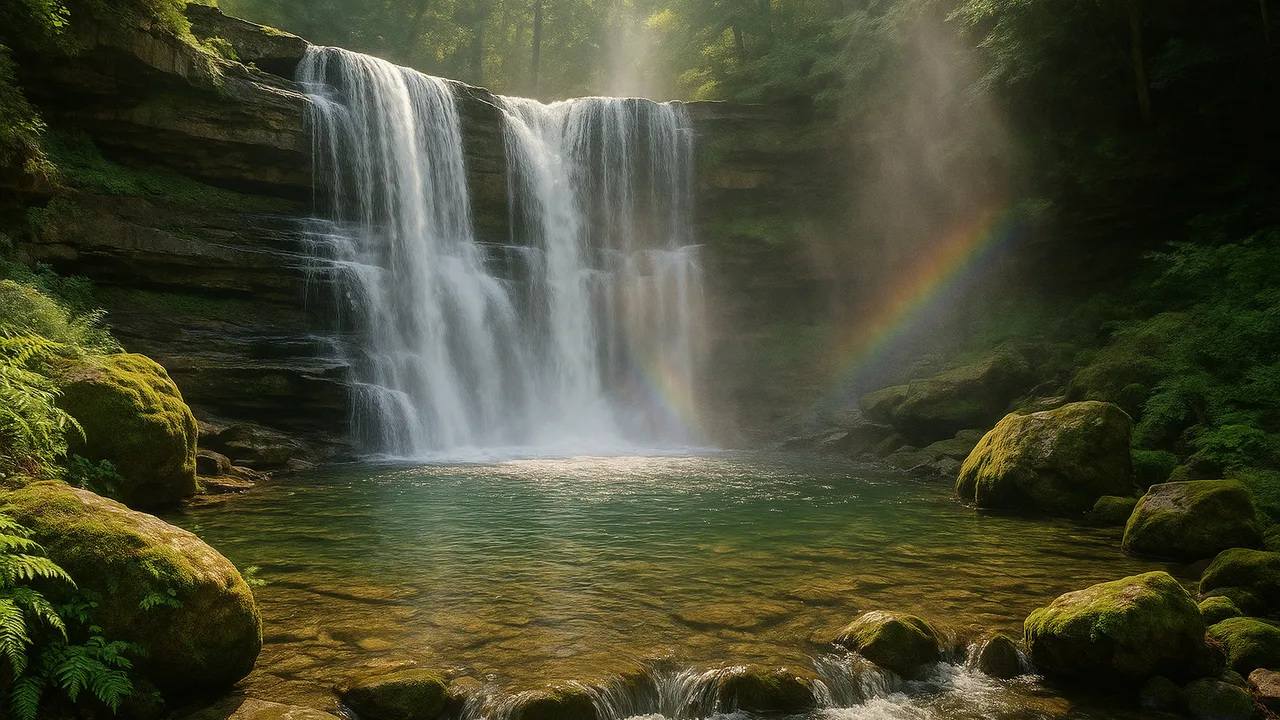
build a model for the waterfall stop that shows how the sun and gravity drive the water cycle, and how moving water reshapes the trail.
- I can use my model to explain how energy from the sun causes water to move from oceans, land, and plants into the atmosphere through evaporation and transpiration.
- I can describe how water vapor cools and condenses or crystallizes to form rain, snow, or ice, which gravity pulls back to Earth.
- I can show what happens to water after it falls on land, including how it flows to oceans, evaporates, is taken up by plants and animals, freezes, or is stored in bodies of water or underground.
- I can use my model to describe how energy transfer causes water to change between liquid, vapor, and solid through evaporation, transpiration, condensation, crystallization, and precipitation.
- I can use my model to explain how gravity moves water in different forms and places, cycling it between Earth’s surface and the atmosphere.
Phase 4: Build
Warm-Up ~5 min
Do Now. The trail’s stream has a small waterfall that never runs dry, even weeks after the last rain. Where does that water come from, and where is it going?
What pulls the stream's water downhill over the waterfall?
Instruction ~10 min
Trail designers, Stop 3 connects two cycles. The water cycle moves water around the Earth system. Along the way, moving water weathers, erodes and deposits rock, which is part of the rock cycle.
Two drivers. Energy from the sun warms water so it evaporates from oceans, lakes and soil, and plants release water vapor through transpiration. Rising vapor cools and condenses into cloud droplets, or crystallizes into ice. Gravity pulls rain and snow back down, pulls water downhill in streams, and pulls some water down into the ground.
Worked example 1: following one raindrop. Mei’s team traced one drop: it falls on the ridge, soaks into the soil, and moves slowly underground as groundwater. Weeks later it seeps out into the stream, which is why the waterfall keeps flowing between storms. It tumbles over the falls, flows to a river, and reaches the ocean, where sunlight evaporates it again. Some drops are taken up by a tree and leave as vapor from its leaves.
Worked example 2: a stream table model. Diego’s team built a tilted tray of sand and poured water at the top. The water carved a channel (erosion) and dropped sand where it slowed at the bottom (deposition). When they raised the tray, the water ran faster and carved deeper. Their stop text: “The same water that falls as rain is still carving this gorge today.”
Models have limits. A tray of sand is much smaller and faster than a real stream. A good stop names what the model shows and what it cannot.
Guided Exercises ~15 min
Run the stream table twice: once gently tilted, once steeper. Record what you see.
| Trial | Tray height (cm) | Time for water to reach the bottom (s) | Channel depth (mm) | Where sand was deposited |
|---|---|---|---|---|
| 1: gentle slope | ||||
| 2: steep slope |
Independent Practice ~10 min
Write the visitor version of Stop 3.
Write a 60-word sign or a 45-second audio script for the waterfall. Explain why it keeps flowing between storms, and how it is changing the land around it.
Closure ~5 min
All three science stops are drafted. Next: the hardest idea to show visitors, deep time itself.
Exit ticket: describe one path a single water molecule could take from the waterfall back to the waterfall. Name at least three processes.
How confident are you that you can I can model how energy from the sun and gravity move water through the water cycle.
Teacher notes
Materials: shallow plastic trays or foil pans, play sand, cups of water with a small hole in the bottom for steady flow, books to tilt trays, rulers, stopwatches, towels.
Setup: wet the sand slightly and smooth it before each trial so the trials are fair. Two trials take about 12 minutes.
Listen for: “clouds are water vapor” (clouds are tiny liquid droplets or ice; vapor is invisible); “the sun pulls water up”; forgetting that groundwater and plants are part of the cycle.
Support / stretch: give a cut-and-paste water-cycle diagram. Stretch: predict how a paved parking lot near the trail would change runoff and erosion.