2.22 Think Like a Soil Scientist: Plan the Big Test
describe how soil scientists use research and teamwork, and write a test plan that checks our design against every criterion.
- I can describe what is needed to design a solution, including doing research and talking with others to make the design better.
- I can test each solution in different situations and collect data to see how well it meets the criteria and constraints.
Phase 4: Build
Warm-Up ~5 min
Do Now. Look closely at a pinch of compost or garden soil in a cup. Use a hand lens. List everything you notice.
Which of these would a soil scientist expect to find in healthy garden soil?
Instruction ~10 min
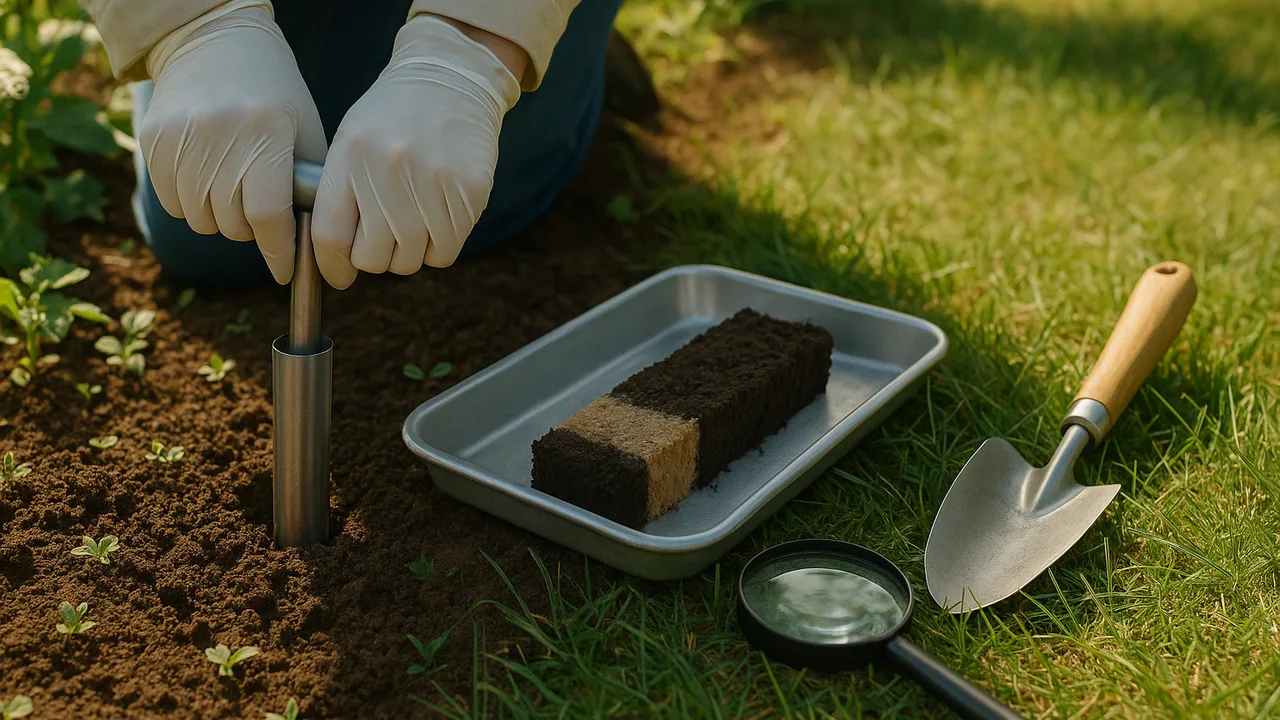
Garden engineers, meet the people who study what is under our feet. Soil scientists study what soil is made of and how it changes. They help farmers and gardeners keep soil healthy so plants grow well.
How they work. Soil scientists collect samples, test them and record data. They read what other scientists have already found. They talk with farmers about problems in their fields. Then they suggest solutions, test them and check the results.
Worked example 1: a test plan for one criterion. Criterion: every scrap has a place to go. Priya’s team will list every kind of scrap from the garden and the lunchroom. For each one, they check the plan for an arrow to the right place. Pass means every scrap has a place.
Worked example 2: a test plan for a constraint. Constraint: about 10 minutes of care a week. Malik’s team will time a classmate doing the weekly jobs: adding scraps, adding leaves and turning the bin. Pass means 10 minutes or less.
| Criterion or constraint | How we will test it | What counts as a pass |
|---|---|---|
| Every scrap has a place to go | ||
| Compost goes back to the beds | ||
| Matter cycling and energy from the Sun shown | ||
| Fits one corner, safe and low cost | ||
| About 10 minutes of care a week |
Guided Exercises ~15 min
Write your test plan with your team. Use these cards to check it.
Independent Practice ~10 min
Think like a scientist.
Name two things a soil scientist does to design a good solution. Which of them did your team do in this unit?
Explain how fungi and bacteria help a farmer's soil. Use the words decomposer and matter.
Closure ~5 min
Your test plan is ready. Next time is Test Day, when we check our model against every criterion.
Exit ticket: which job from today would you like to try? What question would you want to answer in that job?
How confident are you that you can I can explain how research and talking with others make a design better.
Teacher notes
Materials: small cups of compost or garden soil, hand lenses, gloves, test plan tables.
Setup: soil observation for 5 minutes, then the career reading, then test plans. Check each team’s plan before Test Day. If you can, invite a local farmer, gardener or extension educator to visit.
Listen for: “soil is just dirt” (it is a mix of rock bits, old plant matter, air, water and living things); pass rules with no way to measure them.
Support / stretch: give a pass-rule word bank. Stretch: add a test for a second situation, such as a very rainy week.