2.01 The Pumpkin Patch Mystery
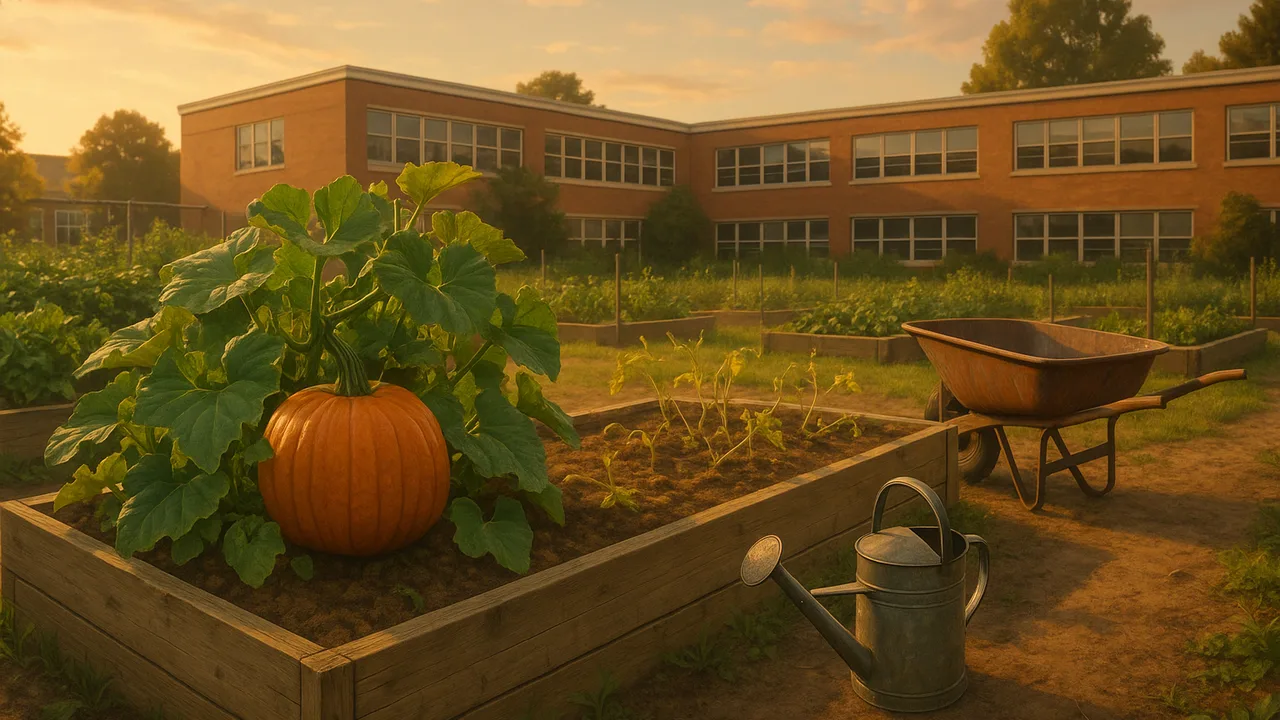
The Zero-Waste School Garden
Where does a plant’s food come from, and how can we design a garden where nothing goes to waste?
The mystery: A pumpkin seed weighs less than a paper clip, yet it can grow into a pumpkin heavier than a fifth grader. Where does all that mass come from?
Questions we will figure out together in this unit:
- How can a tiny seed turn into a pumpkin heavier than me?
- Does a plant eat the soil it grows in?
- Can a plant grow in the dark if it gets plenty of water?
- Does air really have mass?
- Where does the energy in my lunch come from?
- What happens to a banana peel when it rots?
- Why do mushrooms grow on old logs?
- How can a garden use its own waste to grow more food?
describe the pumpkin mystery and the garden club’s need, and state a first claim about where a growing plant gets its materials.
- I can identify the claim that plants get most of the materials they need to grow from air and water.
Phase 1: Spark
Warm-Up ~5 min
Young scientists, we have a mystery. Hold a pumpkin seed in your hand. It is flat, light and smaller than your thumbnail. Now picture a giant pumpkin at a fall fair, so heavy that it takes several adults to lift it. That pumpkin started as one seed just like this one. Make your guess below.
A pumpkin seed grows into a huge pumpkin. Where did most of the new mass come from?
Instruction ~10 min
Meet our client. Our school’s garden club grows vegetables and flowers in raised beds behind the school. They have a problem. Every day, the cafeteria throws away apple cores, banana peels and lettuce scraps. In the fall, the garden beds fill with dead leaves and old vines. All of it goes into the trash and leaves the school in a truck.
The club’s dream. The garden club wants a garden and compost system where nothing goes to waste. Scraps should feed the soil. The soil should help grow new plants. The plants should feed people and animals again. Your mission: help them design it. To do that, you need to understand how plants grow, where food energy comes from, and how matter moves in nature.
Worked example 1: what a claim looks like. A claim is a sentence that answers a question. Ava’s question is, “Where does a pumpkin get its mass?” Her claim is, “The pumpkin plant gets most of its mass from the soil.” That is a clear claim. It might be right or wrong. Scientists test claims with evidence before they trust them.
Worked example 2: a second claim. Jamal reads that a famous scientist grew a tree in a pot and weighed the soil before and after. Jamal makes a new claim: “Plants get most of the materials they need to grow from air and water.” This is the claim our unit will test. By the end, you will decide if the evidence supports it.
Your team roles. You work in teams of four. The Materials Manager gets and returns supplies. The Recorder keeps the data in the notebook. The Tester runs each trial the same way. The Reporter shares the team’s thinking. Roles rotate every lesson.
Guided Exercises ~15 min
Work through these with your team. Use the arrows to move through them. The Reporter reads each one aloud.
Independent Practice ~10 min
On your own, think like the garden club. What would a garden with no waste look like?
Write your own claim: where does a pumpkin get most of its mass? Then write one test you could do to check your claim.
How confident are you that you can I can state a claim about where plants get the materials they need to grow.
Closure ~5 min
Today you met the garden club and our pumpkin mystery. Next lesson, we tour the garden, map where its waste goes, and set up our teams.
Exit ticket: pick one question from our Wonder Board. Write your best guess at the answer today.
Teacher notes
Materials: a few dry pumpkin seeds (one per team), a photo of a large pumpkin, a kitchen or classroom scale, chart paper for the Wonder Board, team role cards.
Setup: weigh a handful of seeds on the scale so students see how light they are. Post the Wonder Board on chart paper so it stays up all unit. If you can, invite a garden club member or adult volunteer to share the need in person.
Listen for: “plants eat soil” or “the plant gets its food from the dirt” (the most common idea; do not correct it yet, the evidence will do that); “air weighs nothing” (we test this in 2.06).
Support / stretch: give a sentence frame for the claim (“A pumpkin gets most of its mass from ___ because ___”). Stretch: ask how you could weigh the soil fairly before and after a plant grows.