2.14 Ideate: Designing a Zero-Waste Garden
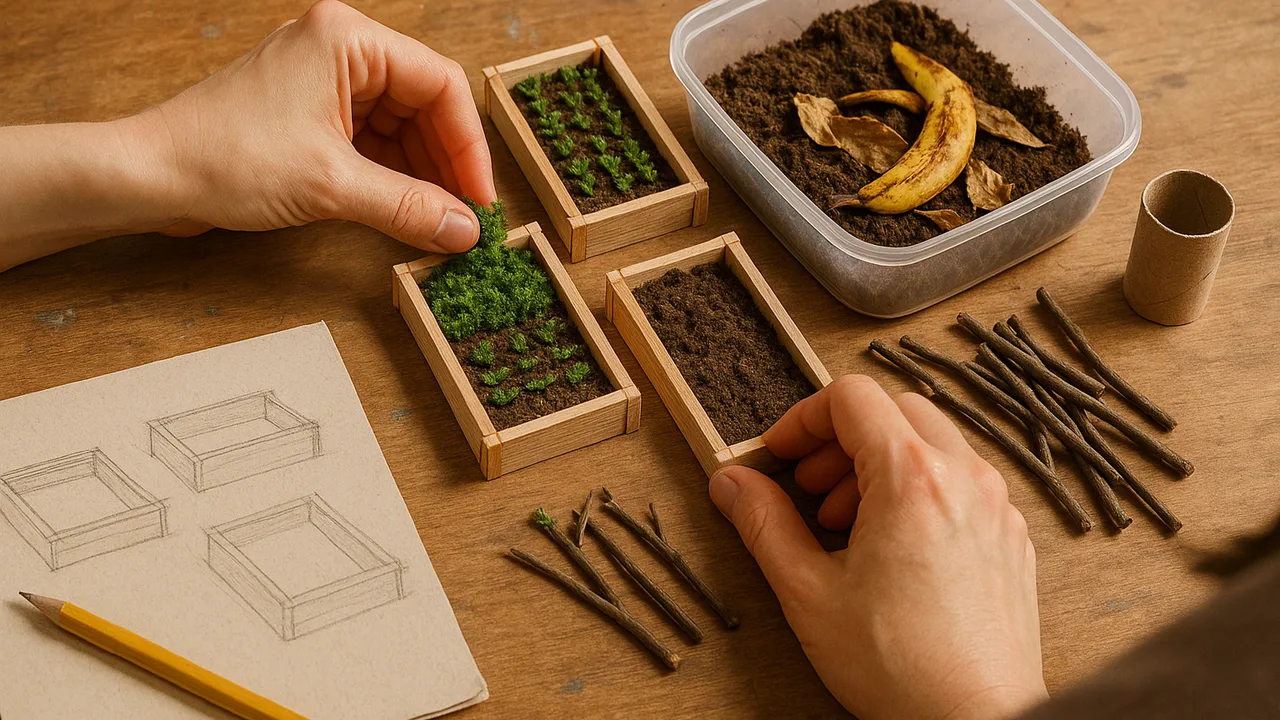
use what I know about plants, energy and decomposers to brainstorm at least three ideas for the garden club and explain the science behind each one.
- I can use my model to show how matter cycles between plants, animals, decomposers, and the environment.
- I can explain how the interactions between plants, animals, decomposers, and the environment help different species meet their needs.
- I can use my model to show how adding a new species or changing something in the ecosystem can affect the balance and other parts of the system.
- I can use my model to explain that all the energy animals use for body repair, growth, movement, and staying warm originally came from the sun through plants.
- I can describe how energy from the sun moves to animals through a chain of events, starting with plants making food and then being eaten by animals.
- I can use reasoning to explain that soil changes very little in weight while plants grow a lot, and that some plants can grow without soil.
- I can argue that since plants can grow without soil and soil does not lose enough matter as plants grow, soil is not the main source of material for plant growth.
- I can explain that plants need water and air to grow, and since both are matter and enter the plant, they provide the materials plants need for growth.
Phase 3: Make Sense
Warm-Up ~5 min
Quick review. Before we brainstorm, check the three big ideas.
Which sentence sums up the unit's science best?
Instruction ~10 min
Reading: from science to design. You now know three big ideas. First, plants get their materials mainly from air and water, and they need light. Second, the energy in every food we eat came from the Sun through plants. Third, decomposers break down dead matter and return it to the soil and air, so matter cycles.
Engineers use science to come up with ideas. A garden bed in full sun gives plants the energy they need. A compost bin gives decomposers food, water and air, so scraps become soil. A worm bin lets earthworms speed up the work. A rain barrel catches water for the plants. Each idea is grounded in the science.
Worked example 1: a compost bin idea. Mei suggests a three-bin compost system: fresh scraps, half-done and finished. The science: decomposers break scraps down into soil that feeds new plants. A problem: if the pile gets too dry, decomposers slow down. She adds, “Water it each week.”
Worked example 2: a garden map idea. Jamal suggests putting the vegetable beds on the sunny side of the school and the compost bin in the shady corner. The science: plants need light, but decomposers do not. A problem: who will water the plants over summer break? He adds that to the constraints list.
Brainstorm rules. Every idea counts. Go for many ideas. Build on a teammate’s idea with “Yes, and…” Choose the best ideas later, in the Build phase.
Guided Exercises ~15 min
With your team, test each idea against the science and your criteria and constraints list.
Independent Practice ~10 min
Ideate. Pick your own best ideas and back them with science.
Write at least 3 ideas for the zero-waste garden. For each one, explain the science that makes it work: plants and their materials, energy from the Sun, or decomposers and the matter cycle.
Use a model to explain one idea. Show where the energy comes from and how the matter cycles through the garden.
Closure ~5 min
Your team now has a pile of garden ideas grounded in science. First, take your 3DX field trip to an eastern forest food web at dawn. Then the Build phase begins, and you turn your best ideas into a real design for the garden club.
Exit ticket: which of your ideas do you like best? Give one science reason it would help the garden waste nothing.
Teacher notes
Materials: team criteria and constraints lists from 2.03 to 2.08, the class models from 2.10 to 2.13, chart paper, sticky notes, a timer.
Setup: post brainstorm rules. One idea per sticky note, so ideas can be sorted and compared in the Build phase.
Listen for: ideas that put compost in the trash or meat in the bin (revisit what decomposers and compost need); “plants eat the compost” (compost adds nutrients and improves soil, but most plant matter still comes from air and water). Save comparing and choosing solutions for the Build phase.
Support / stretch: give picture prompts (compost bin, worm bin, rain barrel, sunny bed, shady corner). Stretch: combine two ideas into one system and draw the full loop.