1.15 Two Kit Designs: Choosing the Best Plan
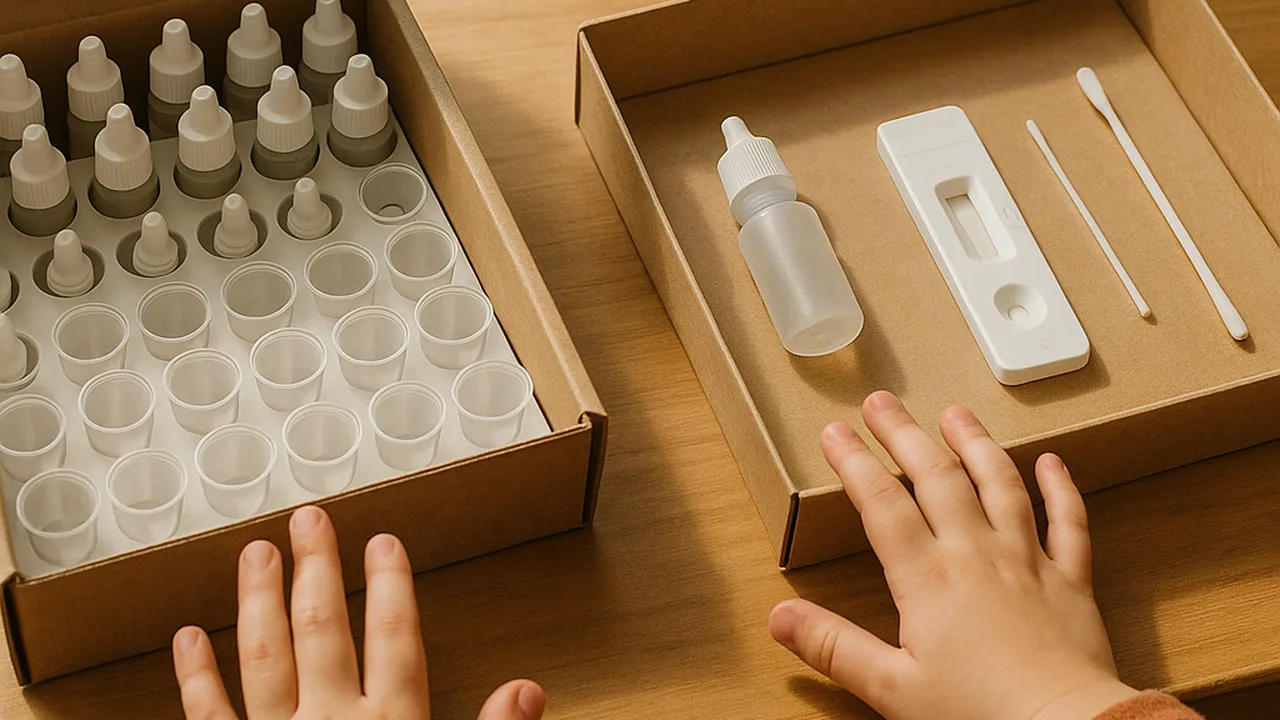
compare two test kit designs for the food pantry and choose the one that best meets our criteria and constraints.
- I can come up with at least two possible solutions to a problem using what I know about science.
- I can explain how each of my design solutions could solve the problem.
- I can describe the required features (criteria) and limits (constraints) for a solution, including ways to increase benefits, decrease risks or costs, and meet what people need.
- I can explain how I will use the criteria and constraints to help create and test my design solutions.
Phase 4: Build
Warm-Up ~5 min
Do Now. A pantry volunteer finds a bag of white powder with no label. Her first idea is to taste a tiny pinch. Why is that a bad plan, even for something that might be sugar?
What is the safest first step with an unknown white powder?
Instruction ~10 min
Junior chemists, welcome to the Build phase. In Investigate, you tested each powder’s properties. Now you will turn those tests into a kit that a pantry volunteer can use. Our client needs it to work every time.
Our criteria and constraints. The kit must identify all five powders. Any volunteer must be able to follow it. It must include a “not sure? set it aside” exit, so no one guesses. The constraints: kitchen-safe supplies only, it fits in a shoebox, and a full test takes 10 minutes or less. Nobody ever tastes anything.
Engineers sketch at least two designs. Then they score each design against the criteria and constraints. Each design has trade-offs. A trade-off means you give up one good thing to get another.
Worked example 1: Design A, the Look-and-Feel Kit. Malik’s team uses a magnifier, a cup of water and a dropper of vinegar. Vinegar finds baking soda, because only baking soda fizzes. Water splits the rest: sugar and salt dissolve, while flour and cornstarch make cloudy water. The magnifier splits sugar from salt, since salt grains often look like tiny cubes. It is cheap and simple. The weak spot: tiny grains can be hard to tell apart.
Worked example 2: Design B, the Tester Kit. Sofia’s team keeps the vinegar and water tests. For sugar and salt, they add a small battery-and-bulb tester. Salt water lets electricity flow and the bulb glows. Sugar water does not. Design B is more reliable for sugar and salt. But it costs more, and the battery can run down. Sofia’s team decided the extra reliability was worth it.
| Check | Design A | Design B |
|---|---|---|
| Identifies all 5 powders? | ||
| Easy for any volunteer to follow? | ||
| Has a “not sure” exit? | ||
| Kitchen-safe supplies only? | ||
| Fits in a shoebox? Under 10 minutes? | ||
| Biggest trade-off |
Guided Exercises ~15 min
Work with your team. Score both designs in your table as you go.
Independent Practice ~10 min
Choose and defend your design.
Which design did your team choose? Explain how it solves the pantry's problem. Use at least one criterion and one constraint in your answer.
Name the biggest trade-off in your chosen design. What did you give up, and what did you gain?
Closure ~5 min
You have a plan, junior chemists. Next, we test a big question: when two substances mix, is something new made?
Exit ticket: write one way your other design could still help you. Which idea will you borrow from it?
How confident are you that you can I can compare two design solutions using criteria and constraints.
Teacher notes
Materials: notebooks, the design table projected, team criteria cards from Investigate, a hand magnifier and one sealed sample bag per team to pass around.
Setup: post the criteria and constraints. Give 8 minutes for two designs, then 6 minutes to score them. A teacher-built battery-and-bulb or LED conductivity tester is optional; it works best with a 9-volt battery and an LED.
Listen for: “we’ll just taste it if we’re stuck” (never); teams choosing the design with the most tests rather than the one that fits the constraints.
Support / stretch: give a two-column design organizer with test names to cut and paste. Stretch: add a sixth powder, such as baking powder, and ask whether the design still works.