2.13 Decomposers Close the Loop
use our mold bag and compost bottle data to explain, in a CER, how decomposers return matter to the environment.
- I can explain how animals eat plants or other animals, and how matter moves between them when they eat.
- I can describe how decomposers, like fungi and bacteria, break down dead plants and animals and return matter to the environment.
- I can show how organisms take in matter from the environment for life and release waste back into the environment.
- I can use my model to show how matter cycles between plants, animals, decomposers, and the environment.
- I can explain how the interactions between plants, animals, decomposers, and the environment help different species meet their needs.
- I can use my model to show how adding a new species or changing something in the ecosystem can affect the balance and other parts of the system.
Phase 3: Make Sense
Warm-Up ~5 min
Final check. The Recorder fills in the last row of the decomposer table. Look closely at both mold bags (sealed!) and the compost bottle.
Which mold bag probably changed the most?
Instruction ~10 min
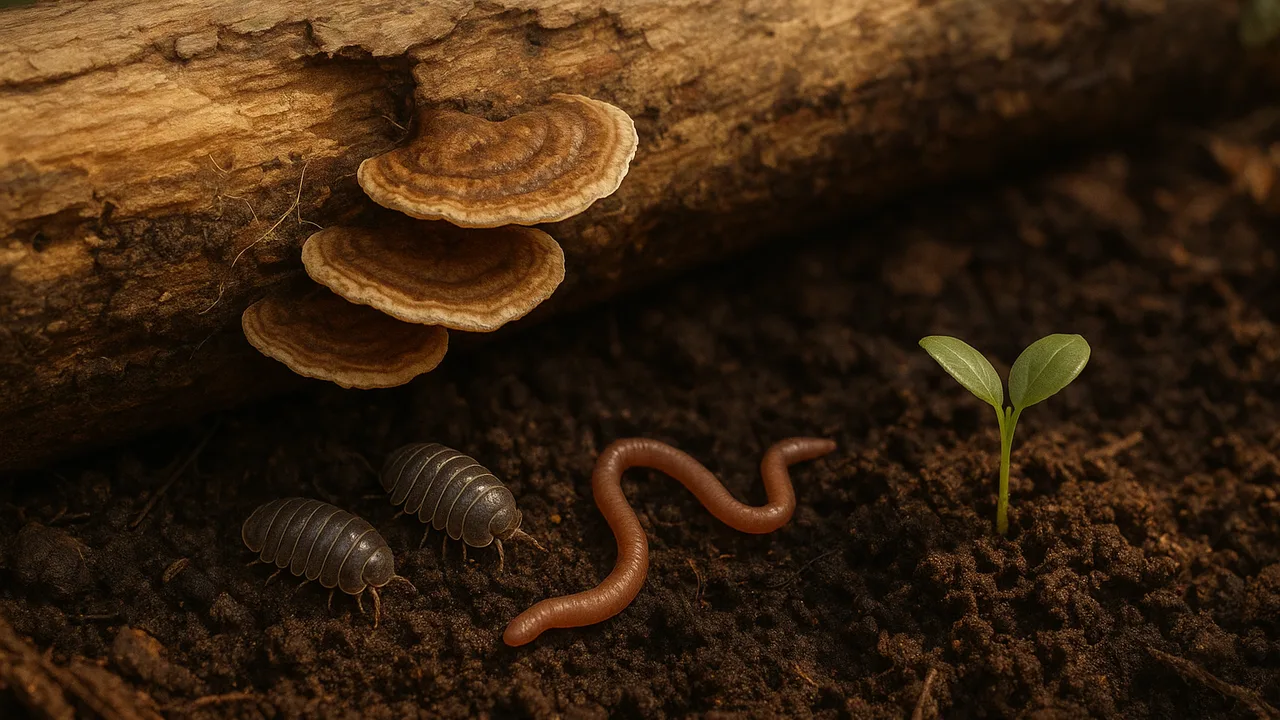
Reading: the clean-up crew. Without decomposers, the world would be buried in dead leaves, fallen trees and dead animals. Fungi, like mold and mushrooms, and many bacteria feed on dead matter. Earthworms and some insects help by breaking it into smaller pieces. As decomposers feed, the dead matter breaks down. Its matter goes back into the soil and the air.
Decomposers need water, air and a mild temperature to work well. That is why the warm, damp bread molded faster than the cold, dry bread. It is also why gardeners keep compost piles damp and turn them to let air in.
Worked example 1: reading the data. Here are example results from one team. Warm bag: day 4, two small spots; day 7, spots across half the slice; day 14, the slice is covered and shrinking. Cold bag: almost no change. Compost bottle: the pile dropped from 20 cm to 15 cm, and the scraps turned dark and crumbly.
Worked example 2: a CER. Here is Diego’s explanation.
Claim: Decomposers break down dead plant matter and return its matter to the soil and air.
Evidence: Mold covered the warm, damp bread, and the slice shrank. In the compost bottle, the pile dropped 5 cm and the scraps became dark and crumbly like soil.
Reasoning: Matter cannot just disappear. As the decomposers fed, the scraps broke down. Some of their matter became soil and some went into the air as gases. Plants can use that matter again.
Back to the garden. The garden club’s food scraps and dead vines do not have to leave as trash. In a compost pile, decomposers can turn them into rich soil for next year’s plants. This is the loop the club dreamed of, and many towns and schools now collect food scraps for compost for the same reason.
Guided Exercises ~15 min
Use your own decomposer table and the example data. Sentence starters: I claim that… My evidence is… This shows that… because…
Independent Practice ~10 min
Write your own CER.
CER: What happens to the matter in food scraps when they are composted? Use at least two pieces of evidence from the mold bags or compost bottle.
How confident are you that you can I can explain how decomposers return matter to the environment.
Closure ~5 min
Decomposers close the loop: dead matter becomes soil and air that plants use again. Next lesson, we use everything we have learned to brainstorm ideas for the zero-waste garden.
Exit ticket: why would a garden with no decomposers eventually be in trouble?
Teacher notes
Materials: sealed mold bags, compost bottles, decomposer data tables from 2.08, the class matter model from 2.12, gloves, CER strips.
Setup: lay the bags flat on a tray so students can see them without handling them. Dispose of every bag sealed at the end. The CER is formative evidence for 5-LS2-1:2a.
Listen for: “the mold ate the bread so it’s gone” (matter went into mold, air and leftover material); “compost is just dirt” (it is broken-down plant matter that feeds new plants).
Support / stretch: provide a CER frame with the claim given. Stretch: explain why a sealed bottle of compost would keep almost the same mass while a bottle open to the air would slowly lose mass.