1.22 Who Tests Unknown Powders? Hazmat Teams and Food Scientists
compare our kit with how real teams test unknown materials safely, and explain how people’s needs shape a design.
- I can use information I am given to explain a problem that comes from something people need or want.
- I can explain how people’s needs and wants can change over time.
- I can describe what is needed to design a solution, including doing research and talking with others to make the design better.
Phase 4: Build
Warm-Up ~5 min
Do Now. Long ago, families often bought flour and sugar scooped from big barrels at a general store. Today most come in labeled bags. Why do you think that changed?
Why do labels on food packages help people today?
Instruction ~10 min
Junior chemists, you are not the first to face this problem. People who handle unknown powders follow the same big ideas as our kit: stay safe, test properties step by step, and say “not sure” when you are not sure.
Needs change over time. People have always needed to know what is in their food. When food came from barrels, shoppers trusted the store. Later, printed labels made the contents clear. Today, pantries sometimes receive large donated bags that get split into smaller bags. Labels can get lost. The old need is back in a new form, so a new solution is needed.
Worked example 1: matching a solution to a need. The pantry manager needs volunteers to sort powders fast and safely. So our key uses kitchen-safe supplies, not lab chemicals. A key that needed special equipment would not fit this client, even if it worked.
Worked example 2: research makes designs better. Jamal’s team read how hazmat teams work, in the case study below. They noticed that real teams record every test. So Jamal’s team added a check-box log sheet to their kit. Research and talking with others improved their design.
Guided Exercises ~15 min
Read the case study and career spotlight. Then check your understanding.
Independent Practice ~10 min
Connect the real world to our project.
Answer the case study question. Then explain why collecting property data is how both teams identify a material.
Describe one way research or talking with another team made your kit better.
🔎 Mini case study: Mini case study: when firefighters find an unknown powder ~6 min
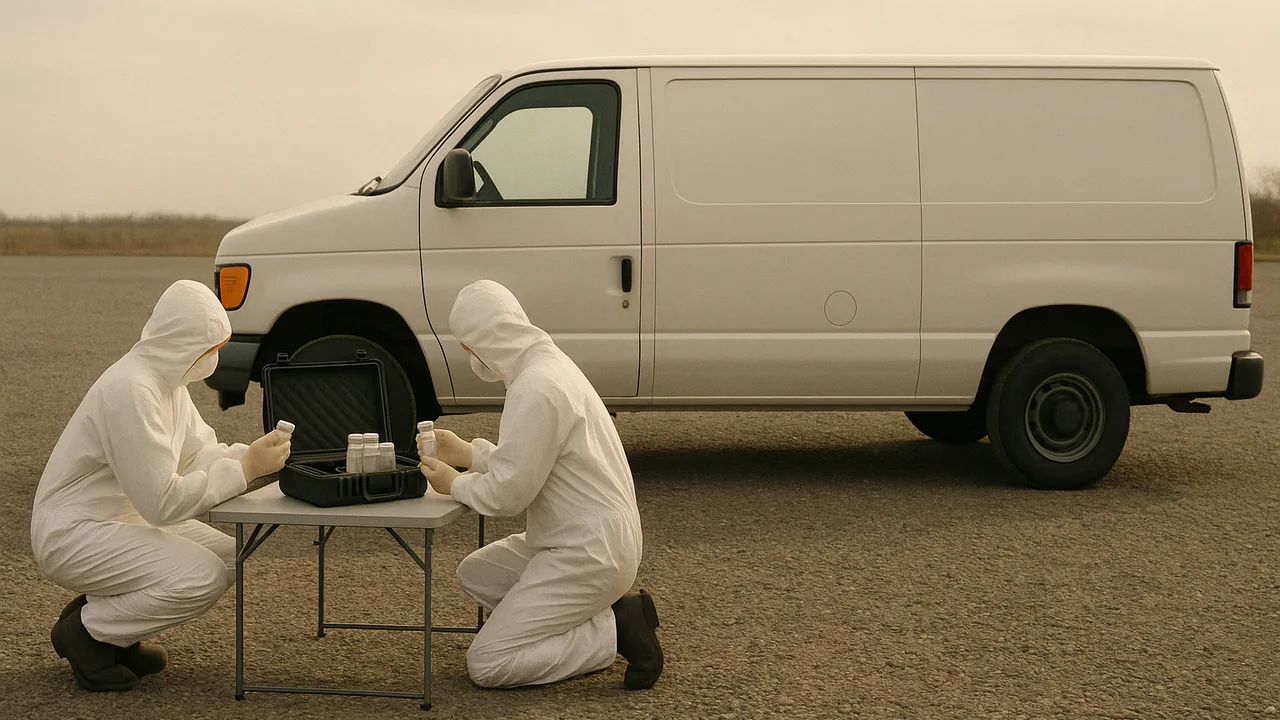
Sometimes firefighters are called because someone found a strange white powder. Many fire departments can call on a hazardous materials team, or hazmat team. The team never tastes or sniffs the powder. First, they keep people back and put on protective gear.
Next, they run screening tests on a tiny sample. These quick tests check properties, much like our vinegar and water tests do. Each result narrows down what the powder could be. Often the powder turns out to be something harmless.
Screening tests are not the final word. A sample is often sent to a lab for stronger tests that confirm what it is. Until then, the team treats the powder as unknown. That is the same idea as our “not sure? set it aside” exit.
Think about it: Name two ways the hazmat team’s process is like our kit. Name one way our kit should become more like theirs.
Closure ~5 min
Next phase: Prove It. Your kit faces mystery samples it has never seen before.
Exit ticket: would you rather be a food scientist, a lab technician or a hazmat responder? Give one reason.
How confident are you that you can I can explain how people's needs shape a design problem.
Teacher notes
Materials: case study printed or projected, notebooks, each team’s kit for the log-sheet add-on.
Setup: read the case study aloud in parts, with a pause after each paragraph. Keep the tone calm; the point is careful testing, not danger. Do not name real incidents.
Listen for: “scientists just know what it is by looking”; “screening means 100% sure.” Connect both to our “not sure” exit.
Support / stretch: partner read; give a Venn diagram for “hazmat team / our kit.” Stretch: research one other job that identifies materials, such as a pharmacist or a recycling sorter.