2.18 Peer Critique: I Like, I Wonder, What If
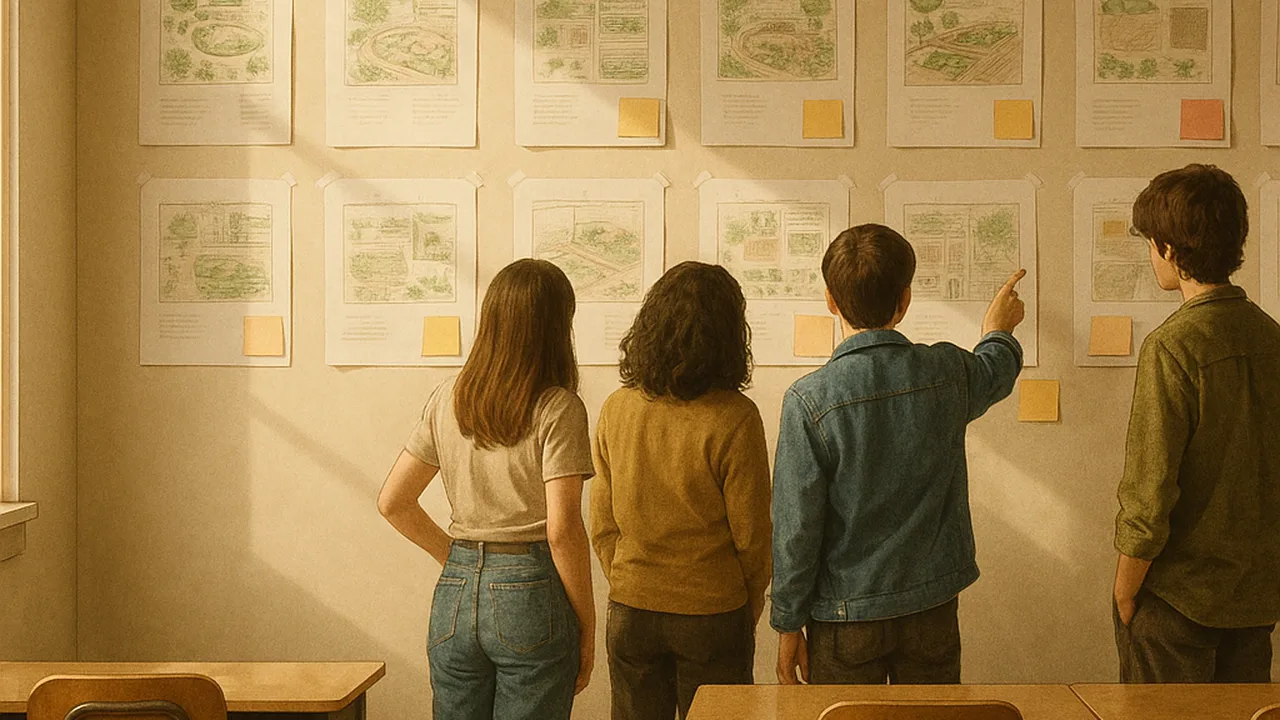
give and use kind, specific feedback on garden-and-compost designs to create more possible solutions.
- I can share my ideas and findings about design solutions with others to help create more possible solutions.
- I can use my model to show how matter cycles between plants, animals, decomposers, and the environment.
- I can explain how the interactions between plants, animals, decomposers, and the environment help different species meet their needs.
- I can use my model to show how adding a new species or changing something in the ecosystem can affect the balance and other parts of the system.
Phase 4: Build
Warm-Up ~5 min
Do Now. Read two comments about a garden plan. Which one would help a team improve?
Which comment is the most helpful feedback?
Instruction ~10 min
Garden engineers, every strong design gets better with feedback. Today two teams swap plans and bottle biomes. We use three sentence starters: I like…, I wonder… and What if….
Kind, specific, helpful. Kind means you respect the team’s work. Specific means you point to one exact part. Helpful means your idea could make the design meet the criteria better.
Worked example 1: feedback for Jamal’s team. Mei’s team said: “I like that your compost bin is next to the garden beds. I wonder what happens to the pea plants after harvest, because no arrow leaves them. What if you add an arrow from old pea plants to the compost bin?”
Worked example 2: a what-if about change. Diego’s team asked: “What if the club adds a worm bin? The worms would help break scraps down faster. But robins might visit to eat the worms.” Jamal’s team used their model to think about how one new species could change other parts of the garden.
| Starter | Our feedback for team ___ |
|---|---|
| I like… | |
| I wonder… | |
| What if… | |
| Criterion this feedback helps |
Guided Exercises ~15 min
Visit your partner team’s station. Use the carousel to guide your critique.
Independent Practice ~10 min
Read the feedback your team received.
Which piece of feedback will your team use? Explain how it will help your plan meet the criteria better.
Use your model: if the club removed the compost bin, what would happen to the soil in the garden beds over many years?
Closure ~5 min
Great critique work. Next time is our mid-build checkpoint, so review your notes on plants, food energy and decomposers.
Exit ticket: write one idea you borrowed from another team. Why is it a good idea?
Teacher notes
Materials: each team’s plan and bottle biome, critique tables, sticky notes in two colors.
Setup: pair teams. Model one critique with a sample plan first. Give 10 minutes per round and switch.
Listen for: vague praise with no evidence; feedback that is about looks, not science; “more worms is always better” (changes ripple through the system).
Support / stretch: give sentence frames on cards. Stretch: ask teams to predict two effects of adding one new species to the garden.