2.21 From Scraps to Soil: Composting in Real Communities
explain how community and school composting programs turn food scraps into soil material and compare their solutions with ours.
- I can use information from research to explain what causes a problem and what effects it has.
- I can use scientific facts I have learned to help me understand the problem.
- I can use my model to show how matter cycles between plants, animals, decomposers, and the environment.
- I can explain how the interactions between plants, animals, decomposers, and the environment help different species meet their needs.
- I can use my model to show how adding a new species or changing something in the ecosystem can affect the balance and other parts of the system.
Phase 4: Build
Warm-Up ~5 min
Do Now. Think about all the lunch trays in one school. Now think about every school in a whole city. How many apple cores might that be?
When food scraps are buried in a landfill, what usually happens to the matter in them?
Instruction ~10 min
Garden engineers, our idea is not new. Communities all over the country already turn food scraps into compost. Studying their solutions helps us understand our problem better.
The cause and the effect. Food scraps are a large part of what families and schools throw away. In a landfill, the scraps are buried under other trash. Their matter is locked away instead of returning to farms and gardens. Composting sends that matter back to the soil.
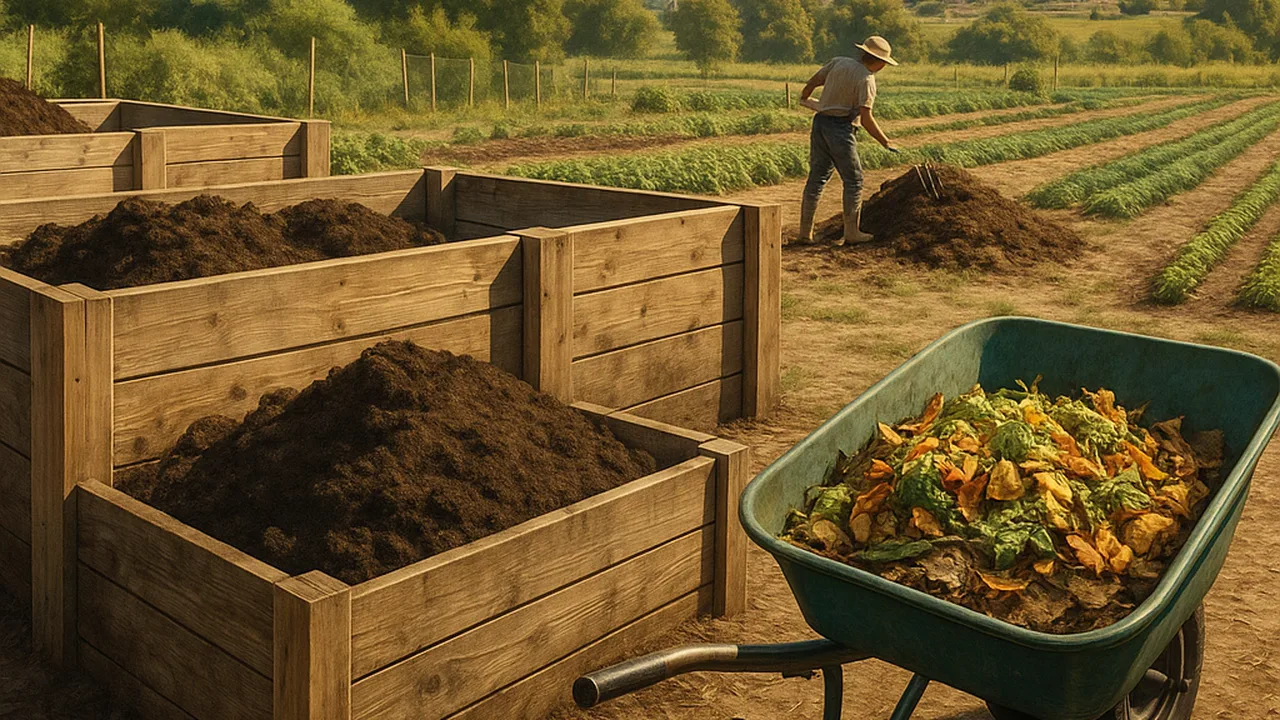
Worked example 1: a city program. In many cities, families put food scraps in a special bin. Trucks collect them, much like trash pickup. The scraps go to a large composting site. There, huge piles are turned and kept damp so decomposers can work. Months later, the finished compost goes to farms, parks and gardens.
Worked example 2: a school program. Many schools set up sorting stations in the lunchroom. Students sort what is left on their trays into recycling, compost and trash. Student helpers show others where each item goes. Some schools compost on site and spread the compost in their own gardens.
| Compare | City program | School program | Our garden design |
|---|---|---|---|
| Where scraps come from | |||
| Who or what breaks them down | |||
| Where the compost goes | |||
| One idea we could borrow |
Guided Exercises ~15 min
Fill in the comparison table with your team. Then answer.
Independent Practice ~10 min
Borrow a good idea.
Pick one idea from the case study, such as a lunchroom sorting station. Explain what problem it solves and how you would add it to the garden club's plan.
Suppose the school stops composting and sends all scraps to a landfill. Use your model to explain how the garden soil and plants could change over many years.
🔎 Mini case study: from food scraps to garden soil ~8 min
Across the United States, many cities and towns now run food scrap programs. Families and restaurants put fruit and vegetable scraps, and sometimes other food, into a separate bin. The scraps travel to a composting site instead of a landfill.
At the site, workers build long piles of scraps mixed with leaves and wood chips. Machines turn the piles to let air in. Water keeps them damp. Huge numbers of bacteria and fungi break the scraps down. The piles get warm inside while the decomposers work.
After a few months, the scraps have become dark, crumbly compost. Farmers, park crews and gardeners spread it on soil. The matter that was once a banana peel helps new plants grow. Many schools run smaller versions of the same idea, with lunchroom sorting and garden compost bins.
Think about it: How is a city composting program like our school garden design? Name one way it is different.
Closure ~5 min
Our garden corner is one small part of a much bigger system. Next time, meet the scientists and farmers who care for soil for a living.
Exit ticket: explain the cause of the food scrap problem and one effect it has on the matter cycle.
Teacher notes
Materials: the case study, comparison tables. Optional: photos of a lunchroom sorting station and a large compost pile.
Setup: read the case study aloud, then teams fill the table. Keep the discussion general. If you know for certain that your own district or town runs a program, add it as a local example.
Listen for: “compost piles are warm because of the Sun” (the warmth comes from decomposers at work); “landfill scraps vanish” (matter is never destroyed, only moved and changed).
Support / stretch: pre-fill the city column. Stretch: plan a one-week lunchroom sorting trial and decide what data to collect.