1.17 Mixing Lab 2: New Substance or Just a Mixture?
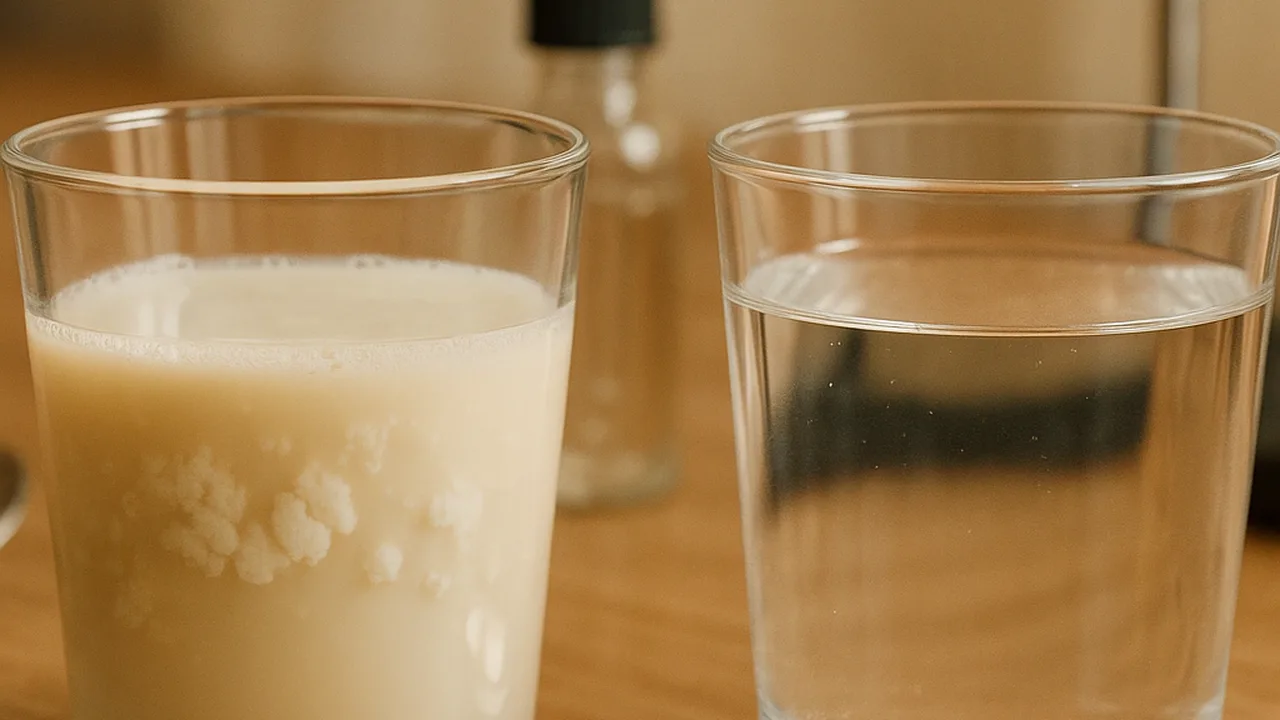
test milk with vinegar and salt with water, then use weight and property data to decide which one made a new substance.
- I can explain how my data will show if mixing substances made a new substance or not.
- I can work with others to collect and record data about the substances before and after mixing.
- I can use my measurements and calculations to explain that the total weight of the substances stayed the same, even if their properties changed.
Phase 4: Build
Warm-Up ~5 min
Do Now. You stir sugar into water and it disappears. Did you make a new substance? Talk with a partner for one minute.
If you let a dish of salt water dry out for a few days, what will be left?
Instruction ~10 min
Junior chemists, not every mix makes something new. A mixture is two or more substances mixed together that each keep their own properties. You can often separate them again. A new substance has new properties, and you cannot simply pick the old substances back out.
Station 1: milk plus vinegar. Warm milk is a smooth white liquid. Add vinegar and stir. White clumps form, and a watery liquid separates out. The clumps are rubbery, unlike anything in milk or vinegar. That new texture is evidence of a new substance.
Station 2: salt plus water. The salt seems to vanish. But the water still conducts electricity and, once dried, leaves salt behind. Salt kept its properties, so this is a mixture.
Weigh before and after. Weigh each substance before mixing. Then weigh everything after, cups included. Find the difference.
Worked example 1: Jamal’s milk data. Cup with milk: 150 g. Cup with vinegar: 60 g. Total before: 210 g. After pouring the vinegar in and weighing both cups together: 210 g. The difference is 0 g. The weight stayed the same even though clumps formed. These are sample numbers.
Worked example 2: Mei’s salt data. Water and cup: 120 g. Salt: 10 g. Total before: 130 g. After stirring: 130 g. Mei made a bar graph with a “before” bar and an “after” bar. The bars were the same height. The salt was hidden, not gone.
| Station | Total weight before (g) | Total weight after (g) | Difference (g) | New properties? | New substance or mixture? |
|---|---|---|---|---|---|
| Milk + vinegar | |||||
| Salt + water | |||||
| Flour + sugar (dry) |
Guided Exercises ~15 min
Rotate through the three stations. Weigh, mix, weigh again, and record.
Independent Practice ~10 min
Show your data two ways.
Draw a bar graph of total weight before and after for each station. Then calculate the difference for each one.
For each station, decide: new substance or mixture? Use one property and your weight data as evidence.
Closure ~5 min
Now we know two kinds of mixing. Our kit can use that: fizz means a new substance formed, and that signal points to baking soda.
Exit ticket: explain how the weight can stay the same even when a new substance forms.
How confident are you that you can I can use data to tell a mixture from a new substance.
Teacher notes
Materials: goggles, warm milk (teacher-heated), white vinegar, table salt, water, flour, sugar, clear cups, a strainer or coffee filter, kitchen scales, magnifiers.
Setup: three stations, 8 minutes each. Weigh both cups together before and after pouring so nothing is left out. Strain a few curds onto a paper towel so students can feel the new texture (with gloves).
Listen for: “the salt disappeared, so it weighs less”; “any change means a new substance” (dissolving is a change, but salt keeps its properties).
Support / stretch: give a pre-labeled bar graph grid. Stretch: ask why an open cup of baking soda and vinegar weighs less after mixing, while a sealed bag does not.