2.05 The Seed and the Soil
use mass measurements of soil and plants to decide whether a growing plant gets most of its matter from the soil.
- I can describe evidence that shows plants grow bigger over time.
- I can explain how changes in the weight of soil and water in a closed system show that soil does not provide most of the material for plant growth, and that plants need water to grow.
- I can describe evidence that plants need air to grow and that air is matter.
- I can analyze evidence to decide if plants need air, soil, or water to grow.
- I can use evidence to figure out if air, soil, or water can provide enough matter to explain how a plant’s weight increases as it grows.
- I can use reasoning to explain that soil changes very little in weight while plants grow a lot, and that some plants can grow without soil.
- I can argue that since plants can grow without soil and soil does not lose enough matter as plants grow, soil is not the main source of material for plant growth.
- I can explain that plants need water and air to grow, and since both are matter and enter the plant, they provide the materials plants need for growth.
Phase 2: Investigate
Warm-Up ~5 min
The big question. A pot holds soil and one seed. Months later, it holds a big plant. If the plant ate the soil, what should happen to the soil’s mass?
A tree grows in a pot for five years and gains a huge amount of mass. The dry soil is weighed before and after. What happens?
Instruction ~10 min
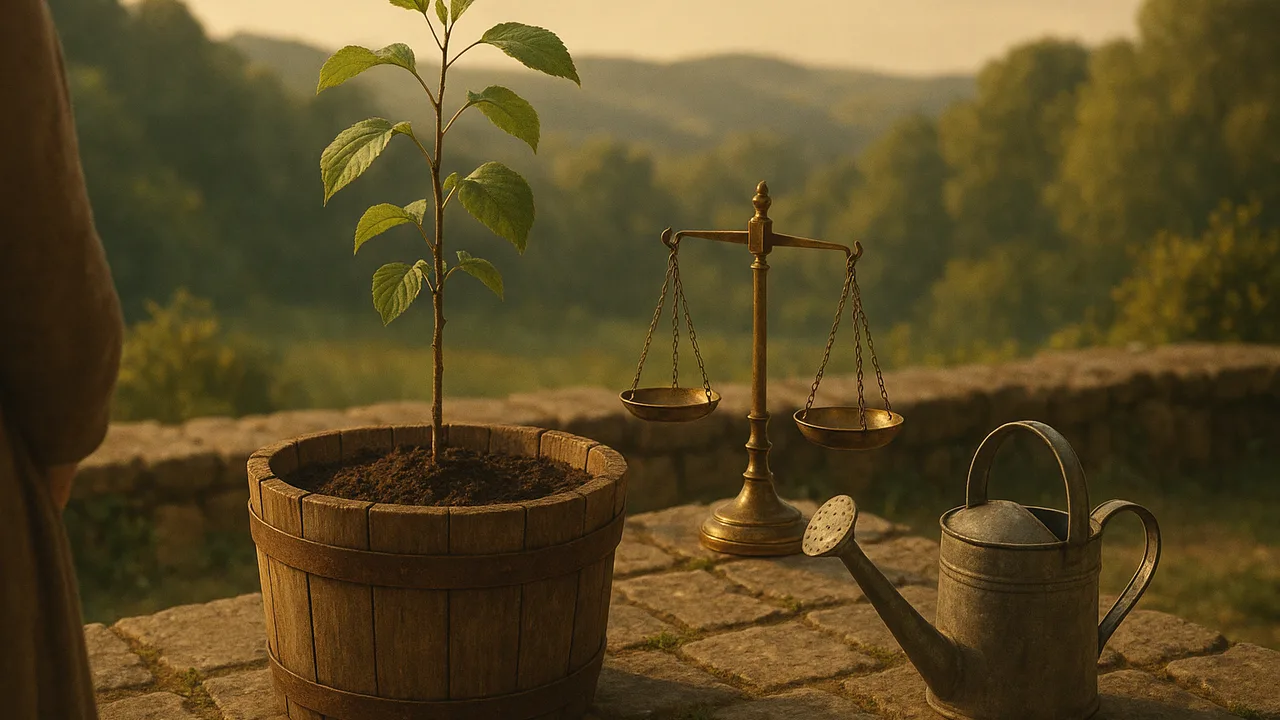
A famous experiment. In the 1600s, van Helmont planted a small willow tree in a large pot of dried, weighed soil. He covered the pot so dust could not fall in. For five years he gave the tree only rainwater. Then he weighed the tree and dried and weighed the soil again. The tree had gained well over one hundred pounds. The soil had lost only about two ounces. That is less than the mass of a small apple.
Our classroom version. We cannot wait five years, so we use fast-growing plants. Two weeks ago, the teacher filled cups with dry soil, weighed each cup, planted bean seeds and watered them. Today we pull out each plant, shake the soil back into the cup, let the soil dry, and weigh again.
| Cup | Dry soil + cup at start (g) | Dry soil + cup today (g) | Change in soil (g) | Seed mass at start (g) | Fresh plant mass today (g) | Change in plant (g) |
|---|---|---|---|---|---|---|
| 1 | ||||||
| 2 | ||||||
| 3 |
Worked example 1: finding a change. Diego’s cup of dry soil had a mass of 250 grams at the start. Today it has a mass of 249 grams. He subtracts: 250 − 249 = 1 gram. The soil lost about 1 gram. (These are example numbers.)
Worked example 2: comparing the changes. Diego’s bean seed had a mass of about 1 gram. Today the whole plant, with roots, has a mass of about 10 grams. The plant gained about 9 grams, but the soil lost only about 1 gram. Diego asks, “Where did the other 8 grams come from?” That is the right question to ask.
Thinking about a closed system. If the soil does not supply most of the new matter, something else must. The plant took in water. It was also surrounded by air. Keep both in mind. We test air next lesson.
Criteria check. Add to your garden list: what does this tell the garden club about whether they need to keep buying lots of new soil?
Guided Exercises ~15 min
Work with your team. Use the example numbers in the mini lesson and your own measurements.
Independent Practice ~10 min
Think it through on your own.
A friend says, “Plants eat soil, that's why they grow.” Use the soil and plant numbers to explain why the evidence does not support that claim.
How confident are you that you can I can use mass data to show that soil is not the main source of a plant's matter.
Closure ~5 min
The soil barely changed while the plant grew a lot. So where did the new matter come from? Next lesson, we test water and air, and ask whether plants can grow without any soil at all.
Exit ticket: if the new matter did not come from the soil, where else could it have come from? List two ideas.
Teacher notes
Materials: 3 or more cups of air-dried soil weighed two weeks earlier, with labels; bean seeds weighed before planting; a digital balance that reads to 1 gram (0.1 gram is better); paper towels; trays. Rotate team roles today: Materials Manager, Recorder, Tester, Reporter. Each person gets a new job.
Setup: start this two to three weeks before the lesson. Spread the soil on trays to air-dry overnight before reweighing. Some soil sticks to roots; shake gently and accept a small error.
Listen for: “the soil lost a little, so plants do eat a little soil” (plants do take in small amounts of minerals from soil, which is true but tiny); “the plant got heavier because of the water inside it” (partly true; air also matters). Keep the van Helmont numbers approximate, as written.
Support / stretch: provide a subtraction frame (start − today = change). Stretch: ask why a whole class’s results are better evidence than one cup.