1.06 Melt, Freeze, Weigh: Ice in a Sealed Bag
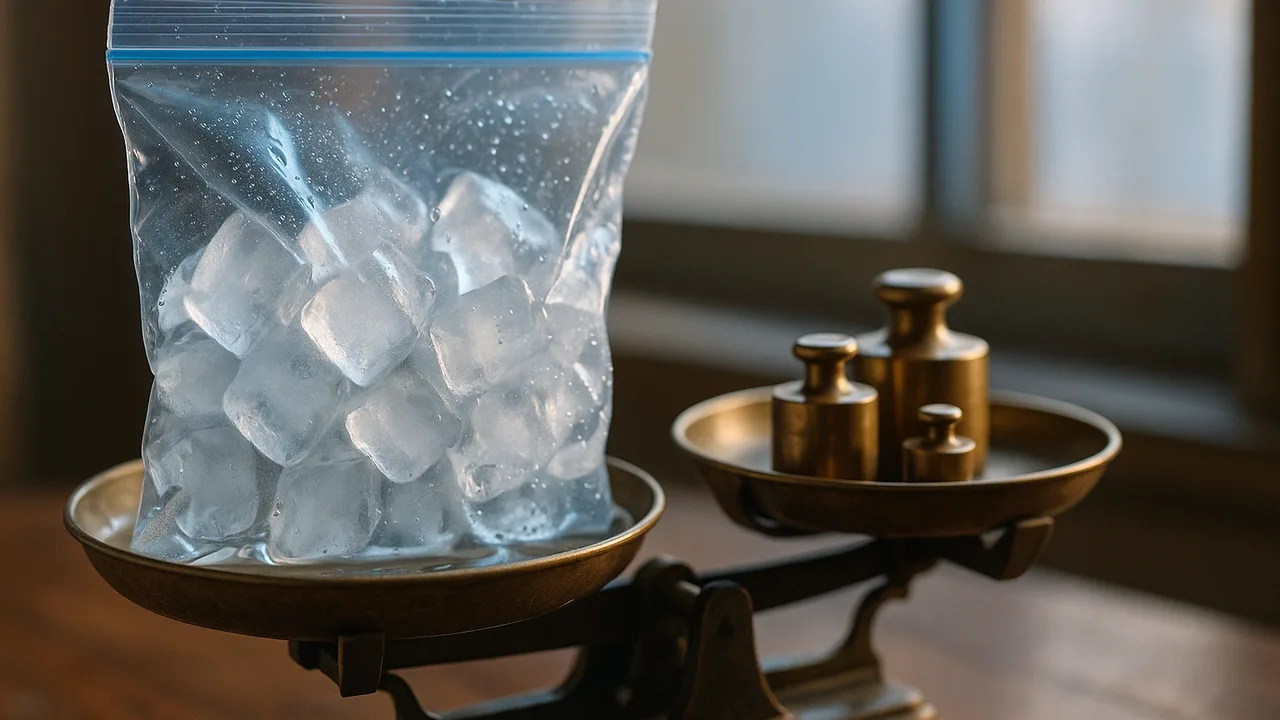
measure mass before and after melting and freezing, graph the results, and explain whether the total mass stayed the same.
- I can measure the weight of substances before they are heated, cooled, or mixed using standard units.
- I can measure the weight of substances, including any new substances made, after they are heated, cooled, or mixed.
- I can make a graph to show the weights I measured before and after heating, cooling, or mixing substances.
- I can describe the changes I observe in substances during or after heating, cooling, or mixing them.
- I can use my measurements and calculations to explain that the total weight of the substances stayed the same, even if their properties changed.
Phase 2: Investigate
Warm-Up ~5 min
Do Now. Yesterday your teacher put a sealed bag of water in the freezer. Now it is a lumpy block of ice, and it looks bigger. Did it gain mass?
The water froze and now takes up more space. What happened to its mass?
Instruction ~10 min
Pantry detectives, today we heat and cool. Melting and freezing are changes of state. Ice is water in its solid state. Liquid water is the same matter in a different state. Does the mass change when the state changes?
How to run the melt test. Put 4 ice cubes in a zip bag. Squeeze out the air and seal it. Dry the outside with a paper towel. Weigh it and record the mass. Let it sit in a warm spot until all the ice has melted. Dry the outside again, then weigh it.
The freeze test. Your teacher weighed a sealed bag of water yesterday, then froze it. Today, dry and weigh the frozen bag.
| Test | Mass before (g) | What I observed (state, shape, size) | Mass after (g) | Difference (g) |
|---|---|---|---|---|
| Ice melting in a sealed bag | ||||
| Water freezing in a sealed bag |
Worked example 1: why dry the bag? A cold bag pulls water out of the air. Tiny drops form on the outside, like on a cold glass of lemonade. Those drops add mass from the room. Ava’s team forgot to dry their bag and measured 2 extra grams. After drying, the difference was 0 g.
Worked example 2: graphing before and after. Jamal made a bar graph. Each test gets two bars side by side: one for before and one for after. Melting: 118 g and 118 g. Freezing: 205 g and 205 g. Same-height pairs show that the mass did not change. These are sample numbers.
Back to our powders. Some pantry tests might involve warming or cooling. Now we know a change of state does not add or remove matter.
Guided Exercises ~15 min
Use your data and your graph to answer these.
Independent Practice ~10 min
Graph your own data.
Draw a bar graph of your melt and freeze tests, with a before bar and an after bar for each. Then write one sentence about what the graph shows.
Closure ~5 min
Melting and freezing changed the shape and state, but not the mass. Next time, we mix two powders and liquids in a sealed bag. Something surprising will happen.
Exit ticket: a 50 g ice pop melts in a sealed cup. What will the melted pop and cup weigh, compared to before? Explain.
Teacher notes
Materials (per team): a kitchen scale, a sturdy zip bag, 4 ice cubes, paper towels. Teacher: one sealed bag of water per team, weighed and labeled with its mass, frozen the day before (leave room in the bag for the ice to expand).
Setup: start the melt bags early in the period, in a warm spot or a tub of warm water. If ice is still melting at the end, finish the after measurement at the start of 1.07.
Listen for: “ice weighs more because it is bigger” or “water weighs less than ice.” Condensation is the most common source of extra grams; dry every bag.
Support / stretch: give a graph with labeled axes to fill in. Stretch: predict the mass of a bag of melted chocolate chips, then test it with a sealed bag in warm water.