1.01 The Case of the Missing Labels
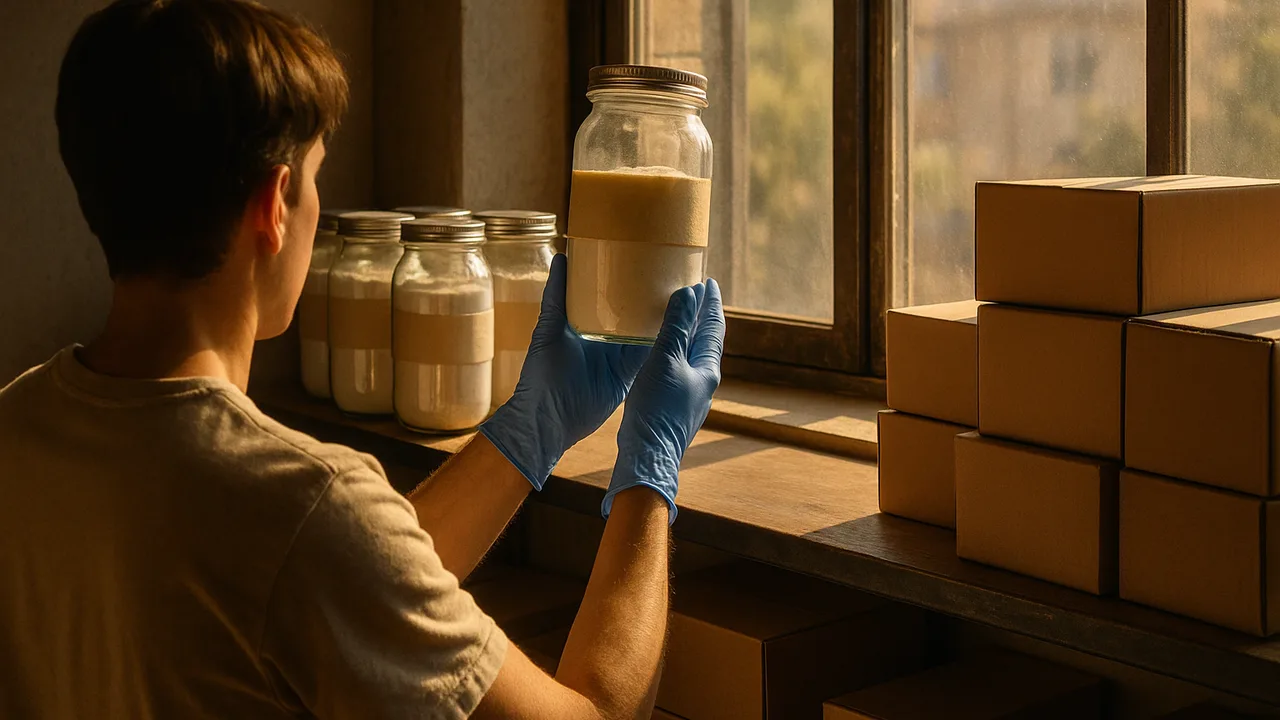
The Mystery Powder Test Kit
How can we tell which white powder is which, safely and for sure, without ever tasting it?
The mystery: Sugar disappears when you stir it into water, but the water still tastes sweet. Where did the sugar go, and is it still there?
Questions we will figure out together in this unit:
- Where does sugar go when it disappears in water?
- Is the sugar still there if we cannot see it?
- Does water get heavier when you stir something into it?
- Which powders dissolve and which ones do not?
- Why does baking soda fizz in some recipes?
- How can two white powders look the same but be different?
- Is air made of something, even though we cannot see it?
- How do scientists identify a material without tasting it?
explain the problem our food pantry client needs us to solve and why we can never use tasting to solve it.
- I can use information I am given to explain a problem that comes from something people need or want.
Phase 1: Spark
Warm-Up ~5 min
Do Now. Your teacher stirs a spoonful of sugar into a clear cup of water. Watch the sugar closely while it is stirred. After a minute, the water looks exactly like plain water again. Make a guess before we learn anything new.
Where did the sugar go after it was stirred into the water?
Instruction ~10 min
A message from our client. A community food pantry near our school gives free food to families who need it. Last week, someone donated a big box of baking supplies. On the way, the box got wet and every label peeled off. Now the volunteers have five bags of white powder and no idea which is which.
Why does it matter? The pantry knows the box held flour, sugar, salt, baking soda and cornstarch. A family who bakes bread needs flour, not salt. Some people are allergic to wheat, and flour is made from wheat. The pantry cannot hand out a bag unless it knows exactly what is inside.
Rule one: no tasting, ever. In science, we never taste an unknown substance. A white powder could be harmful, and the label is gone. Scientists identify materials by their properties, the things we can observe and measure safely. Color, shape, and what a powder does in water are all properties.
Pantry detectives, here is your mission. Design a Mystery Powder Test Kit that pantry volunteers can use. It must tell the five powders apart, safely and for sure, without ever tasting them.
Worked example 1: who, what, why. Engineers start by describing the problem. Priya wrote: “The food pantry needs a safe way to identify five white powders, because families must know what food they are getting.” Her sentence names who has the need, what they need, and why.
Worked example 2: a good test or a bad test? Jamal suggests smelling each bag up close. That is risky, because powder can get into your nose. Mei suggests dropping a pinch of each powder into water and watching. That is safe and gives us something to observe. Mei’s idea uses a property.
Our teams. You will work in teams of four, and roles rotate every lesson. The Materials Manager gets and returns supplies. The Recorder writes data in the notebook. The Tester runs each test. The Safety Captain and Reporter checks goggles and shares the team’s ideas with the class.
Guided Exercises ~15 min
Work through these with your team. Use the arrows to move from one to the next. Talk it over before you choose an answer.
Independent Practice ~10 min
On your own, start our class Wonder Board.
Write one question you wonder about the powders, the disappearing sugar, or how to tell materials apart. Put it on a sticky note for the Wonder Board.
How confident are you that you can I can explain our client's problem and why we never taste.
Closure ~5 min
Today we met our client and our mission. We learned that properties, not taste, help us identify materials. Next time, we will sort our Wonder Board and sharpen the problem.
Exit ticket: in your own words, what does the food pantry need, and why is it a problem engineers and scientists can help solve?
Teacher notes
Materials: clear cup of water, sugar, spoon, the five powders in sealed bags labeled A–E (keep the key private), sticky notes, chart paper for the Wonder Board, a roles rotation chart. If possible, invite a pantry volunteer to deliver the request in person or by a short letter.
Setup: post the driving question and the “no tasting, ever” rule where they stay all unit. Collect allergy information now, especially wheat (flour).
Listen for: “the sugar is gone” or “it turned into water.” Do not correct yet; 1.03 and 1.05 give students the evidence. Note that the reveal mentions sweetness only as something people report; students do not taste anything.
Support / stretch: give a frame: “The pantry needs ___ because ___.” Stretch: ask why “it looks like sugar” is not enough evidence.