2.20 Sun or Shade? Test, Revise and Retest
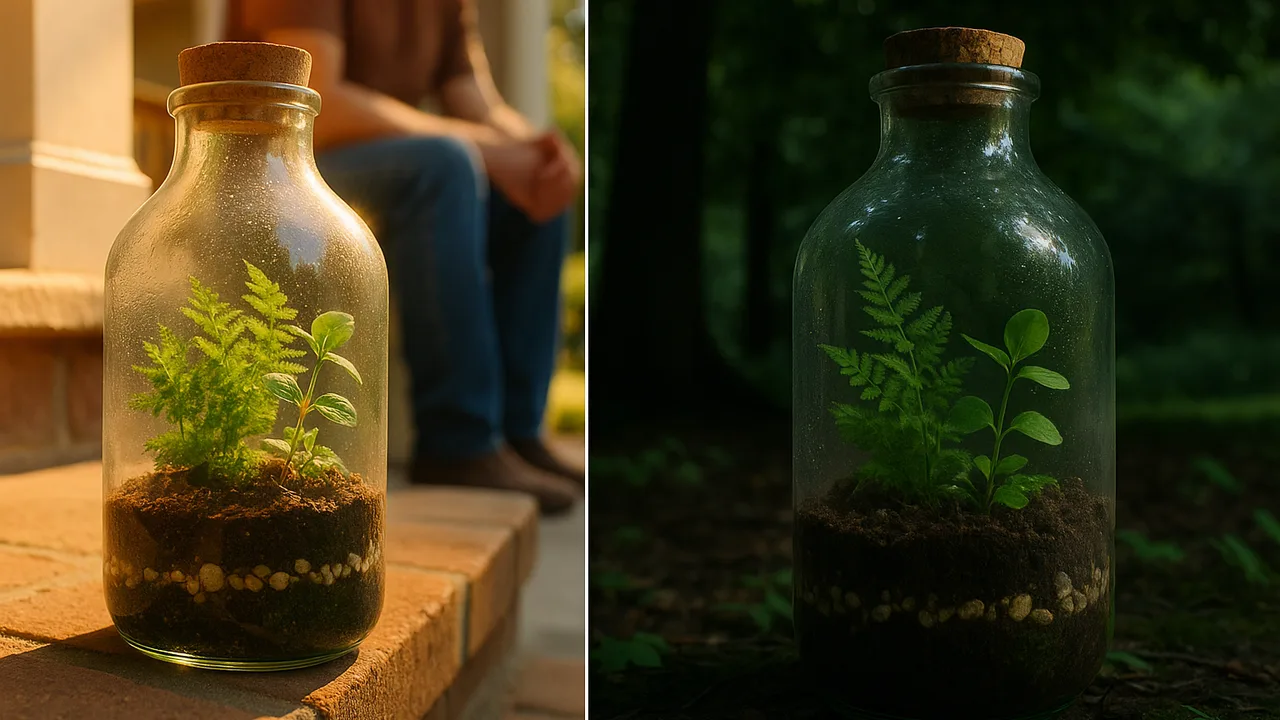
test our bottle biomes in two different places, use the data to explain what the plants need, and revise the garden plan.
- I can test each solution in different situations and collect data to see how well it meets the criteria and constraints.
- I can use reasoning to explain that soil changes very little in weight while plants grow a lot, and that some plants can grow without soil.
- I can argue that since plants can grow without soil and soil does not lose enough matter as plants grow, soil is not the main source of material for plant growth.
- I can explain that plants need water and air to grow, and since both are matter and enter the plant, they provide the materials plants need for growth.
Phase 4: Build
Warm-Up ~5 min
Do Now. Your team built two identical bottles. One sat on a sunny windowsill. One sat in a shady cupboard. Predict what you will find.
Which bottle will have the taller, greener seedlings?
Instruction ~10 min
Garden engineers, a design must work in more than one situation. The real garden has sunny beds and shady spots. So we test our model in both. We change only ONE thing, the light, and keep everything else the same.
What we measure. Weigh each sealed bottle. Measure the tallest seedling. Describe the leaf color and the scraps. Then compare.
| Measurement | Sunny bottle Day 1 | Sunny bottle today | Shady bottle Day 1 | Shady bottle today |
|---|---|---|---|---|
| Mass (grams) | ||||
| Tallest seedling (cm) | ||||
| Leaf color | ||||
| What the scraps look like |
Worked example 1: Ava’s team. Sample data: the sunny bottle was 612 grams on Day 1 and 612 grams today. Its seedling grew from 2 cm to 9 cm. The shady bottle also stayed at 608 grams, but its seedling was pale and thin. Claim: plants need sunlight for energy to grow well. The plant grew while the bottle’s mass stayed the same, so its new matter came from inside the bottle: mostly the air and water, not the soil.
Worked example 2: revising the plan. Ava’s team moved the vegetable beds on their garden plan to the sunniest side. They moved the compost bin into the shady corner, because decomposers do not need sunlight. One data set led to one clear revision.
Guided Exercises ~15 min
Fill in your data table first. Then answer.
Independent Practice ~10 min
Revise your garden plan with your data.
Describe one revision to your garden plan. Which data led to it? Which criterion does it help?
A student eats a radish from the sunny bed and then plays soccer. Trace the energy for the soccer game back to its start.
Closure ~5 min
Data drove your revision, garden engineers. Next time we learn how real communities compost on a much bigger scale.
Exit ticket: name the one thing you changed in today's test and two things you kept the same.
How confident are you that you can I can test a design in different situations and use the data to improve it.
Teacher notes
Materials: both bottle biomes per team (placed in sun and shade right after 2.16), kitchen scale, rulers, data tables.
Setup: weigh bottles on the same scale used on Day 1. If a bottle shows a small change in mass, discuss leaks in the tape or scale error.
Listen for: “the plant ate the sunlight to get bigger” (sunlight is energy, not matter); “the shady plant is lighter, so the bottle is lighter” (matter just stays in other parts).
Support / stretch: pre-fill the Day 1 column. Stretch: ask teams to design a test showing plants need air, using two sealed bottles.