2.15 Two Compost Designs, One Choice
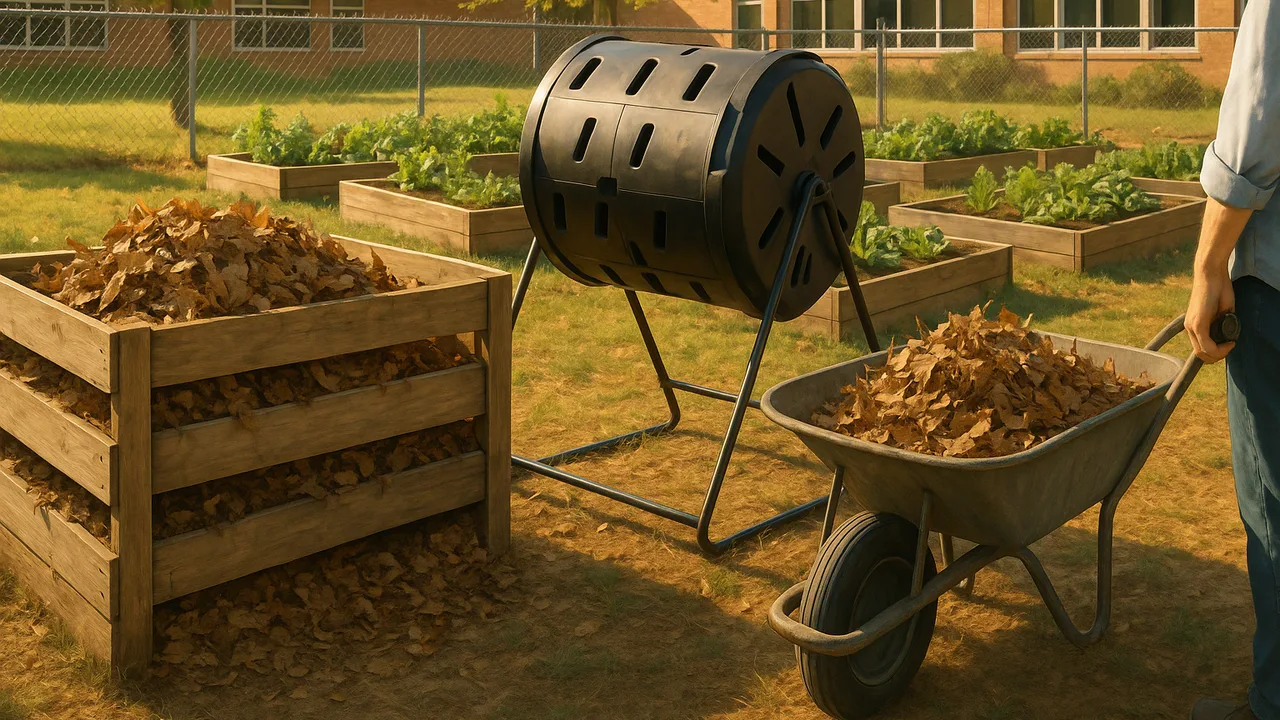
describe the garden club’s problem, sketch two compost designs that use decomposers, and choose one using the criteria and constraints.
- I can use information from research to explain what causes a problem and what effects it has.
- I can use scientific facts I have learned to help me understand the problem.
- I can come up with at least two possible solutions to a problem using what I know about science.
- I can describe the required features (criteria) and limits (constraints) for a solution, including ways to increase benefits, decrease risks or costs, and meet what people need.
- I can explain how I will use the criteria and constraints to help create and test my design solutions.
Phase 4: Build
Warm-Up ~5 min
Do Now. After lunch, the garden club found a bag of apple cores and banana peels in the trash. Where could those scraps go instead, so nothing is wasted?
Which living things break down apple cores and turn them back into material for the soil?
Instruction ~10 min
Garden engineers, welcome to the Build phase. The garden club wants a garden where nothing goes to waste. Today we turn that wish into a design problem with clear criteria and constraints.
The cause and the effect. The cause of the problem is simple. Fruit, vegetable and plant scraps go into the trash. The effect is that useful matter gets buried far away instead of feeding the garden. Decomposers could turn those scraps back into rich soil material right here at school.
| The garden club needs… | Type | How we will check |
|---|---|---|
| Every fruit, vegetable and plant scrap has a place to go | Criterion | |
| Finished compost goes back to the garden beds | Criterion | |
| The plan shows matter cycling and energy coming from the Sun | Criterion | |
| Fits in one corner of the garden | Constraint | |
| Safe: no meat, dairy or oily food, and lids keep animals out | Constraint | |
| Low cost, using recycled or donated materials | Constraint | |
| About 10 minutes of care a week | Constraint |
Worked example 1: Priya’s design A, an open pile. Scraps and dry leaves go in a pile behind the garden shed. It costs nothing. Air reaches the decomposers easily. But there is no lid, so squirrels and raccoons could dig in. That breaks the safety constraint.
Worked example 2: Priya’s design B, a closed bin with holes. A donated plastic bin has a lid and small air holes. Decomposers still get air and water. Animals stay out. Students turn the mix with a garden fork once a week. Design B meets every constraint, so Priya’s team chose it. They kept one idea from design A: a layer of dry leaves on top of each batch of scraps.
| Check | Design A | Design B |
|---|---|---|
| Where do the scraps go? | ||
| Do decomposers get air and water? | ||
| Safe and animal-proof? | ||
| Cost and weekly care time |
Guided Exercises ~15 min
Work with your team. Use the design table to check each idea.
Independent Practice ~10 min
Choose one design and defend your choice.
Which design did your team choose? Explain how it solves the garden club's problem. Use at least one criterion and one constraint as evidence.
Explain how decomposers in your design return matter to the garden soil.
Closure ~5 min
You have a compost plan, garden engineers. Next time we build a small working model of the whole system inside a bottle.
Exit ticket: name one trade-off your team made. What did you give up, and what did you gain?
How confident are you that you can I can come up with at least two solutions and compare them with criteria and constraints.
Teacher notes
Materials: notebooks, the criteria table copied or projected, chart paper for sketches. Optional: photos of an open pile and a closed bin.
Setup: post the garden club’s criteria and constraints where every team can see them. Give 8 minutes for two sketches and 5 to compare.
Listen for: “compost is just trash” (decomposers change it into material plants can use); “scraps disappear” (their matter moves into decomposers, the soil and the air).
Support / stretch: give a two-column planning frame. Stretch: ask teams to add a third design, such as a worm bin, and compare all three.