4.25 Unit Checkpoint: Sky Patterns and Gravity
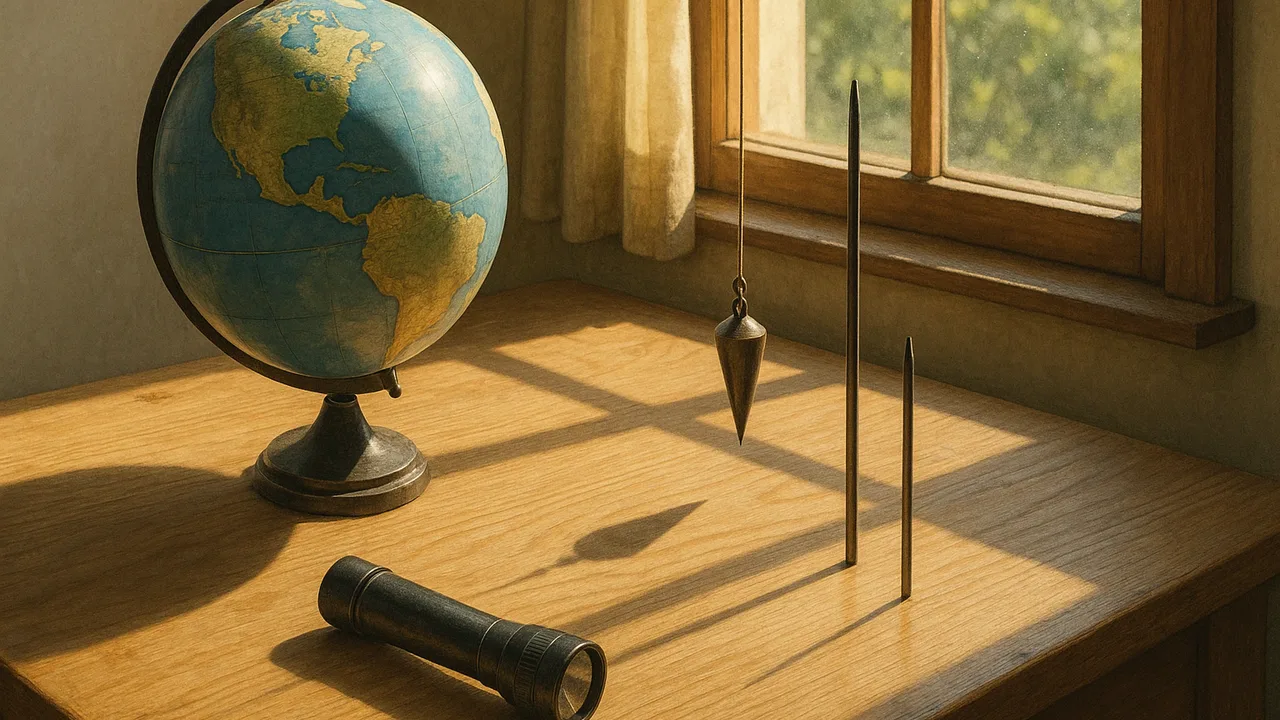
show what I know about gravity, star brightness, sky patterns and engineering design.
- I can use reasoning to connect evidence about Earth’s shape and objects falling down to support the claim that gravity pulls objects toward Earth’s center.
- I can explain that if Earth is spherical and everyone sees objects fall straight down, then objects must be falling toward Earth’s center.
- I can argue that when an object moves downward after being released, a force (gravity) must be pulling it toward the center of Earth.
- I can use evidence and reasoning to argue that the sun looks brighter and bigger than other stars because it is much closer to Earth, even though all stars give off their own light and are very large.
- I can explain that objects, like stars, look smaller and dimmer the farther away they are, so stars that are farther from Earth seem less bright than the sun.
- I can use examples of stars that look different in brightness to show that stars are at different distances from Earth.
- I can compare my data about shadows, daylight, and stars to find similarities and differences in how often these changes happen, like how shadows change daily and stars appear seasonally.
Phase 5: Prove It — unit checkpoint
Warm-Up ~5 min
Do Now. Take a slow breath. Look over the three big questions of this unit: Which way does gravity pull? Why does the Sun look so bright? What patterns do shadows and stars follow?
How confident are you that you can I can use evidence to explain gravity, star brightness and sky patterns.
Instruction ~10 min
Junior engineers, show what you know. Work on your own. Read each question twice. For written answers, use a claim, evidence and reasoning.
Worked example 1: reading a data question. A table shows a shadow at 30 cm, 18 cm, then 29 cm. First describe the pattern: long, short, long. Then explain it: the Sun is low, then high, then low again.
Worked example 2: judging evidence. If a question asks whether evidence is “enough,” ask yourself: does it connect to the claim, and does it cover every part of the claim? If not, name what is missing.
Guided Exercises ~15 min
Part A: multiple choice and short answer. Use the table for questions about shadows.
| Time | Shadow length | Direction |
|---|---|---|
| 8:30 | 45 cm | west |
| 12:30 | 20 cm | north |
| 3:30 | 40 cm | east |
Independent Practice ~10 min
Part B: written answers. Answer in 4–6 sentences each.
CER: A student in the United States and a student in Australia each drop a ball. Argue which way each ball falls and why. Use evidence about Earth's shape and about falling objects.
CER: Explain why the Sun looks bigger and brighter than other stars, even though all stars give off their own light. Use a model and an example of stars that look different in brightness.
Organize and compare: make a small table of three sky patterns (shadows, daylight, evening star groups). For each, write how often it repeats. Then write one similarity and one difference.
Closure ~5 min
Flip the review cards, then rate yourself again. Next: two catch-up and stretch days.
Gravity
Tap to revealPulls objects toward Earth's center, everywhere on Earth
Round Earth evidence
Tap to revealShips sink below the horizon; curved shadow on the Moon; North Star height changes
Star brightness
Tap to revealAll stars make light; the Sun looks brightest because it is closest
Daily pattern
Tap to revealShadows change length and direction
Yearly patterns
Tap to revealHours of daylight and the evening star groups
Design
Tap to revealCriteria and constraints, two solutions, fair tests, compare with data
How confident are you that you can I can use evidence to explain gravity, star brightness and sky patterns.
Teacher notes
Materials: the checkpoint on screen or printed, pencils, the CER anchor chart.
Setup: About 20 minutes for Part A, 15 minutes for Part B, and 5 minutes for review cards. This is an ordinary unit assessment; follow each student’s plan for accommodations such as read-aloud.
Look for: claims that dim stars are small; answers that explain why daylight changes (not required, and outside this unit); CERs with only one piece of evidence.
Support / stretch: Use results to group students for 4.26 (gravity and shadows) and 4.27 (star brightness and design). Stretch: ask early finishers what evidence they would collect to check that dropped objects fall straight down in a city far away.