3.22 Revise and Get Ready: Version 2
use my test data and feedback to improve my team’s fix, and explain which part we changed and how the evidence supports that change.
- I can describe how I will collect evidence about how well my model or prototype meets the criteria and constraints.
- I can identify and describe specific parts of my model or prototype that do not meet the criteria or constraints.
- I can explain which parts of my model or prototype could be improved to better meet the criteria and constraints.
- I can explain how the evidence I collect will help me find problems or areas to improve in my model or prototype.
- I can combine information from two or more sources to describe both the positive and negative effects that human activities have on the environment.
- I can combine information from different sources to explain how a community uses science ideas to protect a natural resource and its environment.
Phase 4: Build
Warm-Up ~5 min
Do Now. Look at your build log and feedback sheet. Put a star next to your biggest failure point.
Diego's creek cup was still muddy, and visitors saw water going around the sponge. What is the BEST change for version 2?
Instruction ~10 min
Version 2. Real designs are almost never perfect the first time. Engineers improve one thing at a time so they can tell what helped.
The revision steps.
- Pick the failure point with the strongest evidence.
- Choose ONE change that targets it.
- Predict what the change will do to your numbers.
- Keep the same test so you can compare version 1 and version 2.
Worked example 1: Priya’s bank. Failure point: the bare edge eroded. Evidence: muddiness 3 and a groove at the edge. Change: plant grass to the very edge. Prediction: muddiness drops to 1 or 2. Test: same 250 mL, same tilt.
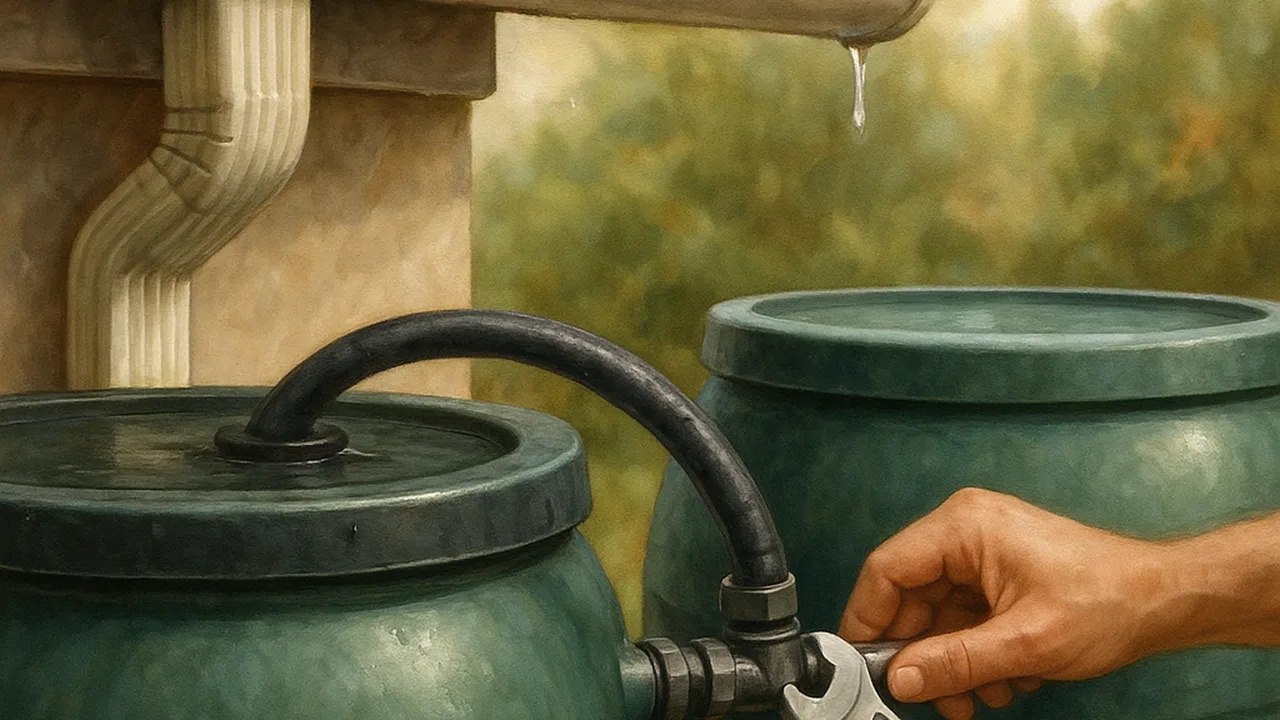
Worked example 2: Ava’s rain barrel. Failure point: the cup overflowed after 20 sprays. Evidence: water spilled onto the model driveway. Change: a bigger cup with an overflow tube into the rain garden. Now the barrel and garden work together as a system.
Draft your plan page. Each team writes one page for the Watershed Protection Plan:
- The problem: what people need, and what is harming the creek.
- Our fix: what it is and how it works with Earth’s systems.
- Good and bad effects: what people do now, and what our fix changes.
- Our evidence: version 1 results, the change, and version 2 results (after Test Day).
Guided Exercises ~15 min
Revise with your team. Use the arrows to move through each step.
Independent Practice ~10 min
On your own, explain your revision.
Write three sentences: “In version 1, ____ did not meet the criterion because ____. We changed ____. Our evidence that this should help is ____.”
How confident are you that you can I can use evidence to decide how to improve a design.
Closure ~5 min
Version 2 is ready. Next phase: Prove It. You will test version 2 in the watershed model, then present the plan at the Watershed Summit. Next: your 3DX field trip to a stream bank being restored.
Exit ticket: what did you change, and what result do you expect on Test Day?
Teacher notes
Materials: models, build logs, feedback sheets, extra sponges, cups, straws or tubes for overflow, plan-page templates.
Setup: About 15 minutes to revise, 15 to draft plan pages, 5 for the closure. Teams do not run the final test today; save it for 3.23 so every team tests under the same conditions.
Listen for: teams changing several things at once, and plan pages that list only harms. Ask for at least one positive effect.
Support / stretch: Offer a list of common fixes for common failure points. Stretch: estimate the cost of the real-life version of the fix.