3.14 Ideate: Ideas to Guard the Creek
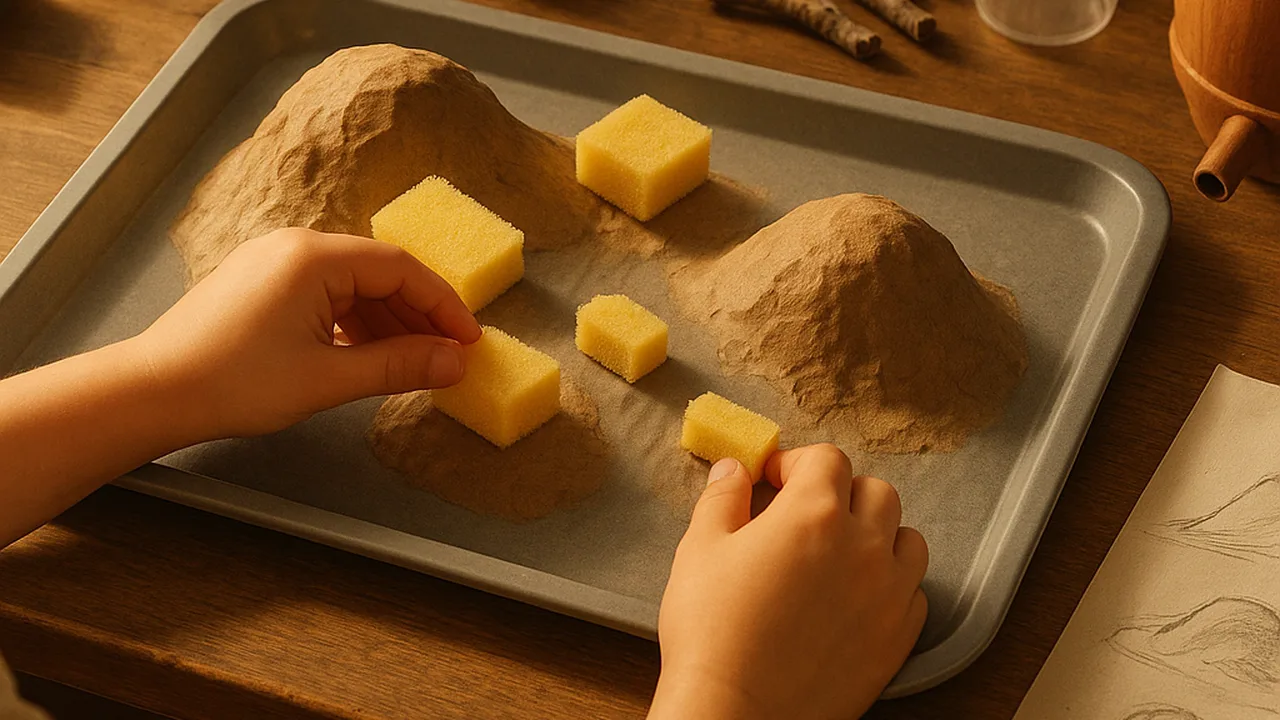
use our models and data to brainstorm solutions for the creek and check them against our criteria and constraints.
- I can describe a problem that could be solved by making a new or better object, tool, process, or system.
- I can list the features that a solution must have to solve the problem.
- I can describe the limits on my design, such as how much it costs, what materials I can use, or how much time I have.
Phase 3: Make Sense
Warm-Up ~5 min
Do Now. Reread the Wonder Board. Put a check next to every question we can now answer.
Pick one Wonder Board question we can now answer. Write the answer in one or two sentences, using a sphere name or a graph.
Instruction ~10 min
Creek guardians, time to ideate. To ideate means to think up many ideas. Every idea today must connect to something we found out.
Our criteria (what the plan must do). Less rainwater rushes over the ground into the creek. The water that reaches the creek is cleaner, with less mud and litter. The plan uses what we learned about how land, water, air and living things interact.
Our constraints (the limits). Families, the school or the town could really do it, at low cost. It is safe for people and wildlife, with no harsh chemicals. In the Build phase, each model fix must fit in our watershed model tray, and we have two build days.
Worked example 1: an idea from data. Mei remembers that the grass tray had the least mud. Her idea is a strip of native plants along the edge of the school lot. It meets two criteria: it slows runoff and holds soil. She checks a constraint: seeds and small plants cost little.
Worked example 2: an idea that needs work. Malik suggests covering the whole creek with a roof. It might keep trash out. But it breaks our constraints: it is costly, unsafe to build and far too big. And it would block the rain the creek needs! He crosses it off and tries again: a sign by the storm drain that says the drain leads to the creek.
Brainstorm rules. Go for many ideas. Build on others’ ideas. Then check each idea against the criteria and constraints. In the next phase, you will test the best ones on a bigger watershed model: a tilted plastic bin with soil, a cardboard roof and plastic “pavement” at the high end, a “creek” cup at the low end, and cocoa powder standing in for pollution.
Guided Exercises ~15 min
Brainstorm as a team. Then score each idea in this table: Y = yes, it meets it; N = no; ? = not sure.
| Idea | Science it uses | Less runoff rushing in? | Cleaner water (less mud and litter)? | Doable at low cost? | Safe for people and wildlife? |
|---|---|---|---|---|---|
Independent Practice ~10 min
Choose your favorite idea.
Pick the idea you think is best. Explain which criteria it meets and which constraints might make it hard. What would you need to find out before building it?
Closure ~5 min
Our ideas are ready to test. Next: your 3DX field trip to Earth’s Four Spheres Overlook. Then the Build phase begins.
How confident are you that you can I can list criteria and constraints and use them to judge ideas.
Exit ticket: name your best idea. Give one criterion it meets and one constraint it must fit.
Teacher notes
Materials: chart paper, sticky notes, the class criteria and constraints chart from 3.09, the Wonder Board, notebooks with all data.
Setup: Post the criteria and constraints in two columns where everyone can see them.
Listen for: ideas with no science link, and mixing up criteria with constraints. Quick test: “Does it say what the plan DOES, or what LIMITS it?” The scoring table is a formative check of 3a and 3b. Save choosing and testing ideas for the Build phase in part 2.
Support / stretch: Give an idea bank (rain garden, native plant strip, storm-drain signs, trash pickup day, rain barrel, mulch on bare soil). Stretch: rank ideas by how many criteria they meet.