4.05 A Flashlight Galaxy: Near, Far and Bright
test how distance changes how bright and how big a light looks, and decide whether our data is useful evidence about the Sun and other stars.
- I can describe how the sun and other stars are natural objects in the sky that give off their own light.
- I can compare how bright the sun and different stars look from Earth.
- I can explain, using examples like streetlights, how objects that are closer look bigger and brighter than similar objects that are farther away.
- I can decide if the evidence I have really helps explain why the sun looks brighter and bigger than other stars because of how far away they are.
Phase 2: Investigate
Warm-Up ~5 min
Do Now. Picture a long, straight street at night. Every streetlight is the same kind of lamp. Look down the row. Do the lamps far away look the same as the one right above you? Make a guess.
Two identical flashlights shine toward you. One is 2 meters away. The other is 8 meters away. Which looks brighter?
Instruction ~10 min
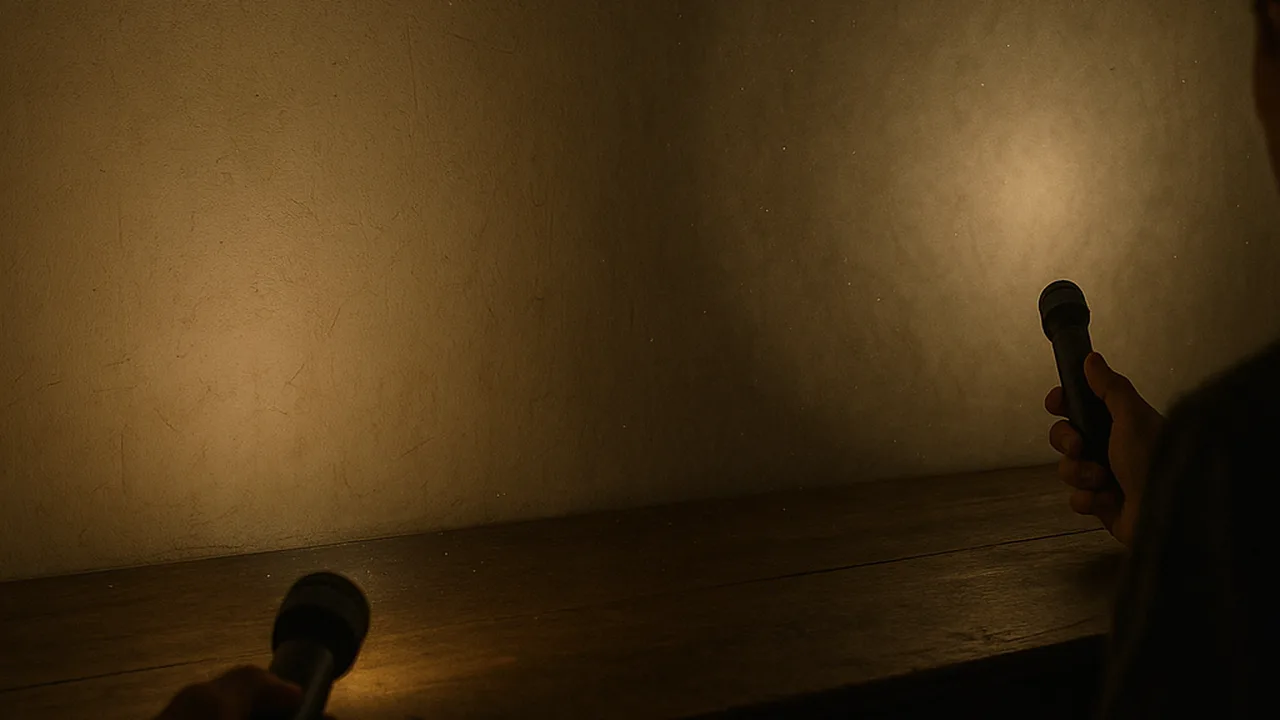
Junior astronomers, welcome to the Flashlight Galaxy. We will darken the room or a hallway. Two Testers each hold an identical flashlight, pointed at the floor near the observer’s feet, never at eyes. The observer stands at a tape line and rates each light from 1 (very dim) to 5 (very bright). The observer also says how big the glowing bulb looks.
How to run it. Put Flashlight A at 2 meters. Put Flashlight B at 2 meters, too, and compare. Then move B to 4 meters, then 8 meters. Swap observers so every team member rates the lights. Last, try one challenge: put a weak flashlight close and a strong one far away.
| Setup | Distance (m) | Brightness rating (1–5) | How big the glow looks (big / medium / small) | Notes |
|---|---|---|---|---|
| Flashlight A | 2 | |||
| Flashlight B | 2 | |||
| Flashlight B | 4 | |||
| Flashlight B | 8 | |||
| Weak light close / strong light far |
Worked example 1: reading sample data. Diego’s team rated Flashlight B a 5 at 2 meters, a 3 at 4 meters and a 1 at 8 meters. It also looked smaller each time. The flashlight did not change. Only its distance changed. These are sample numbers, so your ratings will be your own.
Worked example 2: the challenge. Ava’s team put a small keychain light close and a big lantern far down the hall. The keychain light looked brighter! So a light can look bright because it is strong, or because it is close. Distance matters a lot.
Now we can name it. Lights that are farther away look dimmer and smaller than the same lights up close. The Sun and the other stars are natural objects that give off their own light. The Moon is different. It only reflects sunlight. Our data gives us a clue about the claim that the Sun looks brightest because it is closest.
Guided Exercises ~15 min
Use your team’s ratings to answer these. The Reporter reads each answer aloud before you check it.
Independent Practice ~10 min
Use your own team’s data table.
Describe the pattern between distance and brightness. Use at least two ratings from your table.
How is our flashlight test like the Sun and the stars? How is it different from the real sky?
Closure ~5 min
The same light looked dimmer and smaller as it moved farther away. Next time, we go outside and start tracking real shadows with a shadow stick.
Exit ticket: use our flashlight data to explain one reason a star could look dim even though it gives off a lot of light.
Teacher notes
Materials (per team): two identical flashlights, one weaker light (a keychain light or phone light on low), masking tape, a meter stick or measuring tape. A hallway or gym with the lights off works best.
Setup: tape the observer line and the 2, 4 and 8 meter marks ahead of time. Cover windows if you can.
Listen for: “the far flashlight is weaker” (it is the same flashlight; only distance changed). 5-ESS1-1 is about relative distance only, so avoid star size, age or life stages. Students may say the Sun is “the biggest star”; redirect to distance as the reason it looks brightest.
Support / stretch: let some observers use only “bright / medium / dim.” Stretch: ask teams to set up two lights so they look equally bright and explain how they did it.