3.17 Build Day: Rain Barrels and Rain Gardens
build my team’s fix in the watershed model, run a first test by following our plan, and explain how it changes the way water and land interact.
- I can carry out my investigation and collect and record data by following my plan.
- I can describe how the parts of the two Earth systems in my model interact with each other in my example.
- I can find information from books and reliable websites about how a human activity, like farming or using energy, affects Earth’s resources and the environment.
- I can find information about how a community uses science ideas to protect a natural resource and the environment where it is found.
Phase 4: Build
Warm-Up ~5 min
Do Now. A roof sheds every drop of rain that hits it. Where does that water go if the downspout dumps it onto a driveway?
A cup catches all the water from the model roof. What will happen to the creek cup?
Instruction ~10 min
Build day, Guardians. Materials Managers collect supplies. Testers set up the model. Recorders keep the build log. Reporters watch the clock. Build first, then run your first test exactly as your plan says.
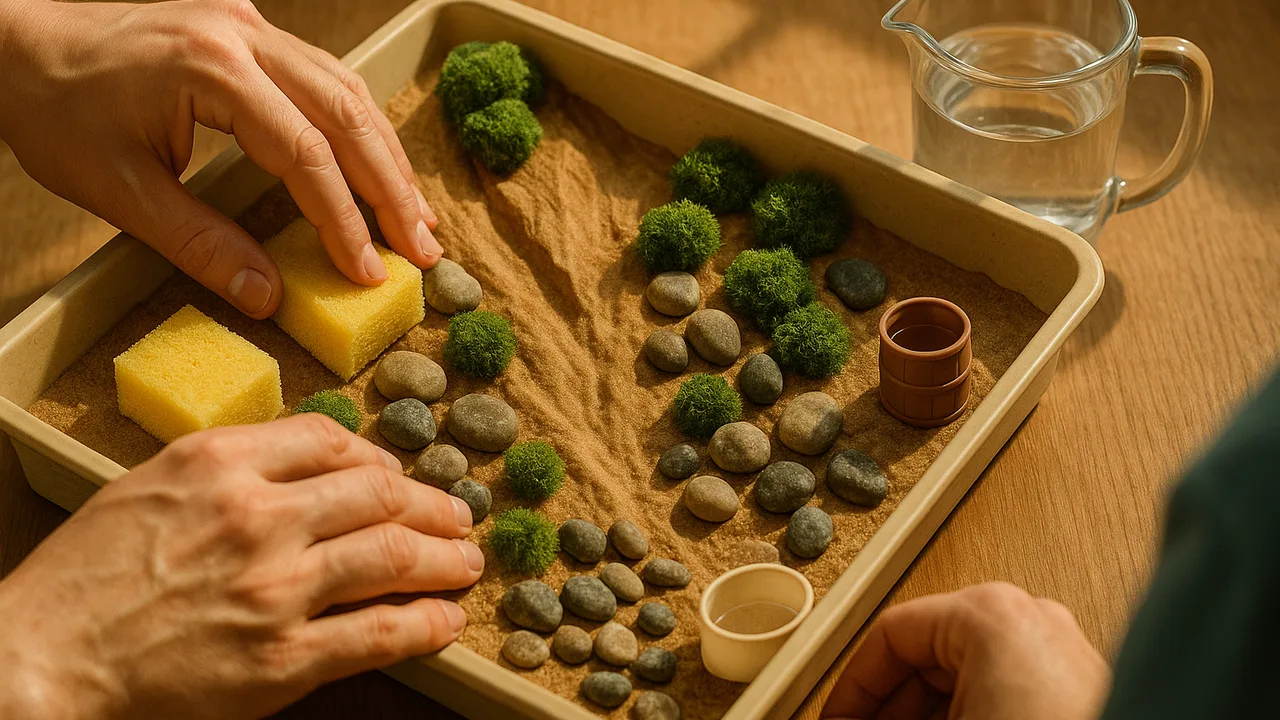
Our watershed model. A plastic bin is tilted so one end is higher. The high end is the “hills and town.” Soil, a cardboard roof and a strip of plastic “pavement” sit there. The low end is the “creek,” where a cup catches the runoff. A spray bottle makes the rain. A pinch of cocoa powder sprinkled on the land stands in for pollution like dirt, oil and fertilizer.
How the model fixes work.
- Rain barrel: a paper cup taped under the cardboard roof catches roof water.
- Rain garden: a dip in the soil near the bottom of the slope, filled with a sponge and loose soil. It holds runoff and lets it soak in.
- Campaign and water-saving teams: build a “before and after” litter test. Scatter paper bits on the model town. Remove most of them, the way a cleanup would. Compare what reaches the creek.
Worked example 1: two systems interact. Rain from the atmosphere hits bare ground in the geosphere. The water picks up soil and carries it downhill. The rain garden changes that interaction. Water soaks into the soil instead of scraping it away.
Worked example 2: Ava’s first test. Ava’s team sprayed 30 times without the barrel cup. The creek cup held 140 mL. Then they added the cup and sprayed 30 times again. The creek cup held 95 mL. These are sample numbers; your model will give its own. Ava wrote both numbers in the build log right away, before she forgot.
Follow the plan. Do the runs in the same order, with the same sprays, every time. If something goes wrong, write it down. A mistake you record is still useful evidence.
| Run | Fix in place? | Sprays | Creek cup (mL) | Muddiness (1–5) | Notes |
|---|---|---|---|---|---|
| A | No | ||||
| B | Yes |
Guided Exercises ~15 min
Build and run your first test. Use the arrows to move through each step.
Independent Practice ~10 min
On your own, explain your model.
Draw your model with arrows. Show rain (atmosphere), soil (geosphere) and water flow (hydrosphere). Write one sentence about how your fix changes how water and soil interact.
Closure ~5 min
Your fix is built and has its first test results. Next time, a different fix: plants on the stream bank.
Exit ticket: write your Run A and Run B results. Name one thing that surprised you.
Teacher notes
Materials: watershed model bins (one per team or shared in shifts); potting soil; a cardboard roof; plastic strip for pavement; sponges; paper cups; tape; spray bottles; cocoa powder; measuring cups in mL; paper bits for litter tests; towels.
Setup: Pre-wet soil lightly so first runs are not all soaked up. Reset the soil between runs and keep the tilt the same (a book under one end). Allow about 25 minutes to build and test.
Listen for: “the barrel makes the rain stop.” It only holds roof water; rain still falls on the land. Also watch for teams changing the number of sprays between runs.
Support / stretch: Pre-build one model as a demo for teams who need it. Stretch: combine two fixes and predict whether they work better together.