3.06 Hidden Water in the Air and in Plants
find evidence that the air holds water and that plants give water to the air, and describe how these parts of Earth interact.
- I can describe how the parts of the two Earth systems in my model interact with each other in my example.
- I can use my model to explain different ways the two Earth systems in my example work together to change Earth’s surface.
- I can use my model to show how parts of one Earth system help that system work and also help the other system work.
Phase 2: Investigate
Warm-Up ~5 min
Do Now. On a summer morning, the grass is wet even though it did not rain. Write one idea about where that water came from.
We tie a clear plastic bag around some leaves on a living plant. What will we find inside the bag tomorrow?
Instruction ~10 min
Creek guardians, water hides in surprising places. Today you work at two stations. Each one looks for water you usually cannot see.
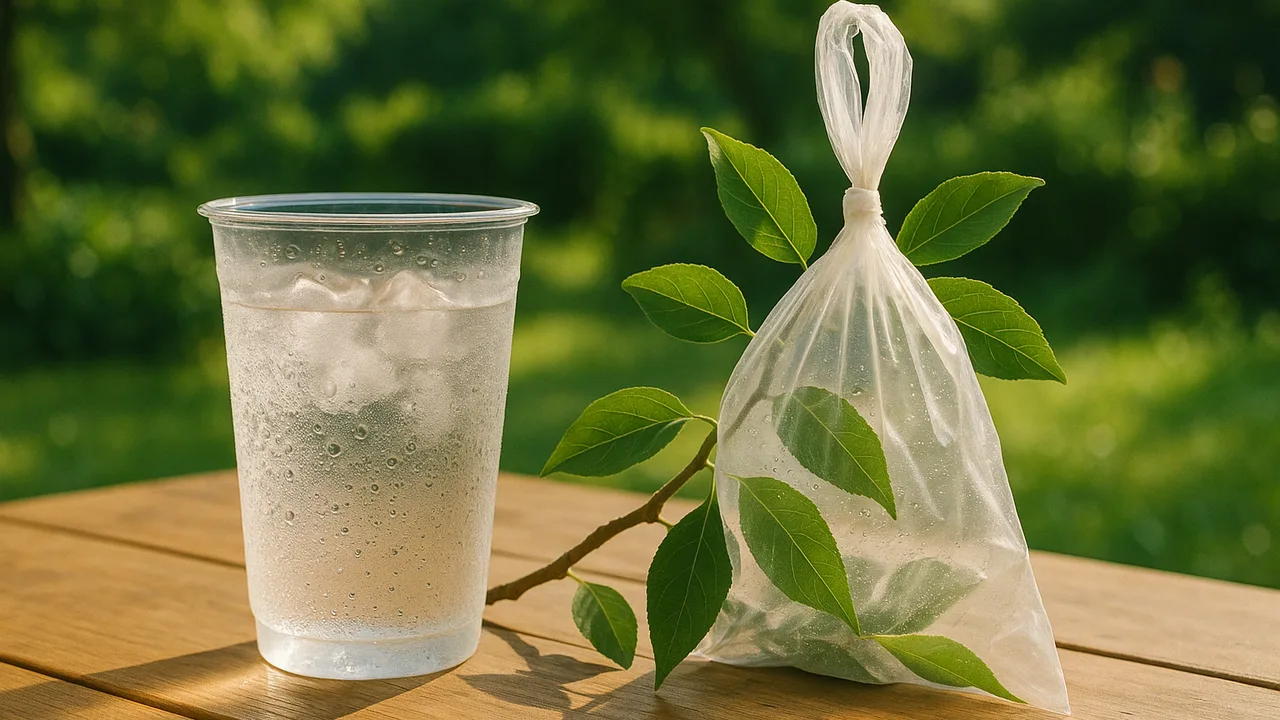
Station 1: the cold cup. Fill a dry, clear cup with ice and water. Wipe the outside dry. Watch the outside for five minutes. A second cup of room-temperature water is your control.
Station 2: the leaf bag. Your teacher set up bags on a potted plant yesterday. One bag is on leafy stems. One bag is on a bare stick in the same pot, as a control. Look closely at both.
Worked example 1: the cold cup. Jamal sees drops form on the cold cup but not the warm one. The cup has no holes. So the water must have come from the air around it. The cold cup cooled the air, and water came out.
Worked example 2: the leaf bag. Ava finds drops in the leaf bag but almost none in the stick bag. The stick is not alive. So the living leaves must have given off water. The water started in the soil and moved up through the plant.
Big picture. Trees along our creek do this all day. They pull water from the soil and send some into the air. The air carries it away. Later it can fall again as rain.
Guided Exercises ~15 min
Visit both stations. The Recorder fills in this table.
| Station | Test | Control | What we saw on the test | What we saw on the control | Where did the water come from? |
|---|---|---|---|---|---|
| 1 | Ice-water cup | Room-temperature cup | |||
| 2 | Bag on leaves | Bag on a bare stick |
Then answer the questions with your team.
Independent Practice ~10 min
Connect the stations to the creek.
Draw a tree beside a creek. Add arrows to show water moving from the soil, up the tree and into the air. Label each arrow.
Closure ~5 min
The air and living things hold water too. Next, we ask a big question: how much of Earth’s water can people actually use?
Exit ticket: name one piece of evidence that air holds water you cannot see.
Teacher notes
Materials: clear plastic cups, ice, water, paper towels; one or two leafy potted plants (or a leafy outdoor branch), clear plastic bags, twist ties, a bare stick pushed into the same pot.
Setup: Bag the plant and the stick the day before, in a sunny spot. Close the bag openings loosely around the stems so the plant is not damaged.
Listen for: “The cold cup is leaking.” Mark the water line with tape; drops form on the outside even above the water line, and the level inside does not drop. Keep the word transpiration optional; the idea is what matters.
Support / stretch: Give a cause-and-effect frame. Stretch: ask students to predict how a hot, sunny day would change the leaf-bag result.