3.01 A Town Between Rivers, Still Thirsty
Guardians of the Creek: A Watershed Protection Plan
How do Earth’s land, water, air and living things work together, and how can our community protect the water we all depend on?
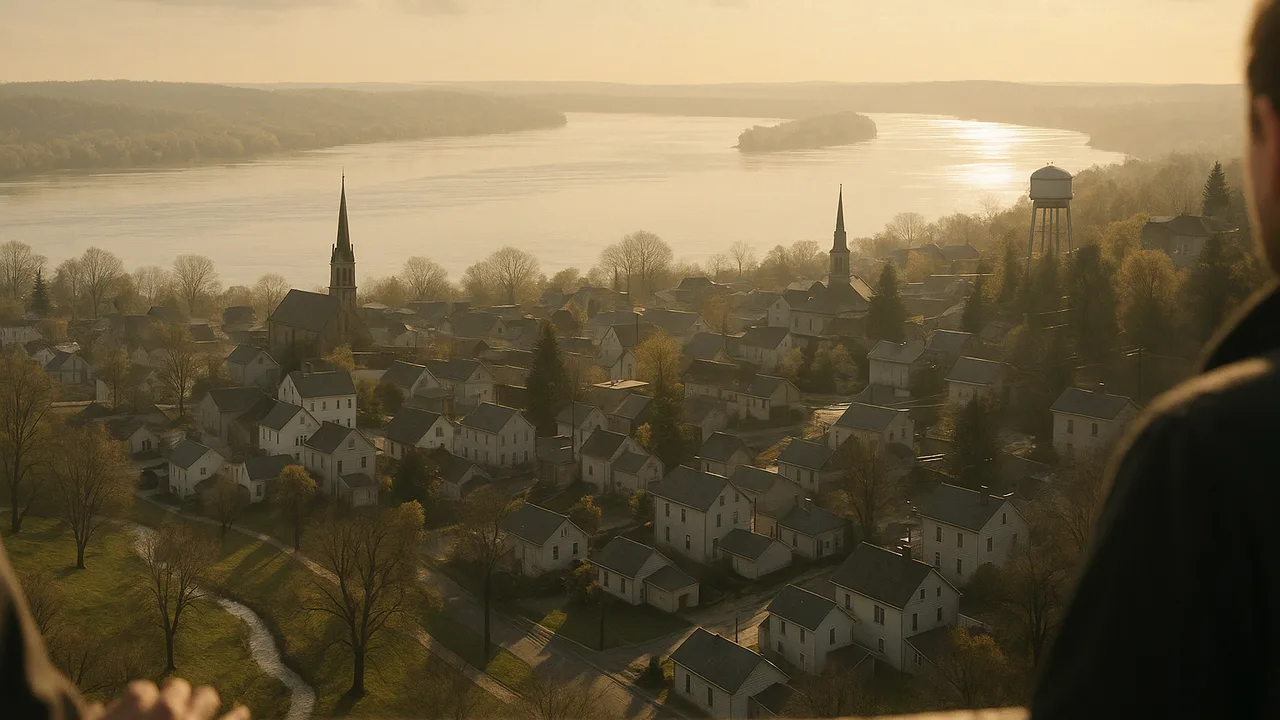
The mystery: Almost all of Earth’s water is salty ocean water. A town built beside two big rivers still has to worry about having clean water to drink. Why?
Questions we will figure out together in this unit:
- If Earth is mostly water, why do people worry about running out?
- Where does our creek’s water come from?
- Where does the creek’s water go after it leaves our town?
- Why does the creek turn brown after a storm?
- How do clouds and rain connect to the creek?
- Do trees and plants help the creek?
- Why do parking lots flood in a big rain?
- What can kids do to keep a creek clean?
explain why a town beside big rivers still has to protect its water, and describe the problem our client needs help with.
- I can use information I am given to explain a problem that comes from something people need or want.
Phase 1: Spark
Warm-Up ~5 min
Do Now. Picture a globe spinning on your desk. Most of what you see is blue. Now picture a town built where two big rivers meet. Make a guess before we learn anything new.
Earth is covered with water. Why would a town beside two big rivers still worry about having clean water to drink?
Instruction ~10 min
Creek guardians, we have a new client! A local watershed group has asked our class for help. Its members are neighbors who care for a small creek near our school. That creek flows into a big river.
What does the group do? Volunteers pick up trash along the banks. They plant trees and check how clear the water looks. They teach neighbors how to keep the creek healthy. Now they want fresh ideas from young scientists.
Here is their problem. After a hard rain, the creek turns brown and fast. Trash from streets washes into it. Some banks are bare and crumbling. The group wants a watershed protection plan that families and the school can follow.
Worked example 1: using information to explain a need. Diego reads the group’s letter. It says, “The creek turns muddy after storms, and kids cannot play in it safely.” Diego writes the need in his own words: “People need a creek that stays clean enough to enjoy, even after rain.” He used facts from the letter to name the problem.
Worked example 2: a need and a want. Priya notices two different ideas in the letter. “Clean water for fish and people” is a need. “A nice bench by the creek” is a want. Engineers solve the needs first, then add wants if there is time and money.
Our Wonder Board will hold the questions this unit answers. Add your own questions on sticky notes. Next lesson, we sort them and form teams.
Guided Exercises ~15 min
Work with a partner. Use the arrows to move through each question. Talk about the client’s letter before you answer.
Independent Practice ~10 min
On your own, think like a member of the watershed group.
Imagine you volunteer at the creek after a big storm. Write two things you might notice. For each one, explain why it could be a problem for people or animals.
Write one new question for our Wonder Board.
Closure ~5 min
Today we met our client and our big question. Next time, we sort the Wonder Board, form teams and define the problem more clearly.
How confident are you that you can I can explain the problem our client needs help with.
Exit ticket: why does a town next to big rivers still need to protect its water? Give one reason.
Teacher notes
Materials: a globe or world map, sticky notes for the Wonder Board, chart paper, and a short client letter you write on chart paper or slides (keep it general; do not name a real organization).
Setup: Post the driving question and an empty Wonder Board before class. If you have photos of a local creek, use them.
Listen for: “There is so much water, we can never run out.” Do not correct it yet; lessons 3.07–3.08 let students measure the answer.
Support / stretch: Give a frame for the need statement. Stretch: ask students to list who else depends on the creek (fish, birds, neighbors, towns downstream).