3.10 Naming Earth’s Four Spheres
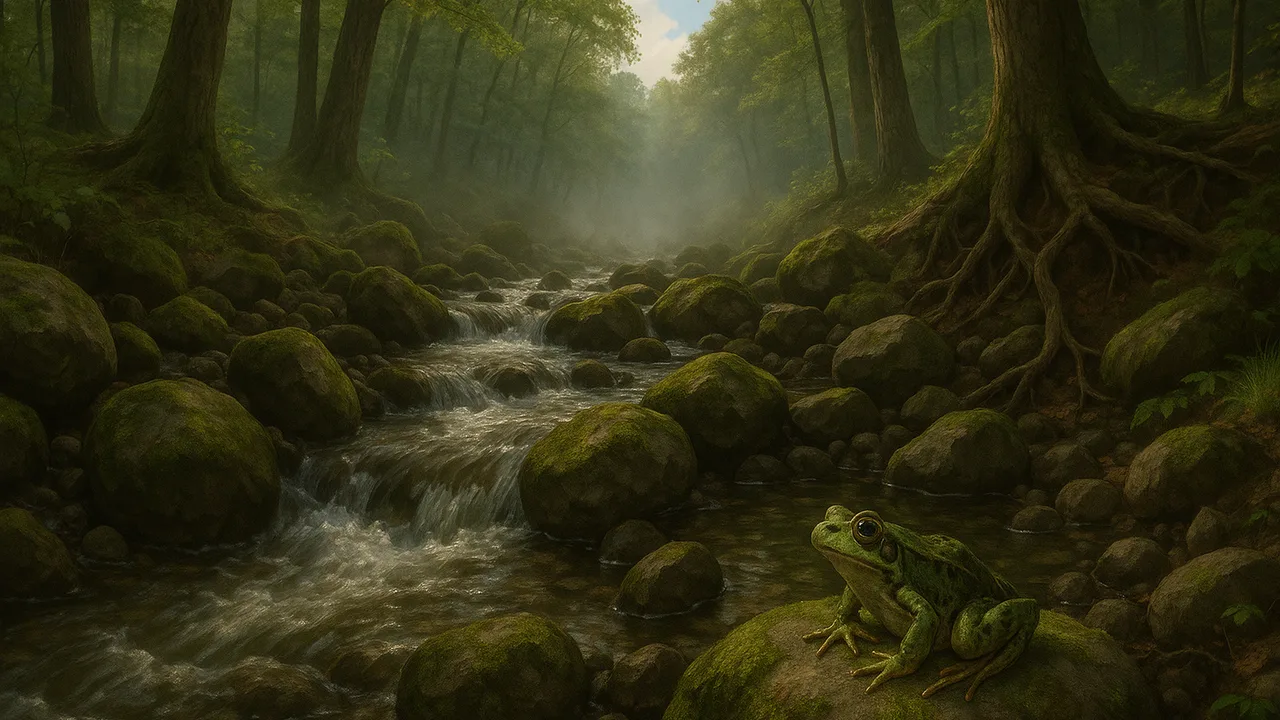
name Earth’s four major systems and build a model of one creek example that shows how two of them interact.
- I can develop a model using a specific example to show how two of Earth’s systems interact.
- I can identify and label the important parts of my example, including features from two Earth systems like the geosphere, hydrosphere, atmosphere, or biosphere.
- I can describe how the parts of the two Earth systems in my model interact with each other in my example.
Phase 3: Make Sense
Warm-Up ~5 min
Do Now. Open your notebook to the schoolyard sort from 3.03. Look at your four columns: land, water, air and living things.
Pick your best touch spot from 3.03. Which two columns did it connect? What was each part doing?
Instruction ~10 min
Now we name what we found. Scientists describe Earth as four big systems, called spheres. Your four columns were the four spheres all along.
- Geosphere: the solid Earth, including rock, soil and sand.
- Hydrosphere: all of Earth’s water, including oceans, creeks, groundwater and ice.
- Atmosphere: the layer of air around Earth, including wind and clouds.
- Biosphere: all living things, including plants, animals and people.
The spheres interact. Each sphere acts on the others. In our water-cycle bag, the Sun warmed the water, and some evaporated into the air. That is the hydrosphere acting on the atmosphere. On the cool plastic, water vapor condensed into drops that fell back. That is the atmosphere acting on the hydrosphere.
Worked example 1: a creek bank model. Ava draws one creek bank. She labels the soil and rocks (geosphere) and the creek water (hydrosphere). She draws an arrow: “Fast water carries soil away from the bank.” She draws a second arrow: “Rocks on the bottom slow the water and change its path.” Two spheres, two arrows, both directions.
Worked example 2: a tree model. Diego draws a sycamore tree on the bank. He labels the tree (biosphere) and the air (atmosphere). His arrow says, “Leaves give water vapor to the air,” using our leaf-bag evidence. His second arrow says, “Wind and rain from the air reach the tree.”
A good model shows one specific example, labels parts from two spheres and uses arrows to show how they act on each other.
Guided Exercises ~15 min
Re-sort your 3.03 findings using the sphere names. Then plan your team’s two-sphere model.
| Our example | Sphere 1 and its parts | Sphere 2 and its parts | How 1 acts on 2 | How 2 acts on 1 |
|---|---|---|---|---|
Independent Practice ~10 min
Draw your own two-sphere model.
Draw one specific example from our creek. Label at least two parts from each of two spheres. Add one arrow in each direction and write what it shows.
Closure ~5 min
Land, water, air and life now have their science names. Next, we explain how the spheres work together to change Earth’s surface.
How confident are you that you can I can model how two of Earth's spheres interact.
Exit ticket: name the four spheres. Give one example of two of them interacting at our creek.
Teacher notes
Materials: 3.03 tables, chart paper, markers, four sphere color codes (brown geosphere, blue hydrosphere, light gray atmosphere, green biosphere).
Setup: Post a sample two-sphere model with arrows in both directions.
Listen for: models that show three or four spheres at once. For now, keep each model to two spheres, as 5-ESS2-1 asks. Also listen for “clouds are the hydrosphere.” Clouds hold water drops but float in the atmosphere; accept either if students explain their thinking.
Support / stretch: Give an arrow template with blanks. Stretch: have students make a second model with a different pair of spheres.