4.16 Build and Calibrate: Marking the Hours
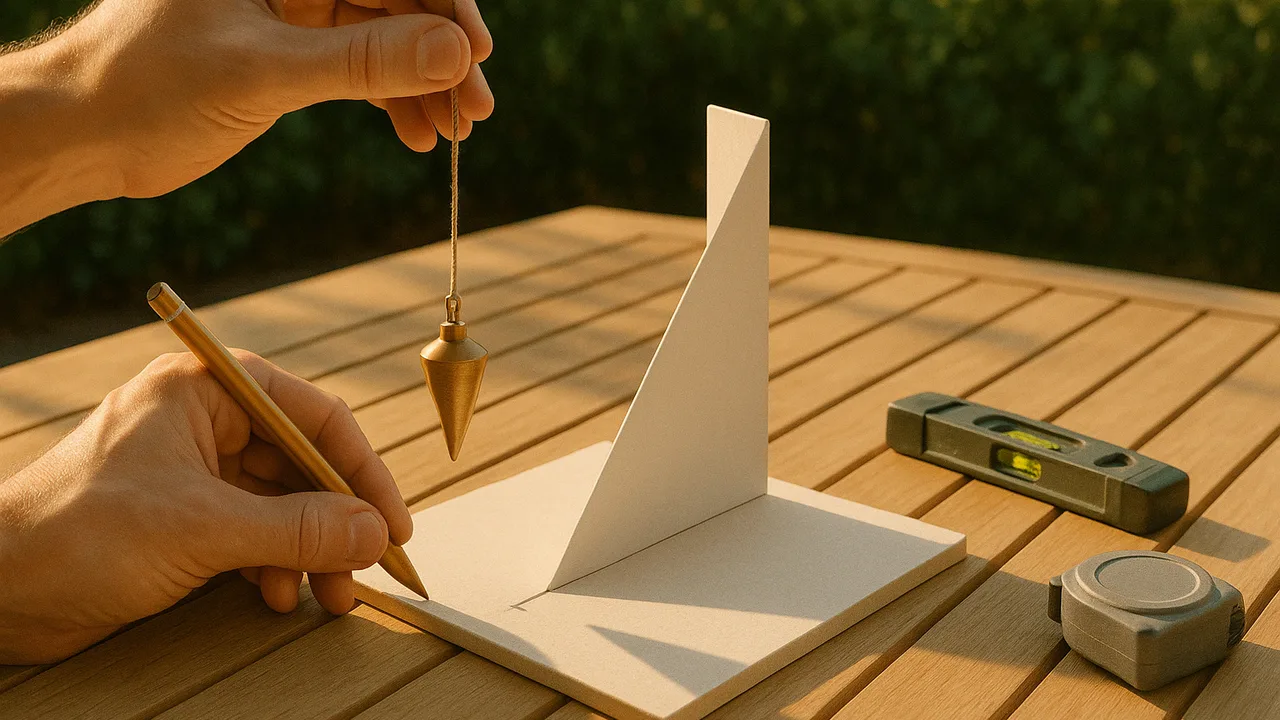
build two shadow clock prototypes, set them level with a plumb line, and mark the hour lines by checking a real clock.
- I can organize data about how the length and direction of shadows change at different times during one day using graphs or charts.
- I can use graphs to show how the amount of daylight changes throughout the year by recording sunrise and sunset times.
- I can organize data to show which stars or groups of stars are visible in the night sky at different times of the year.
- I can explain how each of my design solutions could solve the problem.
- I can describe evidence that shows Earth is shaped like a sphere, such as ships disappearing over the horizon, the shape of Earth’s shadow on the moon, and the changing height of the North Star.
- I can explain that objects dropped anywhere on Earth appear to fall straight down.
- I can describe that people all around the world see objects fall straight down, no matter where they live.
Phase 4: Build
Warm-Up ~5 min
Do Now. Hang a washer on a string and hold the top still. Which way does the string point? Would it point the same way for a student in Australia?
A string with a weight on the end hangs still. Where does it point?
Instruction ~10 min
Junior engineers, today we build and calibrate. To calibrate a tool means to set its marks by checking against something we trust. We trust the school clock, so we will mark where the shadow falls at each hour.
Gravity helps us build. A gnomon that leans by accident gives wrong marks. A plumb line is a string with a weight on the end. Gravity pulls the weight straight toward Earth’s center, so the string shows true “straight down.” Line your straight stick up with the string, and it stands straight up. Builders have used plumb lines this way for thousands of years.
Worked example 1: marking the hours. Jamal’s team sets its clock on a flat, sunny spot and leaves it there. At 10:00 the Tester marks the tip of the shadow and writes “10.” At 11:00 the next mark goes down. The Recorder also measures the shadow’s length. These are sample numbers: 10:00, 31 cm; 11:00, 24 cm; noon, 20 cm. The shadow is getting shorter as midday comes.
Worked example 2: how each design solves the problem. Ava explains her two prototypes. “Our straight stick works because its shadow moves in the same pattern each day. Our tilted pointer works the same way, but it is aimed at the North Star. That should keep the hour lines closer to correct as the weeks pass.” She names the science behind each design.
Clock time vs. Sun time. The shortest shadow happens at solar noon, when the Sun is highest. In many places in the northern United States in spring, solar noon comes close to or after 1:00 on the clock, partly because of daylight saving time. Look up solar noon for your own town to check. That is fine: calibrating against the clock fixes it.
Guided Exercises ~15 min
Build both prototypes, use the plumb line, and start your calibration table. Your Tester marks the shadow tip; your Recorder fills in the table. The class Sky Timekeepers will add the hours we miss during the day.
| Clock time | Straight stick: shadow length (cm) | Straight stick: direction | Tilted pointer: direction |
|---|---|---|---|
| 9:00 | |||
| 10:00 | |||
| 11:00 | |||
| 12:00 | |||
| 1:00 | |||
| 2:00 | |||
| 3:00 |
Independent Practice ~10 min
Explain your two designs to the client.
For EACH prototype, explain how it will help families tell the time. Use the words “shadow,” “pattern” and “because.”
Closure ~5 min
Your shadow clocks now have their first hour marks. Next class, another team will critique them, so make your marks neat.
Exit ticket: why must the shadow clock stay in the same spot, facing the same way, after you calibrate it?
Teacher notes
Materials (per team): two cardboard bases (pizza-box size), pencils or dowels, a triangle of stiff cardboard for the tilted pointer, clay, string, washers, rulers, markers, tape. Teacher: a phone compass to mark north on the ground.
Setup: Choose a spot that is sunny most of the day and where clocks can stay put. Tape the bases down and draw a north arrow on each. Rotate a pair of Sky Timekeepers to add hour marks at times when the class is not outside. For the tilted pointer, aim it toward the north at an angle about equal to your latitude: about 40 degrees from the ground in many places in the northern United States. Check your own location’s latitude on a map or phone app. Cloudy-day backup: mark hours indoors with a flashlight moved in an arc, and use the class shadow data from Investigate.
Listen for: “down is the same direction everywhere in space.” Redirect: down is toward Earth’s center, so on the other side of the world it points the opposite way in space.
Support / stretch: Pre-cut tilted pointers for teams that need it. Stretch: ask teams to predict where the 4:00 mark will fall before it is made.