4.08 Day and Night Globe Lab
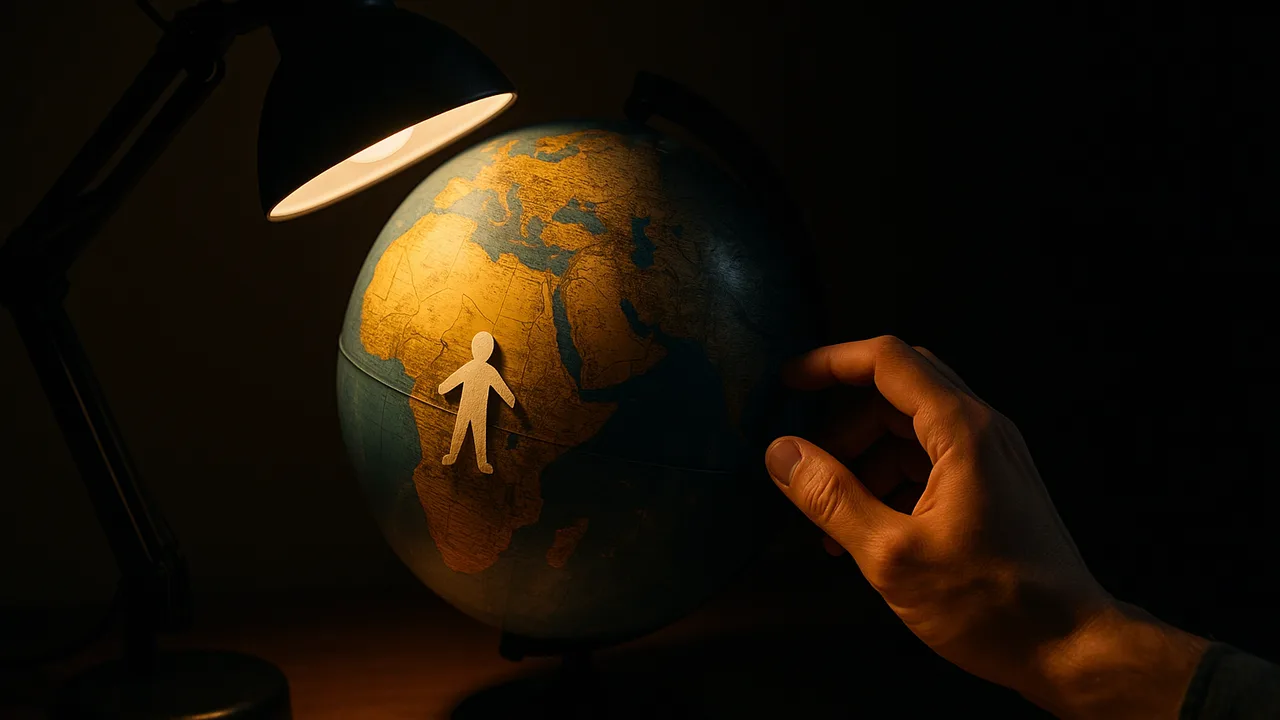
model day and night with a globe and a lamp, and connect one spin of Earth to the daily patterns of sunrise, sunset and shadows.
- I can use my data to explain how the sun’s movement across the sky causes shadows to change in length and direction during the day.
- I can use my data to describe how the length of the day changes throughout the year, with longer days in summer and shorter days in winter.
- I can use my data to explain that some stars or groups of stars can be seen all year, while others are only visible at certain times.
- I can compare my data about shadows, daylight, and stars to find similarities and differences in how often these changes happen, like how shadows change daily and stars appear seasonally.
Phase 2: Investigate
Warm-Up ~5 min
Do Now. Right now, it is daytime here. But somewhere on Earth, kids are asleep in the dark. How can it be day and night at the same time? Talk with your team, then predict.
A lamp shines on a globe in a dark room. How much of the globe is lit at one time?
Instruction ~10 min
Junior astronomers, today you model a whole day. The lamp is the Sun. The globe is Earth. Put a small sticker where we live. Stand a tiny paper figure with a short paper post beside it, so the post can cast a shadow. Slowly spin the globe from west to east. Seen from above the North Pole, that is counterclockwise. Stop at four spots and record what you see.
| Globe position | Day or night for our sticker spot? | Where the lamp seems to be for the figure (east, high, west, not seen) | Post’s shadow (long, short, none) |
|---|---|---|---|
| Sticker spot just turning into the light | |||
| Sticker spot facing the lamp | |||
| Sticker spot just turning out of the light | |||
| Sticker spot facing away |
Worked example 1: sunrise on the globe. Jamal’s team turned the sticker spot just into the light. To the figure, the lamp sat low, on the eastern edge. The post’s shadow was long. That matches our shadow stick at 9:00! Sunrise happens because Earth turns us toward the Sun.
Worked example 2: one spin, one day. When the sticker spot faced the lamp, the post’s shadow was short. When it turned away, the figure was in darkness: night. One full spin brought the figure back to sunrise. Earth spins around once about every 24 hours. That is why day and night repeat every day.
Now we can name it. Earth’s spin is called rotation. The Sun does not really race around Earth each day. Earth turns, so the Sun seems to move across our sky. That apparent motion makes shadows change every day in a pattern we can predict. Daily patterns are perfect for a shadow clock.
Guided Exercises ~15 min
Use your globe model and your table. Tester spins, Recorder writes, and everyone talks before answering.
Independent Practice ~10 min
Connect the model to your real data.
Match two globe positions to two readings from your shadow stick table. Explain how the model helps explain your data.
How often does the day-and-night pattern repeat? How is that different from how often seasons repeat?
Closure ~5 min
One spin of Earth makes one day and one night, and it makes our shadows change. Next time, we look farther out: which star pictures show up at different times of year?
Exit ticket: use the words rotation and shadow to explain why the shadow clock's shadow moves during the day.
Teacher notes
Materials (per team): a globe or ball with our home marked, a desk lamp with an LED bulb (or a strong flashlight), a sticker, a tiny paper figure and a short paper post, tape. A darkened room works best.
Setup: put the lamp at the same height as the globe’s middle. Tape cords down.
Listen for: “night happens because the Sun goes around Earth” or “because the Moon blocks the Sun.” Most globes sit on a tilted stand. Do NOT explain tilt or the causes of seasons; that is outside 5-ESS1-2. If students ask, park the question on the Wonder Board for a later grade.
Support / stretch: give a picture card for each globe position. Stretch: find a city where it is midnight when it is noon where we live.