4.17 Gallery Critique: I Like, I Wonder, What If
give and use kind, specific feedback on shadow clock designs, and explain what makes a design easier to improve.
- I can share my ideas and findings about design solutions with others to help create more possible solutions.
- I can describe what is needed to design a solution, including doing research and talking with others to make the design better.
Phase 4: Build
Warm-Up ~5 min
Do Now. Read two comments about a shadow clock. Comment A: “It’s bad.” Comment B: “I wonder if bigger numbers would help families read it from far away.” Which comment helps more? Why?
Which comment is the most helpful feedback?
Instruction ~10 min
Junior engineers, real designers share early. Engineers show unfinished designs to others on purpose. Fresh eyes spot problems the builders missed. Sharing also spreads good ideas, so every team’s design gets better.
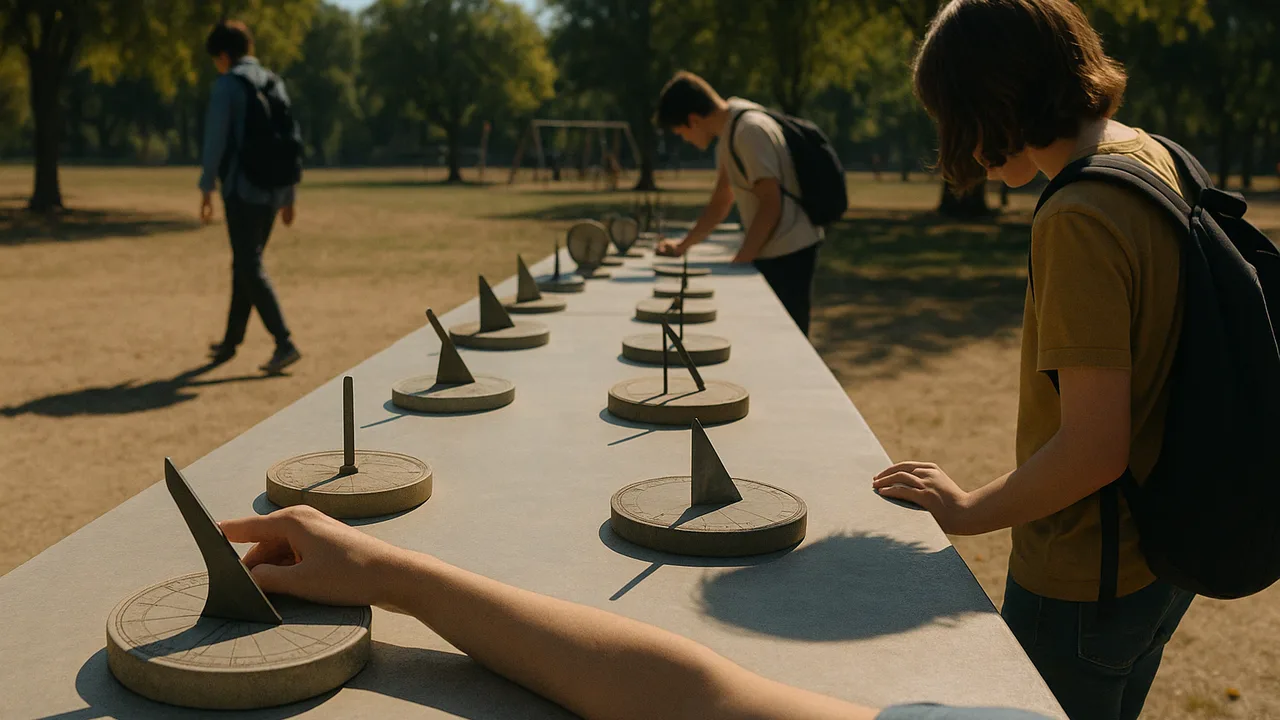
The protocol. Each team leaves its two prototypes and its calibration table at its table. Teams rotate every five minutes. At each stop, write one sticky note of each kind:
- I like… something that works, with a reason.
- I wonder… a question about a possible problem.
- What if… one idea to try.
Worked example 1: feedback that uses science. Malik visits a clock whose 9:00 and 3:00 marks are very close to the gnomon. He writes: “I wonder if those marks are right. Our data showed morning and afternoon shadows are the LONGEST. What if you re-check them on the next sunny day?” His feedback uses the shadow pattern as evidence.
Worked example 2: what a good design process needs. After the gallery, Priya’s team lists what helped them most: their research about tilted pointers, their data table, and three sticky notes from other teams. Good designs come from research, testing and talking with others, not from one person’s first idea.
Guided Exercises ~15 min
Rotate through the gallery. Record the best feedback you GIVE and the best feedback you GET.
| Stop | I like… | I wonder… | What if… |
|---|---|---|---|
| Team 1 | |||
| Team 2 | |||
| Team 3 | |||
| Feedback we got |
Independent Practice ~10 min
Think about how good designs are made.
List three things a team needs to design a great shadow clock, such as research, data or talking with others. Explain how each one helps.
Describe one idea you saw at another table that you could combine with your own design.
Closure ~5 min
Your sticky notes are now your to-do list. Next class we revise and retest.
Exit ticket: write the ONE change your team will make next class, and the feedback that led to it.
Teacher notes
Materials: prototypes and calibration tables from 4.16, three colors of sticky notes (one per starter), a timer, the critique anchor chart.
Setup: If prototypes must stay outdoors, run the gallery with photos of each clock plus its data table. Model one round of feedback with a sample clock first.
Listen for: vague praise (“nice”), and feedback about neatness only. Push for comments that cite the shadow pattern.
Support / stretch: Provide sentence frames on the sticky notes. Stretch: ask students to find two teams whose ideas could be combined and explain how.