3.02 Defining Our Problem: Teams, Roles and a Creek Walk
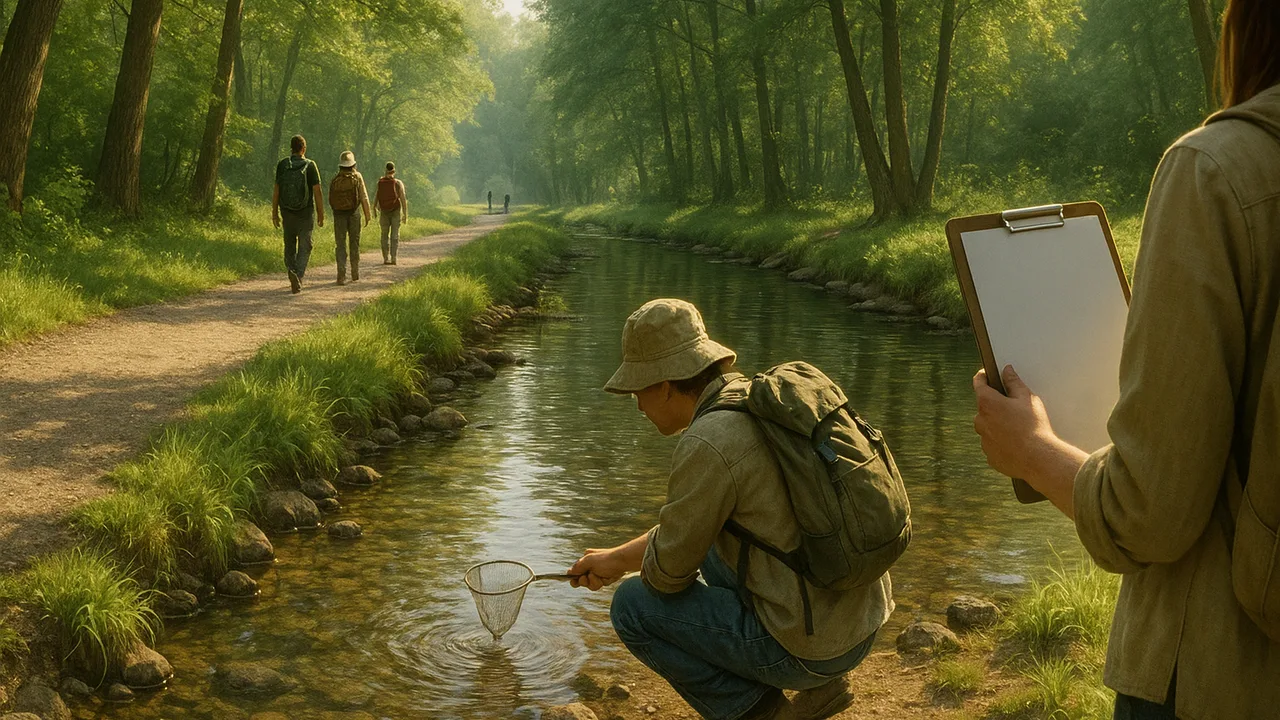
Guardians of the Creek: A Watershed Protection Plan
How do Earth’s land, water, air and living things work together, and how can our community protect the water we all depend on?
The mystery: Almost all of Earth’s water is salty ocean water. A town built beside two big rivers still has to worry about having clean water to drink. Why?
describe the creek problem as something people need now, explain how needs change over time, and get ready to work in a team.
- I can describe a problem that could be solved by making a new or better object, tool, process, or system.
- I can explain how people’s needs and wants can change over time.
- I can define the limits for solving a problem, making sure it is about something people need or want right now.
Phase 1: Spark
Warm-Up ~5 min
Do Now. Long ago, many towns built factories and mills right next to creeks and rivers. Today, many people use creeks for fishing, hiking and learning. Think about how people’s needs might have changed.
Compared with long ago, what do many people want from a town creek today?
Instruction ~10 min
Creek guardians, engineers define the problem first. A good problem statement says who needs help, what they need and why. It also must be about a need people have right now.
Needs change over time. Long ago, few people worried about rain running off streets. Towns were smaller, and more land was covered with plants. As towns grew, people built roads, roofs and parking lots. Now more rain rushes into creeks at once. A newer need is to slow that water down.
Worked example 1: a problem that a new tool could solve. Mei sees trash piled where a storm drain empties into the creek. She writes: “Trash from the street washes into the creek. A better system could catch trash before it reaches the water.” She named a problem that a new object or system could solve.
Worked example 2: keeping it current. Malik first writes, “We need to stop factories from dumping.” Then he checks the client’s letter. Today’s problem is muddy runoff and street trash. He rewrites his statement to match the need the group has now.
How we will work. Each team has four rotating roles. The Materials Manager gets and returns supplies. The Recorder writes the data. The Tester runs the tests. The Reporter shares with the class. You will switch roles each lesson, so everyone tries every job.
Sorting our Wonder Board. We sort questions into three groups: Earth’s systems, How much water and Our watershed. Each group becomes investigations in the next phase.
Guided Exercises ~15 min
Take a short walk around the school grounds, or use the photo cards. Look for places where rain goes. The Recorder fills in this table.
| Place we saw | Where does rain go here? | Possible problem for the creek | Who has this need? |
|---|---|---|---|
Then work through the questions with your team.
Independent Practice ~10 min
Write your first problem statement.
Write a problem statement for the creek. Use this frame: “___ need ___ because ___.” Then explain one way this need is different from what people needed long ago.
Closure ~5 min
Our teams are ready, and our problem is clearer. Next: your 3DX field trip. Follow the creek from where it begins. Then the Investigate phase starts.
Exit ticket: name one place near school where rain runs off instead of soaking in. Why could that be a problem for the creek?
Teacher notes
Materials: clipboards, the walk table, role cards, the Wonder Board sticky notes, three chart-paper headings. Backup photo cards: a downspout, a parking lot, a storm drain, a lawn, a creek bank, a bare dirt patch.
Setup: Walk the route first and pick 3–4 safe stops. Form teams of four and assign the first round of roles.
Listen for: problem statements that describe a solution (“We need a trash net”). Ask, “What is the need under that idea?” Keep history general; do not cite specific local events unless you have a trusted source.
Support / stretch: Give a word bank for the problem statement. Stretch: ask students to list everyone who depends on the creek, including towns downstream.