3.16 A Test for Every Criterion
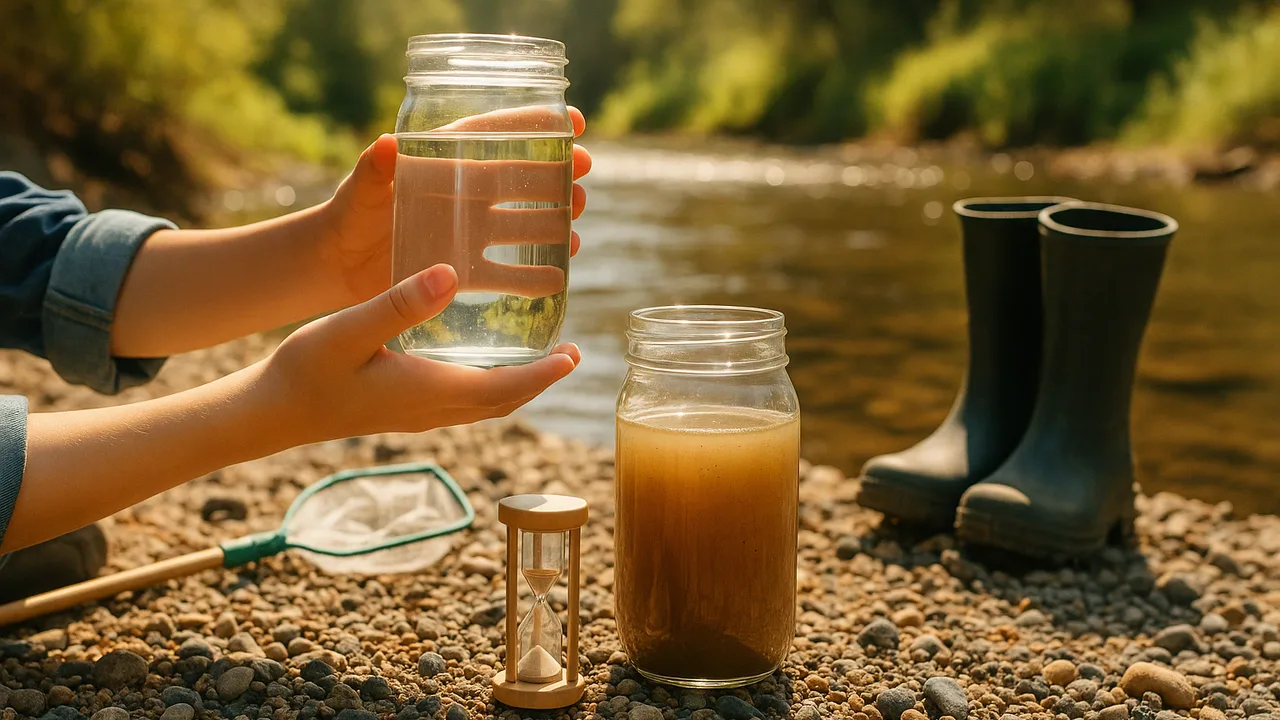
plan a fair test for each criterion and constraint of my team’s fix, naming what we change, what we measure, our tools and what stays the same.
- I can create a plan that includes different tests for each criterion or constraint of my model or prototype.
- I can describe what I will change in each test, what I will measure, what tools and methods I will use to collect data, and what I will keep the same to make the test fair.
- I can explain how the evidence I collect will help me find problems or areas to improve in my model or prototype.
- I can describe the limits on my design, such as how much it costs, what materials I can use, or how much time I have.
Phase 4: Build
Warm-Up ~5 min
Do Now. Malik tests two model gardens. He sprays one 10 times and the other 20 times. The first one sends less water to the creek cup. Is that a fair test? Talk with your team for one minute.
Can Malik say which garden DESIGN works better?
Instruction ~10 min
Every criterion needs its own test. A criterion is something your fix must do. A test tells you whether it does it. If you skip a test, you will not know whether your fix meets that criterion.
Our watershed model. A plastic bin is tilted so one end is higher. The high end is the “hills and town.” Soil, a cardboard roof and a strip of plastic “pavement” sit there. The low end is the “creek,” where a cup catches the runoff. A spray bottle makes the rain. A pinch of cocoa powder sprinkled on the land stands in for pollution like dirt, oil and fertilizer.
Four questions for every test.
- What do we change? Only one thing: with our fix or without it.
- What do we measure? For example, milliliters (mL) of water in the creek cup, or how muddy it looks on a 1–5 color scale.
- What tools do we use? A measuring cup, a spray bottle, a timer and a muddiness color card.
- What do we keep the same? The tilt of the bin, the number of sprays, the soil and the amount of cocoa “pollution.”
Worked example 1: the rain garden test. Diego’s team runs the model twice. Run A has bare soil at the bottom of the slope. Run B has a sponge garden there. Both runs get 30 sprays from the same spot. They measure mL in the creek cup and rate muddiness 1 (clear) to 5 (very muddy).
Worked example 2: the cost test. One constraint is low cost. Mei’s team cannot spray their way to that answer. Their tool is a fix card and a price list. They estimate whether a family, the school or the town could afford it. Some tests use research, not water.
How evidence helps. Test results are evidence. If the creek cup still gets muddy water, the evidence points to a weak spot. Good evidence is specific, like “120 mL, muddiness 4,” not “it was okay.”
Our test plan.
| Criterion or constraint | What we change | What we measure | Tools | What we keep the same |
|---|---|---|---|---|
| Less runoff reaches the creek | ||||
| Cleaner water reaches the creek | ||||
| Uses Earth-systems science | ||||
| Low cost and doable | ||||
| Safe for people and wildlife |
Guided Exercises ~15 min
Write your test plan with your team. Use the arrows to move through each step.
Independent Practice ~10 min
On your own, fix a weak plan.
Jamal's plan says: “Test: spray it and see.” Rewrite his plan so it names what he changes, what he measures, his tools and what he keeps the same.
How confident are you that you can I can plan a fair test for each criterion and constraint.
Closure ~5 min
Your team now has a test for every criterion and constraint. Next time, you build!
Exit ticket: name one criterion and one constraint. For each one, write what you will measure or check.
Teacher notes
Materials: test-plan copies; the classroom watershed model; a measuring cup marked in mL; spray bottles; a muddiness color card (five swatches from clear to dark brown).
Setup: Model one row together, then let teams finish. Agree on a class number of sprays (for example 30) so results can be compared across teams. Campaign and water-saving teams plan research and survey tests.
Listen for: tests that change two things; measures that are opinions (“it looks good”); and teams that forget the constraints. Ask: “How will you KNOW?”
Support / stretch: Give a partly filled plan with the “keep the same” column started. Stretch: plan three trials of each run and explain why repeating makes evidence stronger.