4.21 Designing the Sky Calendar and Star-Finder
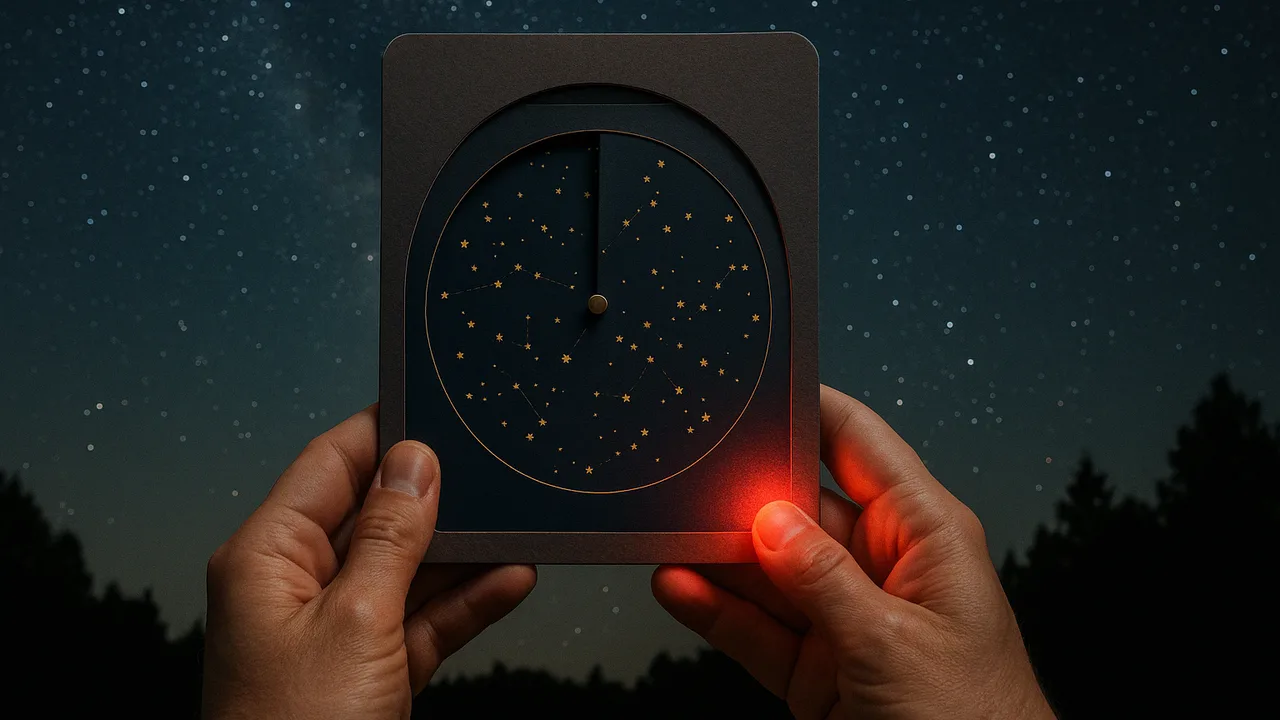
organize data about daylight and seasonal stars, and design two different sky tools that show families what to look for.
- I can organize data about how the length and direction of shadows change at different times during one day using graphs or charts.
- I can use graphs to show how the amount of daylight changes throughout the year by recording sunrise and sunset times.
- I can organize data to show which stars or groups of stars are visible in the night sky at different times of the year.
- I can use my data to explain how the sun’s movement across the sky causes shadows to change in length and direction during the day.
- I can use my data to describe how the length of the day changes throughout the year, with longer days in summer and shorter days in winter.
- I can use my data to explain that some stars or groups of stars can be seen all year, while others are only visible at certain times.
- I can come up with at least two possible solutions to a problem using what I know about science.
Phase 4: Build
Warm-Up ~5 min
Do Now. Night Sky Night is in spring. A family asks, “Will we see Orion, the hunter we saw in January?” What would you tell them? What data would help you answer?
Can we see the same star groups in the evening sky all year long?
Instruction ~10 min
Junior engineers, our second tool is a sky tool. Families want to know two things: when it gets dark, and what stars they will see. Your team designs TWO options, then picks one to build.
- Option A, the sky calendar wheel: a paper circle with the months around the edge. Each month shows star groups to look for in the evening and a bar for hours of daylight.
- Option B, the star-finder: two paper circles. Turn the star map until the date lines up with the time, and a window shows tonight’s sky.
Organize the data first.
| Time of year | Daylight in many northern U.S. places (about, rounded) | A star group to look for in the evening |
|---|---|---|
| Late December | about 9 hours | Orion |
| Late March | about 12 hours | Leo |
| Late June | about 15 hours | Summer Triangle, rising in the east |
| Late September | about 12 hours | Great Square of Pegasus |
| All year | — | Cassiopeia and the Little Dipper, circling the North Star |
Worked example 1: reading the pattern. Priya notices that daylight grows from about 9 hours in December to about 15 hours in June, then shrinks again. The evening star groups also change through the year. Both patterns repeat every year. Shadows, by contrast, repeat every day.
Worked example 2: showing brightness fairly. Malik’s star-finder uses bigger dots for stars that LOOK brighter from Earth. His key says, “Dot size shows how bright a star looks, not how big it is.” A star can look dim simply because it is very far away.
Guided Exercises ~15 min
Fill in the design comparison for your two sky tools. Then pick one to build.
| Question | Option A: sky calendar | Option B: star-finder |
|---|---|---|
| How it helps families | ||
| Data it shows | ||
| Easy for a 6-year-old? (1–5) | ||
| Materials and time |
Independent Practice ~10 min
Choose like an engineer.
Explain how EACH option would help a family at Night Sky Night. Then name the one your team will build and give one reason from your comparison table.
Closure ~5 min
Your team has a sky tool plan. Next class, a planetarium educator’s ideas help us finish it.
Exit ticket: compare the daylight pattern and the shadow pattern. What is one way they are alike and one way they are different?
Teacher notes
Materials: paper plates or cardstock circles, brad fasteners, safety scissors, star stickers in two or three sizes, printed star-group outlines, colored pencils.
Setup: The daylight values are rounded on purpose and fit places about 40 degrees north of the equator; your location may differ a little. Have students check the current month’s sunrise and sunset times in a reliable source. Keep the star table to evening skies (about 9 p.m.).
Boundary note: describe the daylight pattern only. Do not teach why daylight changes or what causes the seasons; that is beyond this unit.
Listen for: “bigger dots mean bigger stars” and “Orion disappears because it burns out.” Redirect to apparent brightness and Earth’s changing view.
Support / stretch: Offer a half-built calendar wheel template. Stretch: add a second ring for a 9 p.m. and an 11 p.m. view.