2.02 Signals All Around Us
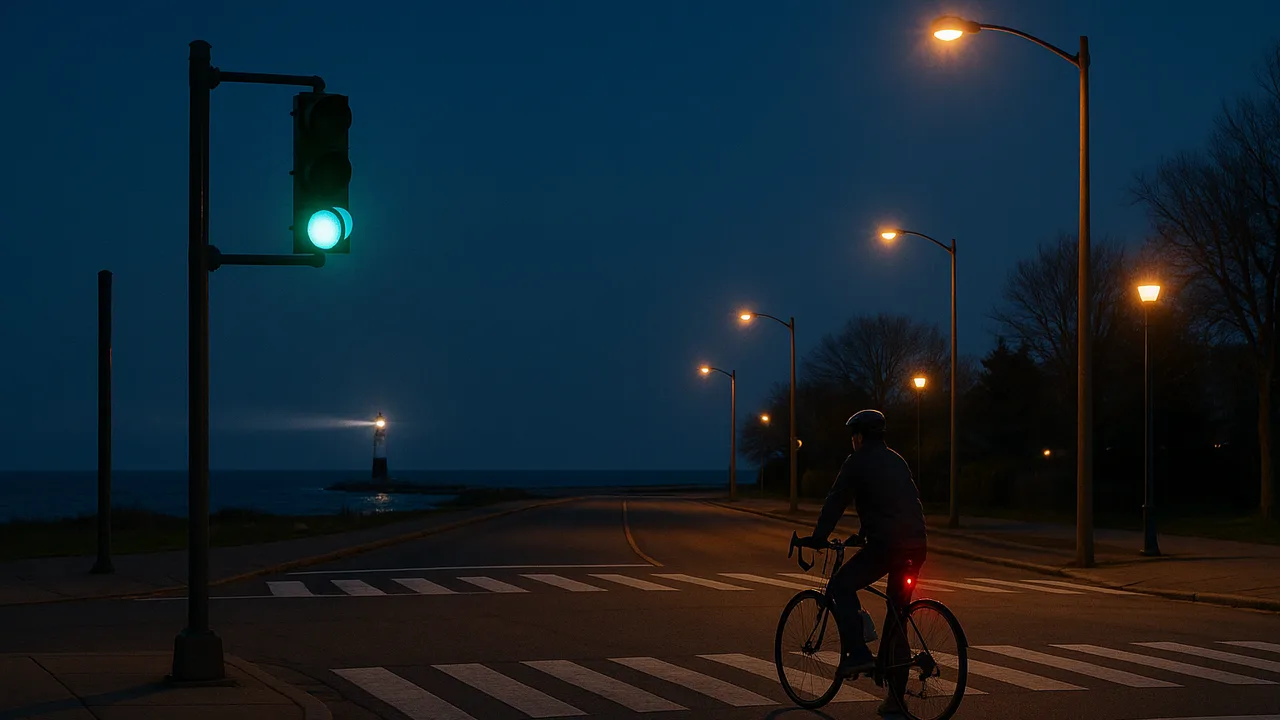
The Silent Signal
How can we send a message across the field day crowd without saying a word?
The mystery: A leaf floating on a pond bobs up and down as ripples pass, but the ripples do not carry it away. Out on the lake at night, a lighthouse flashes the same pattern over and over.
notice waves and light signals in everyday life, sort our Wonder Board questions, and set up my team to work like engineers.
- I can use my model to show how a wave moves and how it makes an object move as it passes.
- I can explain how a wave starts, like by shaking a rope or disturbing water.
- I can show the repeating pattern that happens when a wave travels.
- I can explain that we see objects because light enters our eyes.
- I can describe how light bounces off objects and then travels to our eyes.
- I can show that we can only see objects if light goes from a light source to the object and then to our eyes.
Phase 1: Spark
Warm-Up ~5 min
Signal hunt. Look around the room for 1 minute. Find anything that sends a message without words. A light on a computer? A sign? A hand raised? Then try the question below.
Your teacher turns off every light and covers the windows. You hold up a picture card. Can your partner read it?
Instruction ~10 min
Signals are everywhere. A traffic light changes color. A crossing guard holds up a stop sign. A referee waves a flag. A lighthouse flashes across the water. Each one sends a message with no words. Many of them use light. Some use motion, like a waving arm.
Worked example 1: the crossing guard. Jamal walks to school. The crossing guard lifts a bright stop sign. Drivers stop. How did the drivers get the message? Sunlight hit the sign. Light bounced off the sign and went into the drivers’ eyes. The sign does not glow by itself. It needs light to be seen.
Worked example 2: the referee’s flag. At a soccer game, Priya sees the referee wave a flag back and forth. The waving repeats. That repeating motion is a pattern. People across the field can see it, even when the crowd is loud. A pattern you can see is great for a noisy place.
Sorting our wonders. Our Wonder Board has many questions. Today we sort them into three groups: Waves (how waves start, grow and move things), Light and seeing (how we see objects), and Codes (how patterns carry messages). This helps us plan what to investigate first.
| Waves | Light and seeing | Codes |
|---|---|---|
Team roles and norms. Engineers work in teams. Each role matters. The Materials Manager keeps supplies safe. The Recorder writes what we see, not what we hope. The Tester runs each trial the same way. The Reporter shares for the whole team. Your team will write three norms, like “We listen to every idea.”
Guided Exercises ~15 min
With your team, look at each everyday signal. Decide how it works. The Reporter shares one answer with the class.
Independent Practice ~10 min
Set up your team for the whole unit.
Write your team's three norms. Then write which role you will take first and one thing you will do well in that role.
Add one new question to the Wonder Board. Which group does it belong in: Waves, Light and seeing, or Codes?
Closure ~5 min
Signals are all around us. Many use light, and some use motion patterns. Next, we start investigating. First stop: ripples and a floating leaf.
Exit ticket: how does light from the Sun help you see a stop sign? Draw arrows if it helps.
Teacher notes
Materials: chart paper with three columns (Waves, Light and seeing, Codes), sticky notes, picture cards of everyday signals (traffic light, crossing guard, referee, lighthouse), team role cards.
Setup: move the 2.01 Wonder Board sticky notes to the sorting chart. Pre-assign teams of four with mixed strengths.
Listen for: “the sign is bright so it makes light” (bright colors reflect a lot of light, but they do not make it). Do not resolve every question today; this is a launch.
Support / stretch: give picture cards to students who need a visual. Stretch: ask students to find a signal that uses BOTH light and a pattern, like a blinking crosswalk light.