1.13 Power Choices: Renewable, Nonrenewable and Our Environment
compare the good and bad effects of energy resources on the environment and explain how technology can reduce those effects.
- I can use information I find to give evidence about how using an energy resource affects the environment.
- I can use information to tell if an energy resource is renewable or not.
- I can explain how technology can help reduce or change the environmental effects of using an energy resource.
- I can describe how using different energy resources causes different effects on the environment.
- I can explain how technology helps people get and use energy resources and how that affects the environment.
- I can explain where different energy resources like fossil fuels, solar, wind, water, and nuclear energy come from in nature.
- I can describe how these energy resources help people meet their energy needs.
- I can compare the good and bad effects on the environment when people use each energy resource.
Phase 3: Make Sense
Warm-Up ~5 min
Do Now. Look at your energy trail from 1.08 and your cookie drawing from 1.09. Every resource helps people. Does every resource also change the environment?
Which energy resource has NO effect at all on the environment?
Instruction ~10 min
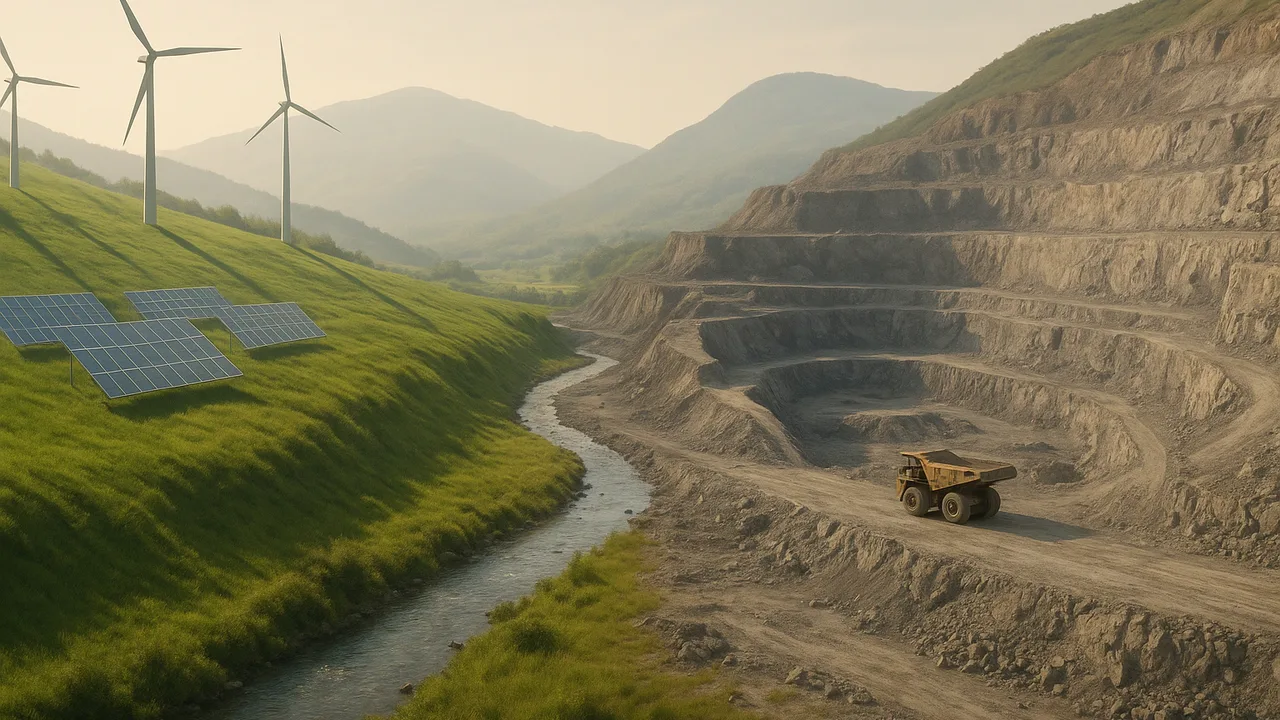
Reading-like explanation: energy and our environment. People need energy to light schools, ring bells and heat homes. We get it from natural resources. Using each one changes the environment in some way.
- Coal (nonrenewable): makes lots of electricity. Burning it puts pollution and smoke into the air. Mining digs up land and can harm streams. Some old coal mines leak orange, polluted water into streams.
- Natural gas (nonrenewable): burns cleaner than coal, but it still adds pollution to the air. Drilling wells and building pipelines change the land around them.
- Wind (renewable): turbines make no air pollution while they spin. But the wind does not always blow. Turbines need open, windy places, and their blades can harm some birds and bats.
- Solar (renewable): panels make no air pollution while they work. They only work when the sun shines. Large solar farms take up a lot of land.
- Water (renewable): dams make electricity without smoke. But a dam floods land behind it and can block fish swimming up the river.
Technology can help. Engineers design tools that lower the effects. Filters in power plant smokestacks catch some pollution before it reaches the air. Mined land can be filled in and replanted. Some wind farms slow their blades at times when bats fly most. Fish ladders help fish get past some dams. LED bulbs use less electricity, so less fuel is needed.
Worked example 1: comparing two resources. Ava compared coal and wind. “Coal: good, it works day and night. Bad, burning it pollutes the air, and it will run out. Wind: good, no air pollution and renewable. Bad, it stops when the wind stops and can harm birds.”
Worked example 2: an energy CER. Jamal’s claim: “Solar panels on our school roof would help the environment.” Evidence: panels make no air pollution while they work, and sunlight is renewable. A roof does not take up new land. Reasoning: using sunlight means less fuel is burned for our lights, so less air pollution.
| Resource | Renewable? | One good effect | One bad effect | A technology that helps |
|---|---|---|---|---|
| Coal | ||||
| Natural gas | ||||
| Wind | ||||
| Solar | ||||
| Water |
Guided Exercises ~15 min
Compare resources with your team.
Independent Practice ~10 min
Write an energy CER. Sentence starters:
- Claim: The best energy resource for our school is ___.
- Evidence: It is ___ (renewable / nonrenewable). One good effect is ___. One bad effect is ___.
- Reasoning: I think the good outweighs the bad because ___. A technology that could help is ___.
Write your energy CER for our school. Use information from the reading and your table.
Closure ~5 min
Every energy choice is a trade-off, and technology can make the effects smaller. Next time, we bring everything together and brainstorm our machine.
Exit ticket: name one renewable and one nonrenewable resource, and one environmental effect of each.
Teacher notes
Materials: the reading (printed or projected), the comparison table, energy trails and cookie drawings from 1.08 and 1.09.
Setup: jigsaw the reading: each team member becomes the expert on one or two resources and teaches the team. Nuclear is on the 1.08 card; add it as a sixth row for early finishers (no air pollution while running; used fuel must be stored safely for a very long time).
Listen for: “renewable means perfect” and “coal is bad, so people who use it are bad.” Keep the talk on effects and trade-offs, and stay respectful of family jobs in energy industries. Keep energy facts general; no statistics.
Support / stretch: give a picture sort of good and bad effects. Stretch: argue for a MIX of resources and explain why.